
The Bishop of Oxford spoke in a debate on what steps the government are taking to support persecuted Christians around the world on 25th March 2024, highlighting the importance of freedom of religion and belief in the context of broader human rights, and calling for the government to inform the House of future strategies to promote freedom of religion and support those facing persecution:
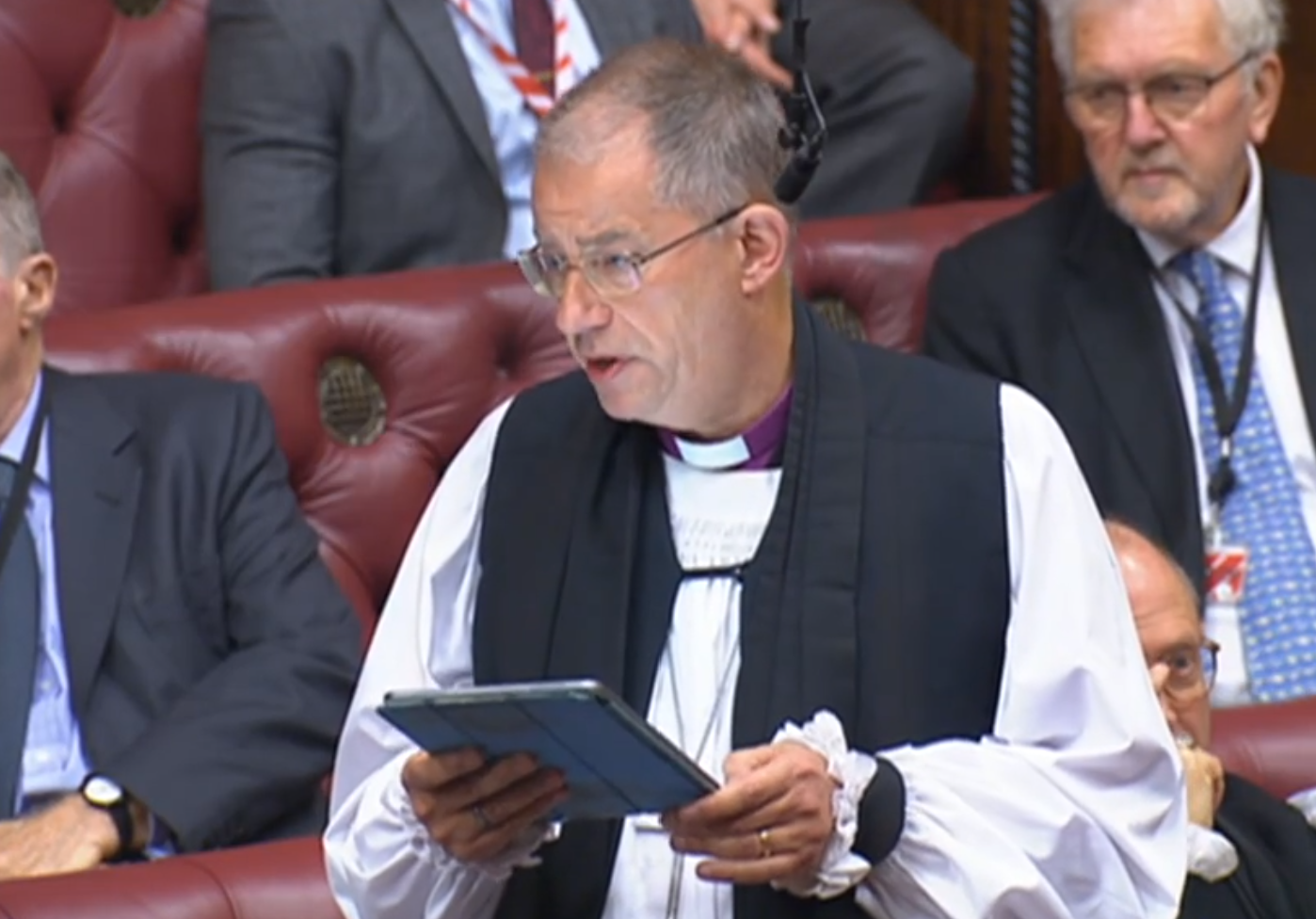
The Lord Bishop of Oxford: My Lords, I too add my congratulations and appreciation to the noble Baroness, Lady Foster, on securing this important debate and her comprehensive and moving survey and speech. It is a pleasure to follow the noble and right reverend Lord, Lord Carey, and I pay tribute to his considerable expertise in this area over many years. I am grateful to my colleague, the right reverend Prelate the Bishop of Winchester, formerly the Bishop of Truro, for a briefing in advance of this debate. He is not able to be present, but I know he will follow deliberations closely.
As the noble Baroness, Lady Foster, set out so eloquently, the beginning of Holy Week is a fitting time to remember the persecution of Christians across the world and the costs of faith. This persecution has been evident since the very beginning of the Church. Even so, it is extremely sobering and moving to reflect that, according to Open Doors, 365 million Christians face some sort of persecution worldwide—about one in seven of the global Christian population. I also note with other noble Lords the disproportionate consequences and costs for women and girls.
We pay tribute today to the courage and perseverance of persecuted Christians, and, in turn, appreciate the freedom of belief which is a feature of our own democracy. As the historian Tom Holland argued recently in his powerful book, Dominion, many of the core values of our society can be traced directly to our Christian heritage and need to be sustained by that Christian heritage now.
However, this debate has a broader significance, because freedom of religion or belief, and violations against anyone, can be important indicators of the state of human rights in any context globally. As the former UN special rapporteur on freedom of religion or belief, Heiner Bielefeldt, said:
“Freedom of religion or belief rightly has been termed a ‘gateway’ to other freedoms, including freedom of expression and freedom of peaceful assembly and association”.
An approach that guarantees freedom of religion or belief for all, as advocated by the Truro review, is the best way of addressing Christian persecution for two important reasons. First, singling out Christians inevitably others them, increasing their vulnerability. It is also antithetical to the Christian faith itself to favour Christians over other faiths. Christianity puts no limit on its definitions of who is our neighbour, so it is wrong to argue theologically for special treatment of persecuted Christians. Secondly, it is also impossible to support persecuted Christians without supporting the freedom of religion or belief of all persons. Freedom of religion or belief is intertwined with other human rights and a matter of legally binding international human rights obligations.
We need to note and acknowledge in this debate that we have seen a regrettable increase in Islamophobia and anti-Semitism in the United Kingdom since the terrible 7 October attacks and the devastating conflict in Gaza. The work of faith leaders building bridges, strong relationships and understanding locally has been a vital part of the local response to events in Israel and Gaza in my own city and county and across the country. Religious freedom and tolerance need to be nurtured and guarded nationally and locally. It is as important to do that in our own country as it is across the world; the two go together,
The Library briefing provides some estimates on the numbers of Christians persecuted globally. Estimating persecution is problematic and contentious for obvious reasons. A comment made by the former UN special rapporteur Asma Jahangir on all FoRB statistics is very helpful:
“When I am asked which community is persecuted most, I always reply ‘human beings’”.
Our responsibility is always to stand up for the world’s most vulnerable people, wherever they may be found. Freedom of religion or belief is a foundation of human rights.
The Truro review argued that freedom of religion or belief should be “central” in FCDO policy. However, religious literacy in policy and diplomacy remains a significant challenge, even though only religiously literate responses will be effective in addressing some of the world’s most serious instances of persecution in countries such as Nigeria, India, Iran, Russia and China. What steps is the FCDO taking to build religious literacy across its work?
Fiona Bruce is sponsoring a Private Member’s Bill in the other place, the International Freedom of Religion or Belief Bill, which would establish an office of the special envoy and require the Prime Minister by law to appoint someone to the role. I very much hope that this House will play its part in supporting the Private Member’s Bill to establish the special envoy post in law when my right reverend friend the Bishop of Winchester brings it to the House in due course.
Finally, I invite both the Minister and the Opposition to tell this House what future strategies they intend to have in place to continue or enhance the role of the Special Envoy on Freedom of Religion or Belief and the support for persecuted Christians globally.
Extracts from the speeches that followed:
Baroness Sherlock (Lab): We are in the season where many of the world’s major faiths have a focus, and it feels particularly poignant that we are having this debate in Holy Week, when most western churches mark the events leading up to the crucifixion and resurrection of Jesus Christ. I should declare as an interest that I am an ordained minister in the established Church of England. When I go freely to church on Easter morning to celebrate the resurrection, it will be an occasion of great joy, so it is deeply painful that one in seven Christians globally will be unable to go to church to mark the resurrection or will do so at great personal risk. That should be a cause for concern to all people of good will, whatever their faith.
The sheer global scale of the persecution of Christians was underscored in the latest annual report on international religious freedom from the Pew Research Center in the US. It assessed 198 countries and found that Christians were harassed by Governments or private actors in 160 of them in 2021. This reflects that sheer global scale; it was noted in the Truro report that, as perhaps the single biggest genuinely global religion, Christianity becomes something of a bellwether for oppression more generally. There are two reasons for this debate to be important. One is to inform those who, like the noble Earl, Lord Sandwich, do not know about the scale of the persecution of Christians, but the other is that if Christians are being persecuted, so are other people. I was very grateful to the right reverend Prelate the Bishop of Oxford for making it clear that Christians standing up and talking about the persecution of Christians are not doing so because they are Christians; they are doing so because they are being persecuted. It is hard to justify that theologically in anybody’s book.
Lord Ahmad of Wimbledon (Con, FCDO): We demonstrated the depth of our commitment two years ago, when, together with the Prime Minister’s special envoy for freedom of religion or belief, I hosted an international ministerial conference. At that conference, we brought together over 800 faith and belief leaders and human rights actors, and 100 government delegations, to agree on a plan to promote and protect FoRB. Since the conference, we have taken several actions to build on the momentum. I thank the noble Lord, Lord Purvis, for his kind remarks, both about the work of the Government and my personal commitment. I agree that we must continue to act in a very focused manner on this.
The right reverend Prelate the Bishop of Oxford talked about essential human rights and reflecting on our own country and the rising tide of attacks on different faiths, Islamophobia and anti-Semitism. As was rightly coined, we should be intolerant of religious intolerance.
We are strengthening international coalitions within FoRB. The noble Baroness, Lady Sherlock, asked about our work with the United States. I have a small personal anecdote. The then ambassador for freedom of religion Sam Brownback, who is well-known to the noble Lord, Lord Alton, asked me to have a meeting with him and one other individual in the US mission. That is where the International Religious Freedom or Belief Alliance was born. He asked me whether the UK would support it and I said that of course we would. Freedom of religion or belief remains a priority in our multilateral work.
 The Church of England in Parliament
You must be logged in to post a comment.