
During a debate on 18th July 2024 in response to the King’s Speech, the Bishop of Chelmsford spoke on the topic of housing, urging the government to take strong and long term action to address the need for new and high quality housing in the UK:
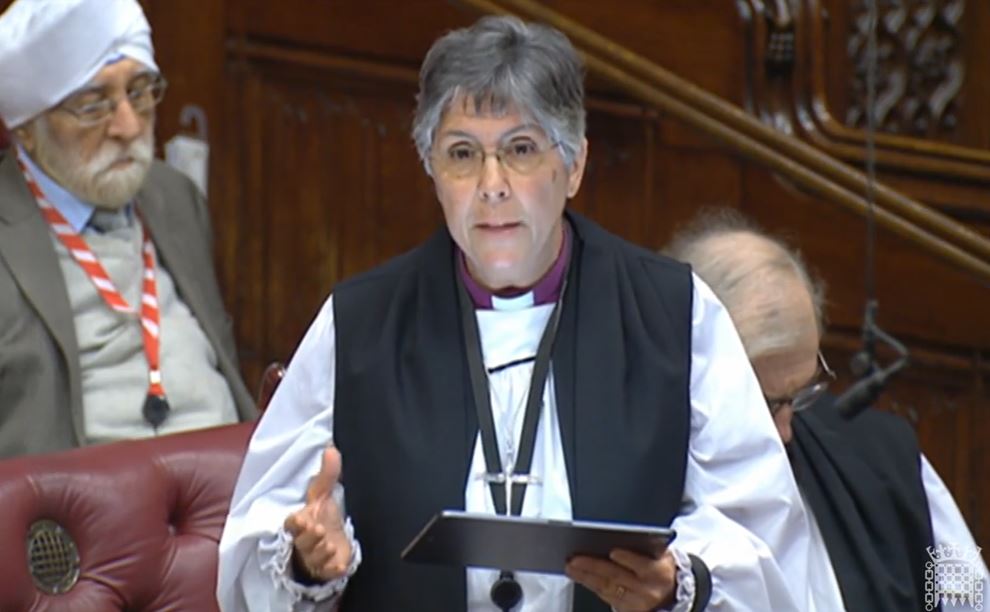
The Lord Bishop of Chelmsford: My Lords, I declare my interest as the Church of England’s lead Bishop for housing. Along with other noble Lords, I very much look forward to the maiden speech of the noble Lord, Lord Fuller.
It is undeniable that the UK is in the midst of a housing crisis—one with deep roots. Too often, housing has been viewed as a financial asset rather than a fundamental human need. I am grateful to the noble Lord, Lord Hunt, for the comments and commitments in his opening speech, but the housing crisis has been escalating for decades, so we should not underestimate just how long it will take to fix. Therefore, I cannot overstate the need for long-term thinking in tackling the housing crisis, a point well made by the noble Baroness, Lady Warwick.
A clear, long-term vision and a carefully thought-through strategy to provide decent, affordable homes for all can deliver three major goals of economic growth, social justice and environmental stewardship. That is why, along with my right reverend friend the Bishop of St Albans, I am pleased to support Homes for All—a vision for a long-term housing strategy supported by churches, charities, think tanks and others, which I commend to all noble Lords.
Here is just one example of the pitfalls of a failure to think strategically. Between 2021 and 2026, the previous Government allocated £11.5 billion to the affordable homes programme to subsidise the building of new affordable homes, but in the same period, the New Economics Foundation estimates that the Government are set to subsidise private landlords by more than £70 billion through housing benefit and the housing element of universal credit. We clearly have the balance wrong here. We should be using more of that funding to build up our stock of social homes, locking in the affordability for good, rather than subsidising private landlords, month in, month out; otherwise, the housing benefit bill will continue to rise without giving anyone in housing need the security that they deserve. I endorse the National Housing Federation’s call to double the affordable homes programme budget and build 90,000 new social homes a year, which it estimates will add £51 billion to the economy.
While it is true that we need to think long term to fix our broken housing system, people at the sharp end of this crisis need change now. Rough sleeping has risen by 27% in the last year, and 142,000 children are currently housed in temporary accommodation—as we know, families can spend months or even years in unsuitable, so-called temporary accommodation while they languish on the social housing waiting list, which currently stands at over 1 million. We proved that it was possible to make significant progress in tackling rough sleeping during the pandemic when we moved with urgency, so I would appreciate more clarity from the Minister about the Government’s ambition for ending rough sleeping.
Even for those who are housed, this can often be in insecure, unaffordable and poor-quality homes. One in five private renters now pays at least half of their income on rent. They cannot wait for decades for the housing market to provide more decent, affordable homes. We need both long-term planning and immediate action for those in acute housing need.
I urge the Government also to pay particular attention to people who spend their lives in the service of others, such as ministers of religion—there are others too—and to ensure that policy-making does not inadvertently make it more difficult to provide housing for them in retirement.
I am pleased that the Government have proposed a new renters’ rights Bill. It must offer renters and tenants a fair deal; extend the decent homes standard to the private rented sector; prevent discrimination against families with children and people in receipt of benefits; and abolish no-fault evictions to give tenants the security that they need. On that latter point, the details must be worked through carefully so that the Bill applies fairly to charities among a range of housing providers.
It might seem like an obvious point, but the primary duty of our housing system should be to provide quality homes for all. I welcome the Government’s plans to reform and better resource the planning system, and their ambition to build 1.5 million new homes during this Parliament. More housing means more opportunity—something which the Church has recognised, as we seek to use more of our own land for affordable housing.
It is not just about the volume of houses we build. We must also think about quality and affordability, as well as resilience to climate shocks. Will these new homes be, in the words of Coming Home, the report of the Archbishops’ Commission on Housing, Church and Community,
“sustainable, safe, stable, sociable and satisfying”?
These five values speak to our profound need for community, as we live with and among one another. New housing developments must be built with the social and physical infrastructure that supports people to thrive. The Church stands ready to help with this mission. While developers and local planners can focus on building houses, community groups, charities and faith groups are well placed to build the social support and relational connections which give these new communities a soul.
Housing is not just bricks and mortar. Our housing system should not primarily be an opportunity to amass assets and wealth. It is about people’s homes and their lives: where they get a good night’s sleep or finally relax on the couch after a long day at work; where they prepare food and eat with family and friends; where they should feel safe and secure. Housing policy must, first and foremost, serve the needs of the people. I look forward to working with the Minister in the coming years to see this vision become a reality.
Extracts from the speeches that followed:
Lord Crisp (CB): I am going to talk about planning and housing, with reference to the environment. I welcome a great deal of what is being proposed by the Government in their legislation on renters reform, leasehold and commonhold reform, Awaab’s Bill—which noble Lords may recall is about the responsibility of landlords to do repairs promptly, as opposed to damaging health as in that particular sad case—the commitment to social housing, much of the changing policy on planning, the proposals I have seen on new towns, and extending the decent housing standard to the private rented sector. If I may say so, I particularly appreciated the presentation of these issues by the noble Lord, Lord Hunt, pointing out that this is about good-quality, safe housing, which is the foundation for an entire life—a theme picked up by the right reverend Prelate the Bishop of Chelmsford.
However, I have some questions and concerns. I shall start with housing. There is an issue here around perhaps too much emphasis on numbers. Some of this is going to feel like déjà vu to the noble Baroness, Lady Hayman of Ullock, but it is important that we emphasise quality and standards in this debate. I am coming at it from the point of view of health and the way in which poor-quality housing damages the health of individuals, and indeed of whole communities. It is not just about numbers; it is about quality and standards, and being fit for purpose.
The worst example of this, which we have often cited, is the permitted development regulations, and I have not seen any comment on that at all, although I may have missed it. Although there are clearly going to be improvements in various bits of the system, my first question is: how will the Government ensure that there are improvements in quality across the whole housing development system, with particular reference to permitted development?
Baroness Kennedy of Cradley (Lab): I turn to the wider housing proposals in the King’s Speech. Yesterday’s Speech proved that the Government have the will to deliver a national programme of building the homes that our country needs. We need investment in community-led housing projects, which are growing and have the potential to deliver so much more than they currently do. There are brilliant and innovative projects around the country, such as WeCanMake in Bristol, a community-led approach to identifying and building on infill plots in communities to create affordable homes. We have an opportunity to communities in a way that promotes health and well-being and supports a goal that I know is shared across the House: tackling health inequality. If they have not already done so, could the Government look at the Town and Country Planning Association’s 12 principles for healthy homes and embed them at the heart of their housing policy?
It is the King’s Speech debate so of course we have talked about the proposed legislation, but in my opinion legislation alone will not solve the housing emergency. For too long we have had a piecemeal approach to housing policy-making, which has exacerbated the crisis that we find ourselves in today. As set out by the Nationwide Foundation yesterday, we need to reimagine our housing system. The Homes for All campaign, referred to by the right reverend Prelates the Bishop of St Albans and the Bishop of Chelmsford, was launched by the most reverend Primate the Archbishop of Canterbury a few months ago. Homes for All is an impressive national coalition of organisations and experts from across the housing sector, including the Church of England and the Nationwide Foundation. It wants to create and develop a policy conversation in England about housing and a well-functioning housing system. It has detailed 25 outcomes that can transform England’s homes and completely overhaul the current failing system. If the Government have not yet considered the proposals from the Homes for All campaign report then I recommend they do. They should be willing to meet with the Homes for All coalition to discuss shared objectives.
Baroness Hayman of Ullock (Lab, DEFRA): During the debate there have been a number of questions, mainly around housing. For example, my noble friend Lady Warwick and the right reverend Prelate the Bishop of Chelmsford asked specifically about social housing. The Government have pledged to deliver 1.5 million homes in this Parliament. This new development will also allow us to deliver thousands of affordable homes, including more for social rent. We will support councils and housing associations to build their capacity to deliver homes and make a greater contribution to affordable housing supply.
A number of noble Lords referred to the renters’ rights Bill, and private renting was an issue of particular concern to many. The Government are determined to address the insecurity and injustice that far too many renters experience by fundamentally reforming the private rented sector and improving the quality of housing in it. The noble Lord, Lord Crisp, stressed the importance of quality and standards and their relation to health, which we take very seriously. The noble and learned Lord, Lord Etherton, asked about a level playing field between tenant and landlord. We want to deliver this decisively. We know that it is important to crack down on unscrupulous landlords, as I mentioned, and we are serious about doing this. We also want to end bad practices such as unfair rent increases and pitting renters against each other in bidding wars. In addition, there will be a new landlord ombudsman service with strong powers, and a private rented sector database will enhance transparency between landlords and tenants, help drive compliance and support amicable redress, reducing the need to go to court. My noble friends Lady Warwick and Lady Kennedy both have huge expertise in this area. They asked a number of very important questions, and I look forward to working with them as we move forward in this area of legislation.
 The Church of England in Parliament
You must be logged in to post a comment.