
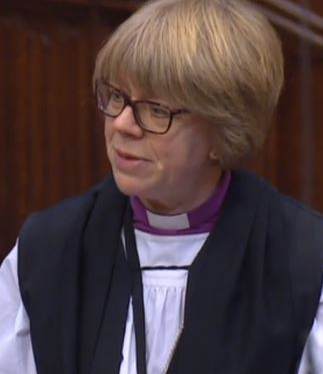
The Bishop of London gave a speech during the debate on the King’s Speech on 19th July 2024, on the topic of health and social care, drawing attention to the need for reform in the social care sector:
The Lord Bishop of London: My Lords, it is an honour to respond to the gracious Speech. I welcome the Minister as she joins us in this House at the Dispatch Box. I also thank the noble Baroness, Lady Jolly, for her contribution to the House, not just on health and social care; those of us who are female priests and bishops thank her for her support.
I welcome many of the Government’s healthcare announcements, especially the two public health legislative measures. I too am glad to see the tobacco and vapes Bill continue. Smoking continues to be one of the leading causes of preventable deaths following the lines of inequality, so bringing forward this Bill will be a significant step forward in our public health agenda. The announcement that the Government will legislate to restrict the advertising of junk food to children and the sale of high-caffeine energy drinks is also welcome. As we have heard, obesity is one of the major health challenges that we face and, again, its impacts are hugely unequal.
The commitment to update the Mental Health Act is long overdue. Mind reminds us that black people are four times more likely to be detained under the Mental Health Act than white people, and more than 11 times more likely to be the subject of a community treatment order. People living in areas of high deprivation are more than 3.5 times more likely to be detained than those living in least deprived areas. I hope that in reforming the Mental Health Act the Government will pay attention to these inequalities.
We now have a much better understanding of what contributes to health and well-being, so I welcome many of the announcements which will provide contributions to healthy lives for individuals, and for communities, such as for housing and education. The commitment to ban conversion practices is long overdue. The measures in the employment rights Bill, especially changes to the statutory sick pay system, are key. Taking time off when you are ill is vital to recovery and ongoing participation in the work in our communities.
I also hope that the Government will use the expanded scope of the national curriculum to promote key life skills, such as making financial education a component of PSHE at key stages 1 and 2, as recommended by many financial literacy charities.
My work inside and outside health has led me to believe with increasing certainty that, if we are to reduce health inequalities and the burden on the NHS, faith groups must be involved. Faith observance is highest in the most deprived areas. This means that faith leaders have the potential to provide vital insight and access to those communities least likely to access preventive healthcare. Faith leaders are trusted in their communities and are valuable partners for improving the health of their community. Ensuring that culturally competent services are available to everyone who requires them is vital if this Government are to halve the gap in healthy life expectancy. I hope that this Government will build on the work already undertaken in this area.
However, it is disappointing there is not a single mention of social care in the gracious Speech. The Government acknowledge that the sector is in need of deep reform. We have an ageing population that has more acute and complex needs. People with care and support needs are often unsupported in navigating the system. There are higher costs for councils at a time of restricted budgets. Unpaid carers provide care for their loved ones, sometimes at the expense of their own health, well-being and work. The Government’s manifesto commitment to create a national care service is laudable, but requires action. We need a long-term funding settlement for local authorities and a workforce plan for the sector. I fear that without these measures we will not achieve the positive vision of social care, because social care is never an end in itself but is a means by which we can live lives of joy, fulfilment and purpose and contribute to the economic recovery of this country.
I regret the absence of palliative care from the gracious Speech. Reliance on charitable donations means that end-of-life care and provision varies depending on how affluent an area is. The cost of care is not being met, and services are being reduced. In the middle of a growing conversation about alternative options at the end of life, it is imperative that we properly fund palliative care.
Finally, every person we talk about in this Chamber is immensely valuable. We all bear the image of God. I look forward to working with noble Lords across the Chamber to ensure that people who are particularly vulnerable to the effects of inequalities and health inequalities are at the forefront of our thinking.
Extracts from the speeches that followed:
Baroness Andrews (Lab): My Lords, it is a great pleasure to follow the right reverend Prelate the Bishop of London from the spiritual security and shelter of these Benches. My real regret is that I cannot actually see our Front Bench, but I am very pleased that my noble friends are there and particularly welcome my noble friend Lady Smith of Malvern. I had the pleasure of working with her many years ago, and know that she understands the role of this House. She made a brilliant maiden speech. I am also very sorry that we are losing the noble Baroness, Lady Jolly, who has made a real contribution to health and social care in this House.
The new Government have set a blistering place but, more importantly, have changed the tone of government. They have already begun the business of rebuilding trust and belief in public services. They have an audacious focus on the long term. What they demonstrate to me is the value that they put on the skills of the care economy, the invisible scaffolding that underpins the real economy and enables growth. The King’s Speech made an intergenerational commitment to child and adult health and social services that is about much more than money. It is about skills and investment in aspiration and well-being.
Taking the long view means addressing the failure of the past 14 years to recognise the structural faults in the care economy by valuing skills, whether in child or adult services, and putting training and careers in place. The King’s Speech does not duck the difficult issues. In 1945, women stayed at home and looked after families from children to adults, from cradle to grave. Nearly 80 years later we have an ageing and deeply unequal society. We now need a social contract between the generations and between the state, the family and the individual. We need to reset that social contract.
Baroness Jolly (LD): Now we are fortunate to have both local authorities and the NHS working together to provide health and care. Despite legislation introduced in the last 15 years, we need to take a close look at the state of care for older people and for those with a learning disability. I undertook the role of chair of Hft, an organisation working all across England that cares for people with a learning disability. Of all the roles I have had, this was the most rewarding. I made many friends from the Hft board and I am grateful for the insight I had into the world of adults with a learning disability.
I echo the words of the right reverend Prelate the Bishop of London: the challenges faced by the health services are extreme. Primary health services need much greater support than they currently receive. Emergency services are stretched beyond their limit, posing risks for those who need urgent care. We also need a much greater focus on community healthcare. I wish the Government the best as they begin to make these challenges. The health service is the heart of our nation, and it is imperative that we begin to solve some of these deep-rooted issues.
Baroness Merron (Lab, DHSC): Turning to the points raised on health and social care, let me openly acknowledge the feeling expressed by this House, including by the noble Lords, Lord Patel and Lord Evans, the right reverend Prelate the Bishop of London, my noble friend Lady Pitkeathley and the noble Baronesses, Lady Walmsley and Lady Tyler, who all spoke of the need to address the challenges in adult social care and asked that it be given the priority it requires. They made the point well that after decades of neglect, these challenges are significant and urgent. We will work with the sector to build consensus on the longer-term reforms needed to create a sustainable national care service. We will make a start by delivering a long-overdue new deal for care workers, ending the constant churn in social care and recruitment challenges. I hope that the noble Lord, Lord Prentis, and other noble Lords will be pleased to know that we will engage with workers and trade unions to develop the first ever fair pay agreement for care professionals, taking lessons from other countries where that already operates successfully.
 The Church of England in Parliament
You must be logged in to post a comment.