
The Bishop of Worcester gave his valedictory speech on issues facing the field of international development, in particular the problem of debt, during the Kings Speech Debate on 25th July 2024:
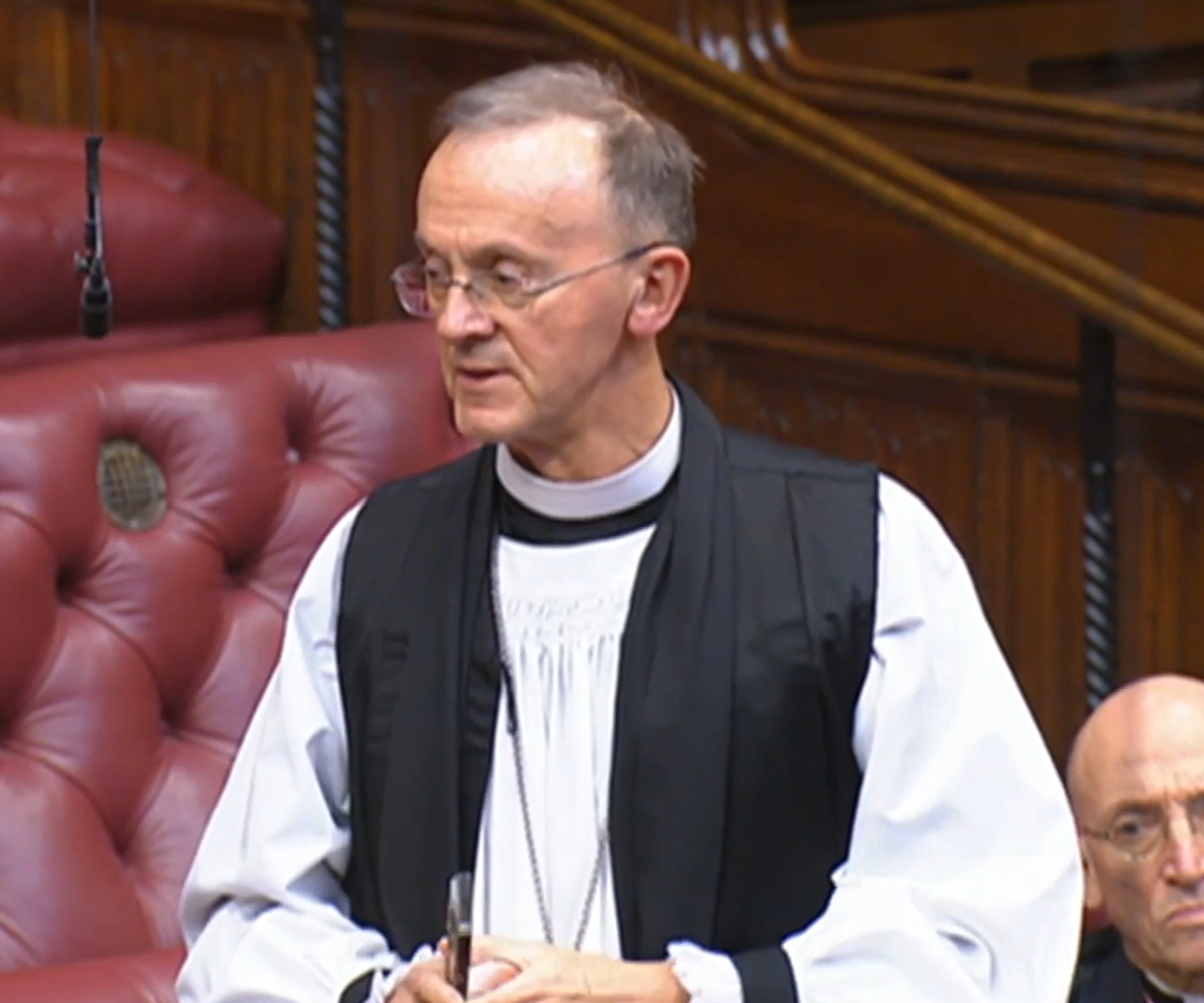
The Lord Bishop of Worcester: My Lords, I join others in welcoming the Ministers to the Front Bench and begin this valedictory speech by saying what a privilege it has been to serve in your Lordships’ House for the last 12 years. I thank all noble Lords and staff on the estate for all they do and their hard work.
After my maiden speech, a fellow Peer asked me how it had gone. “Oh, they were very nice and kind”, I responded. “Yes”, he retorted; “I have never known a place where courtesy is used as such an effective weapon”. I have experienced much unweaponised courtesy and civility here. I have consistently encountered humanity at its best, and I thank your Lordships, whatever their political affiliation, for their impressive devotion to the common good.
In this final intervention, I will concentrate my brief remarks on development issues, which have been a passion of mine throughout my adult life. While I recognise the imperative for defence spending and the need to be ready for war, I hope that the Government will pay equal attention to development, which is an indispensable contributor to peace and human flourishing.
I welcome the Government’s stated commitment to international development. I note that the manifesto spoke of a new mission statement for international development
“to create a world free from poverty on a liveable planet”.
I applaud this and know that all on these Benches will want to work with the new Government in delivering that mission.
The manifesto also stated:
“Government is at its best when working in partnership with business, trade unions, civil society, faith groups, and communities”.
I observe, partly as a result of my first-hand experience in Africa, the Indian subcontinent and South America, that there is scope for much better partnerships with Church and Church-related networks internationally, especially in the field of humanitarian relief and poverty alleviation. Developing the potential of such partnerships, as the most reverend Primate the Archbishop of Canterbury reminded us earlier, is dependent on the Government achieving a religiously literate international development policy and awareness of the role that transnational religious actors play in international affairs.
This is especially true when it comes to the Government’s plans to publish a new strategy for Africa. An Africa strategy that does not recognise the importance of faith and religion would be short-sighted in the extreme. I am delighted by the appointment of the noble Lord, Lord Collins, to his new post as Minister for Africa, which I imagine he will take very seriously indeed.
The international situation with respect to debt is dire. As Christian Aid highlighted recently in its report, Between Life and Debt, 32 African countries spend more in paying external debts than on healthcare, and 25 spend more on external debts than on education. It is clear that, without addressing today’s debt crisis, lower-income countries will not deal with the impacts of the climate crisis or have any hope of meeting the sustainable development goals.
The UK Government are well placed to play a significant part in addressing this crisis, because the majority of external debts owed to private creditors by countries in debt distress are governed by English law. I therefore welcome the manifesto pledge on tackling unsustainable debt. To put this pledge into action, I suggest that the new Government could commit to UK legislation to incentivise private creditors to participate fully in multilateral debt relief initiatives. Coming at no cost to the taxpayer, this would be a practical and realistic step that could be taken quickly to unlock the impasse in global debt relief and release serious resources.
I would love to see the new Government return to spending 0.7% of GNI on development as soon as possible, but in the meantime I implore the Government to ensure that aid is spent in lower-income countries, not in the UK. At present, more than half of UK bilateral aid is spent in the UK, mostly on asylum seekers, which is surely not an appropriate use of the aid budget. I also implore the Government to ensure that aid is refocused squarely on tackling poverty and its causes. That would include investing in the prevention of humanitarian crises and putting resources in the hands of local organisations.
I note that the Foreign Secretary has spoken often of the need for the UK to become a leader in development by adopting a model that emphasises trading with other countries to build long-term win-win partnerships, rather than following an outdated model of patronage. I agree. Such actions are in our own interest, as well as that of other countries. As a Christian, I believe that they are also a moral imperative. Jesus tells us to love our neighbour as ourselves, implying that it is in loving our neighbour, wherever they may be in our global village, that we properly love ourselves. That insight has always been at the heart of all that is best in British values. I pray that it may remain so. As I sit down, I offer the assurance of my prayers for your Lordships’ House.
Extracts from the speeches that followed:
Lord Houghton of Richmond (CB): My Lords, it might be judged somewhat risky for a general to follow the valedictory speech of a Bishop. Be reassured: right reverend Prelate the Bishop of Worcester is the cousin of the late Field Marshal Lord Peter Inge, who was a Green Howard, as is my noble friend Lord Dannatt and—you guessed it—as am I. It is truly remarkable that a single county regiment can claim three Members of this House and, incidentally, three Constables of the Tower at the Tower of London. We always knew that we had influence in very high places, and John has a special place in our hearts.
Bishop John has been a remarkable servant of this House and wider society. At Durham, he was a chemist as well as a thespian. He trained as a teacher at Keble, Oxford. Dangerously, he has a degree in systemic theology and is a doctor of philosophy. He was ordained at Chichester and became the chaplain at Harrow. He is one of the longest-serving diocesan bishops in the Church of England. He is affectionately known for his great sense of humour and his sartorial dress: a fascination with Edwardian frock coats, episcopal toppers and Panama hats—sometimes other people’s. He has a passion for people, cycling and international affairs.
As he said, he has served the House for the last 12 years, speaking on international development, the childcare system, hospices, schools, assisted suicide, migration, asylum and much else. A few short words cannot begin to do justice to a remarkable man, but I know that the House will join me in thanking him for his service and wishing him well for the future.
Lord Oates (LD): The noble Baroness, Lady Anderson, set out many of the foreign policy and development challenges that face the new Government. I shall highlight a few in particular. First, there is the vicious cycle of conflict and hunger that is bringing misery to millions in the DRC, Gaza, Sudan and many other countries. Malnutrition is a critical issue. It is responsible for the deaths of nearly 2 million children every year and it leaves those who survive with impaired cognitive and physical development, robbing individuals of opportunity and undermining the capacity of economies to develop and lift people out of poverty.
Secondly, as the right reverend Prelate the Bishop of Worcester highlighted in his speech, unsustainable debt servicing is now a major issue that is destabilising key strategic partners such as Kenya, and many other countries besides. It is constraining their ability to meet their development goals and raise up their populations.
Thirdly, climate impacts are exacerbating many challenges faced by low-income and middle-income countries, further threatening food security and impacting health as malaria, dengue and neglected tropical diseases become more widespread and resistant, as well as causing more extreme weather events, with hugely destructive consequences to developing economies.
Lord Purvis of Tweed (LD): On development, we have raised concerns over recent years about the whiplash-inducing policy-making and the changes to many of the policies, but the reduction in our reputation around the world, particularly in the global South—as the noble Lord, Lord Kerr, indicated, and which my noble friends Lord Oates and Lord Teverson spoke to—has had strategic consequences. If the Government’s intention is that we will have a foreign policy that will be more reliable, dependable and predictable, we will support that; in fact, we will work with them to bring that about. At the heart of this must be the immediate restoration of our 0.7% legal commitment for ODA, including a 15% share of that on education, and a restoration of funding for women and girls and for water and sanitary health. We should return to the all-party consensus of meeting 0.7% and enshrine it in the legislation, not just a Labour-Conservative consensus of reaching it only when fiscal circumstances allow. Surely the United Kingdom, as one of the richest countries in the world, should not be a country whose response to some of the worst famines in Africa for 30 years is that we will restore our support for famine relief when our fiscal circumstances allow. This is a political choice, not a fiscal one.
I agree with the valedictory contribution of the right reverend Prelate the Bishop of Worcester. Never again should this country, as it did last year, spend more overseas aid in the UK on a failed immigration policy than abroad in combating and preventing migration in the first place.
To conclude, we need to restore our reputation, and I wish the Government well for it. There are a couple of practical things that we could do. The first, which was not mentioned in the Minister’s opening speech, is to give full-hearted support for the delivery of the sustainable development goals. This Government will preside over the 10th anniversary of the SDGs; ensuring that they are as on track as possible will send the best signal possible. We should also return to an independent development department and have clear structures when it comes to delivering development. Much of this debate has been about the means of conduct in warfare in the 21st century, but we all know that it is not solely on the battlefield. It is also in the digital cloud, in misinformation and disinformation, and, yes, in the integrity of those who say they believe in rules. As my noble friend Lord Oates said, we must adhere to them ourselves.
Lord Coaker (Lab, MoD): I will also just say to the right reverend Prelate the Bishop of Worcester, who made his valedictory speech, that the contributions he has made have been welcomed by all in your Lordships’ House. I wish him well in whatever comes. In his contribution—and a number of other noble Lords mentioned this, including the noble Lord, Lord Purvis—he mentioned the importance of spending 0.7% on international development. He will know, as others will, that this Government have an objective of getting back to 0.7% as soon as we fiscally can. That is the aim of this Government.
 The Church of England in Parliament
You must be logged in to post a comment.