
On 3rd September 2024, the Bishop of London spoke in a debate on the first report of the COVID-19 Enquiry, highlighting the reports findings on pre-existing health inequalities in the UK, and the significance of faith to healthcare needs:
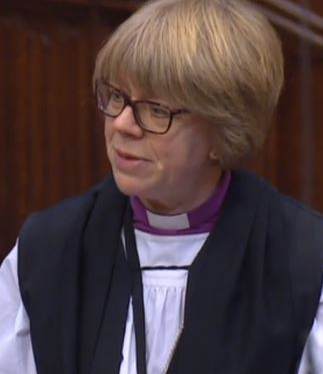
The Lord Bishop of London: My Lords, I declare my interest as set out in the register. It is good to have this opportunity to speak in this debate and to acknowledge the important recommendations of this first report from the Covid inquiry. The pandemic was a seismic event for us all, and a great tragedy for many. My thoughts and prayers go to those who have lost individuals because of the pandemic. My thanks and gratitude go to those who stepped up and beyond to care for and protect us.
I want to highlight a couple of points from the report. The first is that the clearest flaw identified in the risk assessment was the underlying health of the UK population prior to 2020, as mentioned by the noble Baroness, Lady Tyler. We are all aware of the entrenching and exposing effect that the pandemic had on health inequalities. We are all aware of the impact that non-clinical factors such as housing have on our health. We are all aware of the vast difference in healthy life expectancy depending on where we live. We are all aware that those living in more deprived areas are more clinically vulnerable on average, but spend much more time in front-line jobs.
We are an interconnected people whose health and well-being are bound up in one another’s. It is the weighty responsibility of all of us, especially in this place, to take on such an injustice with priority and focus. In the section on data, the inquiry recommends that:
“The UK government should … commission a wider range of research projects ready to commence in the event of a future pandemic,”
including to
“identify which groups of vulnerable people are hardest hit by the pandemic and why”.
The Covid-19 Bereaved Families for Justice spokesman responded to the publication of this report by saying that we must
“challenge, address and improve inequalities”
and not just understand
“the effects of these failures”.
In fact, I wonder whether we have really and completely understood the impact. We were all affected, but we were not equally affected. At the height of the virus, the Bangladeshi population had a death rate around five times higher than the white British population. The rate in the Pakistani population was around three times higher and in the black African population it was twice as high. But even these statistics do not communicate the extent of the damage that the virus caused to specific communities. Between March 2020 and February 2021, the Church End area in Brent lost 48 people. The damage done to individual communities was, in some cases, very severe. What action are the Government taking to address the widening health inequalities in our communities, not just for future pandemics but for now?
There are questions I believe we need to ask about how these devastating events have impacted the trust that those communities have in the health service, local government services and the Government. In 2021, I did a piece of work examining the role that faith communities played during the pandemic and heard their stories and experiences. Many shared stories of loss and resourcefulness, but they also shared stories of culturally incompetent care. This included the story of a Sikh man in Southall, who had had a stroke and was unable to speak, who had his moustache and beard cut without obtaining the permission or seeking the consent of his family. This was deeply offensive and after investigation it was found there was no medical reason for it to have occurred. We heard stories of distrust of the health service and a lack of understanding from statutory bodies of the provision for their communities that faith groups had held for generations. They said:
“There was a lack of cultural knowledge about how a burial for the Muslim community happens so we did it ourselves. We raised money so people could die with dignity”.
During the pandemic, faith leaders were rightly identified as important partners, and there are fantastic accounts of successful vaccination rollouts and health campaigns supported by them. However, that engagement has not been sustained. Forming relationships in a moment of crisis is not the way that resilient and interconnected communities are built. I have said many times in this place that, if we are to make a serious and sustained effort to tackle health inequalities, faith groups must be involved. I was encouraged to hear the words of the noble Lord, Lord Evans, about including diverse views, which I would see as also including faith groups.
Areas of high deprivation often have a higher level of faith observance. A person’s faith is also significant to their healthcare needs. Because of these things, systematic engagement with faith communities at a local, regional and strategic level is vital. This both ensures that the PLUS target populations are prioritised and makes sure that appropriate healthcare is offered to those with faith-based requirements. In addition, the extraordinary effort that faith groups gave to supporting their communities during the pandemic and continue to give should be recognised for the benefit not just to their communities but to us all. What progress are the Government making to engage with faith groups not just in the moment of crisis but over the long term?
This report should inform not just the earmarked actions that we take to prepare for the next pandemic but our approach to other areas of life and health. Our collective health will be undermined if these entrenched inequalities persist and will make us all the more vulnerable to future health threats. I urge the Government to consider carefully how they respond to this report to improve the health of those communities which bore the brunt of the Covid-19 pandemic and to undertake a serious reform of social care. This has never been more urgent.
Extracts from the speeches that followed:
Baroness Coussins (CB): First, as the report acknowledges—and as has been flagged up already today by the right reverend Prelate the Bishop of London—people from some ethnic minority groups had a significantly higher risk of being infected by Covid-19 and dying from it. There is evidence to show that the absence or delay of provision of public health messaging in languages other than English may have been a contributory factor to this. The 2023 report by the Race Equality Foundation, UCL and Doctors of the World stated that black and minority ethnic groups after two years were still three to five times more likely than white British adults to be unvaccinated and that the lack of targeted outreach and promotion contributed to this unequal take-up.
Back in October 2020, the Government’s own quarterly report on Covid inequalities talked of improving public health communication for the so-called hard-to-reach groups, including people from ethnic minority backgrounds, but, strangely, also included a footnote that said:
“Translation into foreign languages is discouraged except in extraordinary circumstances because it conflicts with the government’s approach to integration”.
There was also a significant disparity between the Government’s response to, and preparedness for, the needs of British Sign Language users, as compared with the needs of people who speak little or no English. The former are covered by the AIS, the accessible information standard, but the latter are not. The APPG agreed with Healthwatch England that the AIS should be amended as part of better preparedness and inclusiveness in future emergency responses.
Baroness Neville-Rolfe (Con): There is also less than I expected in the report on the local aspects. I agree with the Minister in her admiration for the many volunteers who put communities ahead of themselves. This was my own experience in my home village of Chilmark. There were many heroes and a terrific role was played by local people, volunteers and local and health authorities of various kinds. Faith groups, mentioned by the right reverend Prelate the Bishop of London, were also important, although personally I was very saddened by the closure of churches during the first lockdown. The noble Baroness, Lady Tyler, also made some useful points about the importance of such different bodies, both in a responsive and preventive capacity, in preparing for future pandemics. My conclusion from reading the report, and from that discussion, is that the inquiry model proposed for the future is too centralised.
Baroness Twycross (Lab, DCMS): The health impacts of the Covid-19 pandemic cannot be consigned to the past. Some people in this country are still living with the effects of the virus through long Covid, a condition that one of my sisters has, or still need to shield as they have a higher risk of illness.
A number of noble Lords, including my noble friend Lord Reid and the right reverend Prelate the Bishop of London, highlighted inequalities and the inequalities outcome. I recognise the right reverend Prelate’s concerns about the issues around how death and funerals were dealt with, and the pain and distress caused by the lack of appropriate treatment of the deceased. The Government would be keen to engage with community and faith groups in the resilience review so that we can get this and other things right in future.
 The Church of England in Parliament
You must be logged in to post a comment.