
The Bishop of St Albans spoke in a debate on the second reading of the Holocaust Memorial Bill on 4th September 2024, supporting the memorialisation of the holocaust but opposing the proposed site for the memorial, citing concerns over security and the removal of a green space in Westminster if the memorial were to be built in Victoria Tower Gardens:
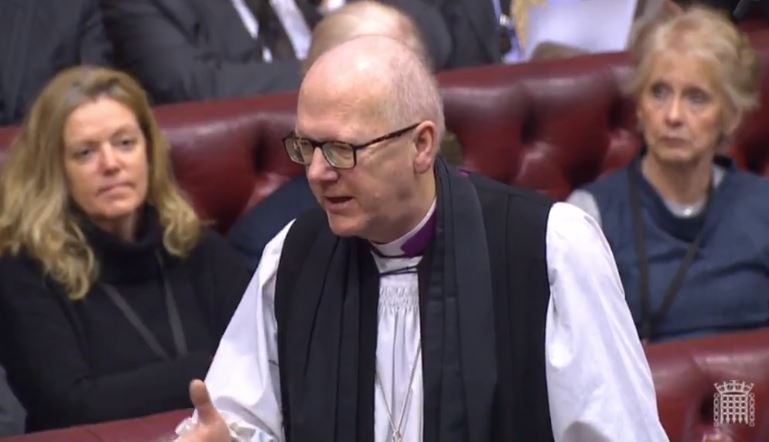
The Lord Bishop of St Albans: My Lords, I rise with a certain reticence to speak, partly because of my own lack of experience of family members or others being involved in the Holocaust. I am aware that many Members of this House will have personal reasons why this is so raw and important. I underline that I am not trying to speak on behalf of the Church of England or the Lords spiritual. We hold a number of differing views on the Bill.
It hardly needs repeating, but I personally know of nobody who opposes the Bill because they are against the concept of having a prominent Holocaust memorial in this nation’s capital. As someone who has visited a significant number of Holocaust memorials in other parts of the world and other capital cities, I am well aware of their importance and how moving they can be.
I agree with much of what the Minister said in his assessment of remembering the horrors of what happened and the need to do everything we can to make sure that a holocaust can never happen again, not least because so few Holocaust survivors are still with us and because of the strategic importance of learning about the Holocaust—especially now, given the ongoing scourge of anti-Semitism. It has been deeply saddening and distressing to read of the increase in anti-Semitic incidents this year, and of some of the hate-filled violence in riots across the country this summer. So it is even more urgent for us to find a way to address the division and prejudices that are damaging our communities, and we need to do all we can to highlight the great evil of these things when they happen.
It is of course deeply regrettable that the establishment of a new Holocaust memorial in London has been so long delayed, but I do not believe that rushing things through without proper public consultation is the right answer. Having said that, I do not support the proposed site of the memorial in Victoria Tower Gardens and the removal of the protections conferred by the 1900 Act that the Bill seeks to enact. Surely it is unnecessary to disrupt and decimate one of the few peaceful public green spaces in Westminster, particularly for residents for whom this is their main neighbourhood park and who have a right to access green space. I have been contacted by more than one member of the Buxton family—a very old Hertfordshire family whose forebear is commemorated in the Buxton memorial—who is deeply concerned about this.
I underline what the noble Earl, Lord Effingham, said about the need for His Majesty’s Government to be absolutely clear about how much of this space will be taken up by the new memorial. We are told it is 7.5%, but this has been contested by the London Historic Parks & Gardens Trust, which claims that it is 20.7% of the total area of the gardens. I cannot see how this cannot be resolved, and we ought to be clear about what it involves.
There are further concerns, which I am sure my noble colleagues will outline in more detail and more persuasively than I could possibly hope to. There are security issues and increased costs, as well as the abandonment of many of the original recommendations for an educational centre, which came from the Prime Minister’s Holocaust Commission in 2015, simply due to space constraints. I note that 18 petitions have been submitted to the Lords Select Committee for the Bill, and I will follow the consideration of these closely after today’s debate. It is for the reason I have outlined here that I am minded to support the amendment from the noble Baroness, Lady Deech.
It seems to me that the values guiding both sides of this debate are in fact rather closely aligned—an interest in the public good; public education and access for all; and a belief in the value of preservation of, on the one hand, our collective memory and, on the other, a vital shared green space at the heart of this city.
Extracts from the speeches that followed:
Lord Cameron of Chipping Norton (Con):I announced the Holocaust Commission back in September 2013. It was multifaith, with teams of experts, and one of the biggest ever gatherings of Holocaust survivors. It was also, of course, thoroughly cross-party—anything that can bring together Ed Balls and Michael Gove is worthy of note. It was a genuine attempt to look at this, and it was clear. It did not say that the existing memorials are sufficient. It did not say that the current state of Holocaust education was good enough. It did not say that we could put this thing somewhere else in London. It said that there is real power in bringing together the monument and the education, and having it at the heart of our democracy. I want unashamedly to put my cards on the table and say that I think this is the right idea, in the right place and at the right time.
The right reverend Prelate said that there was a danger of rushing. With the greatest respect, I think that 11 years is not rushing. Indeed, often people wonder in this country whether we are capable of making decisions and building things any more. I hope that we can. I totally respect those who take a different view, but I want to say that I think this is the right place, the right time and the right idea, and I hope we can make it happen.
Lord Lee of Trafford (LD): In my judgment, and quoting the right reverend Prelate the Bishop of St Albans, the site, post any construction, will be “decimated”. I suggest that we shelve the idea of putting this memorial in the Victoria Tower Garden site. A new site, or the Imperial War Museum, which already has well-regarded Holocaust galleries, would surely be much more appropriate. The noble Lord, Lord Strathclyde, mentioned a number of places where one could perhaps have a memorial also associated with a new Jewish museum—which was referred to by the noble Baroness, Lady Deech.
Lord Khan of Burnley (Lab): As this is a hybrid Bill, there has also been an opportunity for those who are directly and privately affected to petition against it, and for those petitions to be considered by a Select Committee, both in the House of Lords and in the other place. In the Commons, the Select Committee heard eight petitions and decided not to amend the Bill. Eighteen petitions have been received in the Lords and will be referred to a Select Committee for consideration following this debate. Those opposed to the planned Holocaust memorial and learning centre have had every opportunity to make their comments known.
Moving on to specific concerns that were raised, the noble Baronesses, Lady Noakes and Lady Bottomley, the noble Lord, Lord Carlile, the right reverend Prelate the Bishop of St Albans, the noble Viscount, Lord Craigavon, the noble Lords, Lord Howarth, Lord Sandhurst, Lord Strathcarron and Lord Sassoon all talked about the security risk, as did the Opposition Benches. The Holocaust memorial and learning centre will have security arrangements similar to many other public buildings in Westminster. We are working with security experts, the National Protective Security Authority and the Metropolitan Police to ensure that the site has the necessary level of security measures.
Based on this expert advice, physical security measures will be incorporated into the memorial and landscaping which will meet the assessed threat. Expert advice has also informed our proposed operational procedures, which will be reviewed and updated routinely in response to current threat assessment.
(…)
A number of noble Lords, including the noble Lord, Lord Mann, and the right reverend Prelate the Bishop of St Albans, talked about work in relation to the restoration and renewal programme team. The team met regularly to share information and co-ordinate plans to reduce potential impacts. The memorial site is at the southern end of the gardens and need not prevent the use of the gardens by the restoration and renewal programme. Subject to the Bill being passed and obtaining planning consent, we expect construction in 2025, as mentioned. Parliamentary works to the Victoria Tower are expected to start then, and more comprehensive restoration and renewal works are subject to the approval of Parliament and costed proposals in 2025.
 The Church of England in Parliament
You must be logged in to post a comment.