
The Bishop of Sheffield spoke in a debate on the Infected Blood Inquiry on 15th October 2024, querying whether the government would establish a wide reaching duty of candour and the need to tackle a defensive culture in the public sector:
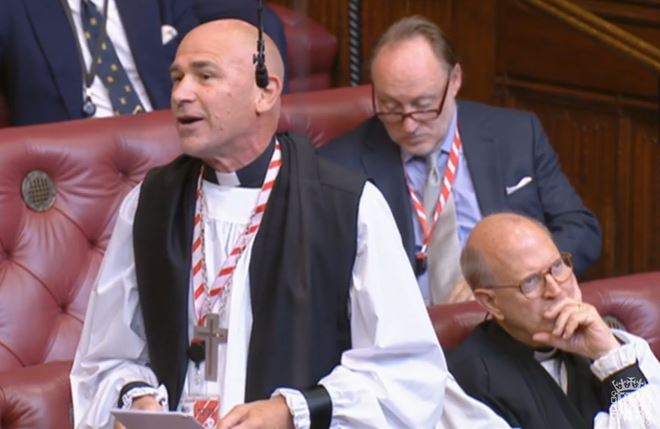
The Lord Bishop of Sheffield: My Lords, I am grateful to the Minister for scheduling this vital debate and for this opportunity to contribute to it. I follow other noble Lords in expressing my gratitude to Sir Brian for his comprehensive report and my deep sorrow at the distress suffered by the infected and affected alike, with many cases ongoing.
I will touch briefly on three matters: candour, culture and compensation. The first is the duty of candour. As the noble Lord just said, it is sadly true that this scandal is part of a regrettable pattern, and I do not believe that we can yet be confident that the pattern is historic. I welcome the prospect of a law placing a duty of candour on public servants and authorities, but I hope that this law when introduced will be as ambitious as possible and place as much responsibility as possible on every citizen—not only those in the public sector—to be candid about failure, especially over a duty of care. Have the Government considered the widest possible application of a duty of candour?
The second is the issue of culture. The inquiry report identifies the need to address
“the unacceptable defensive culture prevalent across too much of the public sector”.
It recommends that the Government must be proactive in calling inquiries, saying that never again must campaigners have to wait for decades for an official, independent investigation to take place. But, as the Bishop of Sheffield, I am bound to note that an overly defensive culture has thus far inhibited a comprehensive inquiry into events at Orgreave in 1984. If the Government aspire to be proactive in calling for inquiries, there is an opportunity right there. Would the Minister be prepared to comment?
The third matter is compensation. After having waited decades for justice, the infected and the affected are, in many cases, still being made to wait for the full implementation of the compensation scheme. This is just wrong. When an inquiry is published as damning as this one, it is surely an overriding priority for compensation to be generous and prompt, and we are failing in that regard right now. It is a legal maxim that justice delayed is justice denied; it presumably follows that compensation delayed is compensation denied. Will the Minister please assure the House that due compensation will be paid without significant further delay?
Extracts from the speeches that followed:
Baroness Bennet of Manor Castle (GP): We have covered a huge amount of ground in what has been a harrowing debate, so I will make two final points. First, many references have been made—I particularly pick up the point made by the right reverend Prelate the Bishop of Sheffield—to the Orgreave inquiry. Where is it? I repeat that question to the Minister. Secondly, when we think about the compensation, we have to think, in this context, about the Windrush scandal and the second scandal of how Windrush compensation has simply not worked out.
I do not think anyone has yet mentioned this, but the parallel has to be drawn with the issues raised in the so-called Cumberlege report, First Do No Harm—vaginal mesh, sodium valproate and Primodos. These were significantly after the events of the infected blood scandal; however, the same things kept happening again and again, and we have to highlight that.
Baroness Twycross (Lab): The noble Lord, Lord Bichard, and the right reverend Prelate the Bishop of Sheffield asked what will be the scope of the Bill on the duty of candour—as noted, it is otherwise known as the Hillsborough Bill—and what the Government consider a wide application for how it would be introduced. It will be introduced to Parliament before the next anniversary of the Hillsborough disaster. Following the Prime Minister’s announcement, its scope and policy detail continue to be worked through, and the Government will provide more detail at the end of the year. The Bill will set out the duties on public authorities and public servants, including any consequences for breaches, and that will include criminal offences.
(…)
The right reverend Prelate the Bishop of Sheffield and a number of other noble Lords, including my noble friend Lady Keeley, raised concerns about the timescale for compensation. I am conscious that the community wants further assurance on this. The Government expect the Infected Blood Compensation Authority to begin making payments under the infected blood compensation scheme to people who were infected by the end of this year. Payments to the affected are expected to begin in 2025 following a second set of regulations.
 The Church of England in Parliament
You must be logged in to post a comment.