
The Bishop of Sheffield spoke in a debate commemorating the 40th anniversary of the 1984 famine in Ethiopia, stressing the need to act to prevent famines and similar crises before they occur:
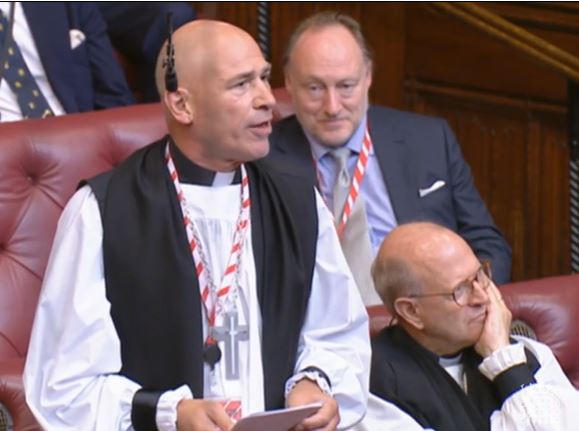
The Lord Bishop of Sheffield: My Lords, I too am grateful to the noble Baroness, Lady Featherstone, for securing this important debate and for the opportunity to contribute to it.
I remember 1984 very vividly. That summer, I graduated from university and got married, and early that autumn, I began training for ordained ministry. I have clear memories of the powerful BBC news coverage of the Ethiopian famine—which, as the noble Baroness reminded us, was broadcast exactly 40 years ago this month—and of the Band Aid Christmas single that year and the Live Aid concerts of 1985. Those events were all quite formative for me.
In retrospect, our crowd-sourced responses to the famine in 1984 were naive, not least in treating the famine as simply a natural disaster and in failing to take into account the human factors that contributed to it, including both the global climate emergency, or global warming as we were just beginning to call it then, and the more local political and military practices. Although we may have learned a good deal in the past 40 years, and although we may be significantly more sophisticated now in our analysis of the causes of famine in that part of the world, it is evident that we are barely more effective at responding to it, let alone at preventing it. Both those aims are urgent: we need to respond effectively to the current crisis, and we need to improve our capacity to anticipate and therefore to forestall future famines.
The current humanitarian crisis in Ethiopia is again drastic, with climate shocks, including flooding as well as drought, compounded by widespread armed conflict inside the country and on its borders. Christian Aid estimates that at least 21 million people in the country need humanitarian assistance right now, and that is of course nearer to three times than to twice the number affected in 1984.
We also need to become better at anticipatory action: reducing the risk of recurring droughts and floods in future years. If solutions were easy, we would have found them by now, but there are steps that can be taken both at once and in the medium to longer term. I tentatively offer two of each. For the short term, first, I urge the Government to ensure that next year the overseas development aid budget really is spent overseas and on development, and not any longer on in-donor refugee costs. Secondly, I urge the Government to take advantage of the UK’s influence, as current co-chair of the Green Climate Fund, to focus climate finance on this region. For the medium term to longer term, I trust that the Government really will, as soon as fiscal conditions allow, and as other Lords have already urged, restore our ODA budget to the 0.7% of gross national income to which we committed ourselves in 2015.
Finally, we on these Benches welcome the Government’s manifesto commitment to tackle unsustainable international debts. We ask that this agenda be taken forward with urgency, and with due priority given to those parts of the world, including Ethiopia, where the humanitarian need is greatest. I would be grateful to know what assessment the Government have made, or intend to make, of these potential positive steps.
Extracts from the speeches that followed:
Lord Alton of Liverpool (CB): My Lords, the whole House is indebted to the noble Baroness, Lady Featherstone, for initiating today’s important debate. During her remarks, she referred to the consequences of indebtedness on development—a point taken up by the right reverend Prelate the Bishop of Sheffield. Forty years ago, on 22 November 1984, in the House of Commons, I challenged the then Government on their policy on Ethiopia, stressing that Ethiopia was still paying back more in debt than it was receiving in aid.
As the noble Baroness rightly remarked, in comments that were echoed very movingly by her friend the noble Lord, Lord Oates, the catastrophe in Ethiopia was brought into our homes by the extraordinary journalism of the BBC’s Michael Buerk. His devastating first hand accounts roused our consciences and indignation —a point to which I will return in my comments.
I will follow what was said by the noble Lord, Lord Browne of Ladyton, and roll the clock forward from the two years of war in Tigray between 2020 and 2022 to the situation there now. Professor Jan Nyssen of Ghent University, a leading European authority on the war, put the number of war fatalities at between 300,000 and 500,000 people, including 50,000 to 100,000 from fighting, 150,000 to 200,000 due to famine and 100,000 from a lack of medical attention. To be clear, this was manmade, but no men have been brought to justice.
 The Church of England in Parliament
You must be logged in to post a comment.