
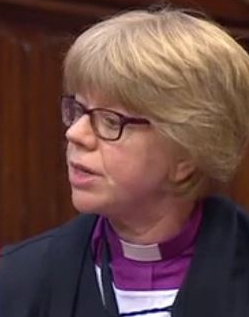
On 24th October 2024, the Bishop of London took part in a debate on state funding of hospices, emphasising that more funding is needed to prioritise and support hospices, palliative care and palliative care research:
The Lord Bishop of London: My Lords, I too thank the noble Lord, Lord Farmer, for introducing this debate. I declare my interests as outlined in register, particularly that I am patron of Hospiscare in Exeter.
I suspect there has never been a more important moment in time to discuss the funding of the hospice sector, which is facing extreme challenges. It is also important to remember that hospices deliver excellent care to a significant number of people who are dying well. However, according to Hospice UK, the sector is facing the worst financial crisis in more than 20 years.
The state provides on average only a third of hospice funding. A large proportion is found by fundraising. Those who live in affluent areas are more likely to financially support their hospices than those in deprived areas. That will have a direct impact on not only access but quality of care to those in the deprived areas.
It also entrenches the worsening inequalities in health, as highlighted by the noble Lord, Lord Farmer, not just between regions but also within them. In addition, the funding given to ICBs for palliative and end-of-life care is highly variable, and sometimes disproportionate for the demographics of their population. In the absence of any long-term plan, I echo the request of the noble Lord, Lord Farmer, and ask the Minister what support the Government are giving to ICBs as they make their commissioning decisions in this area.
As already indicated by the contributions made, noble Lords are aware of the introduction of the Private Member’s Bill in the other place which seeks to change the law for those who are terminally ill. How can we consider this if we do not give enough funding to hospices, palliative care and palliative care research, so that people dying receive the best care—the care that they need to make life worth living and, in the words of Dame Cicely Saunders, to live life until they die?
I hope that we are not prioritising the care of those who need it based on their contribution to our economy. This is contrary to how God values each one of us, contrary to the principles on which the NHS is founded, and contrary to human dignity. How the Government choose to prioritise palliative care matters very much. I look forward to hearing from the Minister about the Government’s plan to secure a sustainable future for hospices, palliative care and palliative care research.
Extracts from the speeches that followed:
Lord Howard of Lympne (Con): My Lords, I too congratulate my noble friend Lord Farmer on securing this debate. It is a pleasure to follow the right reverend Prelate, whose close association with and support for the hospice in Devon I know of and is widely appreciated. I declare my interest as listed in the register as vice-president of Hospice UK, which I had the privilege of chairing for eight years.
(…)
Baroness Merron (Lab, Department of Health and Social Care): The noble and right reverend Lord, Lord Sentamu, the right reverend Prelate the Bishop of London and the noble Lord, Lord Farmer, raised the issue of variation by ICB area. It is important to note that this is in part—I emphasise “in part”—dependent on what is already available in terms of services, along with local needs. Noble Lords will recall the Health and Care Act 2022, which was a key moment. I remember the noble Baroness, Lady Finlay, being very involved in getting palliative care services added to the list of services an ICB must commission in response to the needs of its local population.
(…)
I shall briefly look to the future and say to my noble friend Lady Pitkeathley, who raised the matter of research, that through the National Institute for Health and Care Research the department is investing £3 million in a new policy research unit in palliative and end-of-life care. The unit was launched at the beginning of this year and it will build evidence in this area. To respond to the right reverend Prelate the Bishop of London, it will have a specific focus on inequalities, which I very much welcome.
 The Church of England in Parliament
You must be logged in to post a comment.