
On 24th October 2024, the Bishop of St Albans took part in a debate on the impact of the climate agenda on jobs, growth and prosperity, urging the government to consult farmers in the pursuit of the climate change agenda and pledge a renewed and improved agricultural budget of at least £4 billion per year:
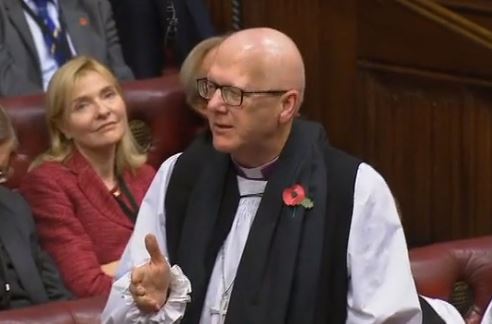
The Lord Bishop of St Albans: My Lords, I too thank the noble Lord, Lord Lilley, for securing this important debate. I am looking forward very much to the maiden speech of the noble Baroness, Lady May, who I know will bring great insight and experience to your Lordships’ House. I declare my interest as president of the Rural Coalition.
We need to take climate change extremely seriously. I commend the previous Government, and indeed some of the plans of the present Administration, for the steps they have taken and are taking. I support the plea by the noble Lord, Lord Lilley, for open and transparent costs of net zero so that we can make informed choices; that seems fundamental to all that we do in every part of our work. Other noble Lords will be able to speak in a more informed way than I can about the positive impact that net zero can have on the economy, not least in terms of jobs in new and emerging sectors such as renewable energy. It will also offset the negative economic impacts that climate change brings with it, such as droughts, pollution and ill health.
I shall limit my comments to quite a focused area: the use of land and, in particular, working with our farmers. Farmers are acutely attuned to changes in weather and therefore to the impact of climate change. They do not have a choice; their whole livelihood depends on it. Some of the increasingly extreme weather that we have seen over recent years, with record windfall and subsequent flooding alongside periods of extreme heat, has hit farmers very hard. I outlined to your Lordships’ House a few weeks ago the devastation and economic costs dealt to farmers recently in the wake of extreme flooding. I remind the House that, last winter, parts of the UK experienced double the level of the monthly rainfall totals of the period that were experienced between 1991 and 2020.
Farmers, as stewards of so much of our land, are uniquely placed to play an important role in helping to achieve His Majesty’s Government’s climate change agenda through nature recovery, sustainable food production and clean energy supply. There is a real opportunity here to have our agricultural industry set a leading example of how economic growth, food security and new energy technologies can work together as a force for good in responding to the environmental challenges we face. I urge the Minister to ensure that farmers are treated as crucial partners in pursuing the climate change agenda; that they are listened to and supported as the burden of demands made on them continues to increase.
In one of the counties in which I am privileged to serve, Hertfordshire, we have some of the most innovative and forward-looking farmers in the whole world. They are right at the cutting edge of how we are going to face the challenges of food production, food security and net zero. What they are asking for, of course, is a level playing field in the international markets and, as any future trade agreements are brokered, their concern is that they should not be disadvantaged in any way. In light of the urgent need to safeguard our environment and to make the Government’s aims for food security, energy security and net zero a reality, the Government must provide a renewed and improved agricultural budget of at least £4 billion a year, which is what the NFU has been calling for, so that farmers can play their part in what is required.
British farmers already own or host about 70% of the UK’s total solar generation capacity, whether on the rooftops of farm buildings or in solar farms. Many food producers also host on-farm wind power. They have a clear role to play in the Government’s commitment to making the UK a clean energy superpower, but it is important that this is balanced with protecting the best agricultural land for food production. It was only a couple of years ago that we saw the invasion of Ukraine having an immediate impact on the cost of food and fertilisers. It was really impacting upon us, so food security is not some optional thing; it is absolutely fundamental to us as a nation.
While rooftop installations offer an ideal platform for renewables, I urge the Government to ensure that those, along with brownfield sites, are prioritised for mounting solar farms, rather than using the most productive agricultural land, which we must protect for our food production. I seek assurances from the Minister that he will do all he can on this front to ensure that these principles are enshrined in the forthcoming land use framework.
Extract from the speeches that preceded:
Lord Lilley (Con): I hope that we can now have an honest, frank, well-informed debate comparing the costs of action with the benefits of action. I am sure that will be a point that my bishop, the right reverend Prelate the Bishop of St Albans, will make in due course since, although we may not agree on this issue, we agree on the importance of honesty. We can have an honest debate only if it is well informed and if we stop trying to convince ourselves that fairy tales are true. I beg to move.
Extracts from the speeches that folllowed:
Lord Deben (Con): I am proud of a cross-party attitude; all parties have supported this, although my noble friend Lord Lilley did not support the Climate Change Act. We have to realise that there is a difference between accepting the facts and being prepared to act on them. Action means that we do it ourselves first because, if we do not, as the Bishops’ Benches would accept, there is no point in asking people to do as you say.
(…)
Baroness McIntosh of Pickering (Con): As the right reverend Prelate the Bishop of St Albans set out, farmers have a key role to play in tackling climate change and achieving net zero. They have been the victims, particularly over the past 18 months, of the record rainfall taking large rafts of land out of production.
(…)
Lord Hunt of Kings Heath (Lab, Department for Energy Security and Net Zero): The right reverend Prelate the Bishop of St Albans and the noble Baroness, Lady McIntosh, made some telling interventions on rural issues. I take their point about farmers, food security and the need to embrace them in this agenda. We worked with the NFU on that when I was a Defra Minister many years ago, and we clearly need to carry on doing so.
 The Church of England in Parliament
You must be logged in to post a comment.