
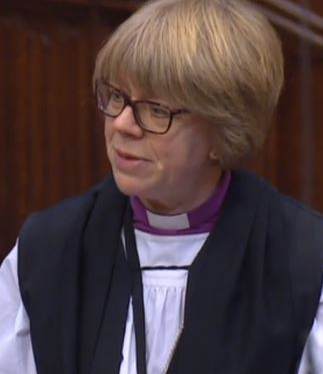
The Bishop of London spoke in the Archbishop of York’s debate on social cohesion on 6th December 2024, speaking on the impact of the COVID-19 pandemic and the effects of widespread health inequalities in the UK:
The Lord Bishop of London: My Lords, I declare my interests as set out in the register, particularly as a commissioner on the National Preparedness Commission. I am glad to be taking part in this debate today. It is a privilege to follow the noble Baroness, Lady Bottomley, and I look forward to the maiden speech of the noble Lord, Lord Sharma, who has much to offer this House. I have the privilege of being Bishop of London, and I can assure the noble Lord, Lord Lilley, that London is full of great diversity of political views. I extend an invitation to him to come and see where we wrestle with some of our Christian faith and politics.
The riots over the summer were a wake-up call to us all to prioritise community cohesion. There is much to be said about this, and I echo much of what my friend the most reverend Primate has already said. I am going to focus my remarks on two issues which are central to this topic but are particularly related to health, although they have a much wider application, and those two topics are trust and partnership.
First, on trust, as the most reverend Primate indicated, we have much to do to improve trust within the Church of England. Not least, we must ensure we have a greater survivor focus and introduce independent safeguarding and mandatory reporting. I join my friend the most reverend Primate in apologising for the shocking failures that the Makin report highlighted.
Moving wider, the pandemic was a world-changing event that impacted on all of us differently, but I am sure that everyone in your Lordships’ House was horrified by the high death rate. We know that those from ethnic communities were more likely to have caught Covid, to have been hospitalised and to have died from it. According to ONS data, the Bangladeshi population faced a death rate five times higher than the white British population. The Pakistani population’s rate was three times higher. Even within these brutal statistics, we cannot properly communicate the extreme and severe loss that some communities experienced. We know that there were unequal health outcomes before Covid, but in some ways Covid demonstrated the scale of them.
The noble and learned Baroness, Lady Hallett, reminded us in the introduction to the first report of the Covid inquiry that the state has a responsibility to protect its citizens. It is easy to see how the pandemic has damaged our communities’ trust in institutions, including the health service, and how that damage worsened during the events over the summer. We have already heard how important it is for us to celebrate and recognise our differences, and it is true that one of the greatest strengths of this nation is, in fact, our diversity, but the experiences of some receiving care with a lack of cultural competence tells us that we have a way to go. Part of this is a lack of understanding and celebration of difference for patients and staff. It is vital for us to understand our ethno-religious identities because they change our experience not just of health but of communities.
My Christian belief that we are all made in the image of God motivates me to ensure that we can do better here, but trust is key. Although having sufficient GP appointments available is important, what is more important is feeling confident that you will be listened to and understood. As we will no doubt be aware from our own communities, there were moments of brilliance throughout the pandemic in which faith groups demonstrated neighbourliness and commitment to service, even when people’s day-to-day lives were really restricted. There are lessons to be learned from their ingenuity in building support for their communities and about how to build trust out of a crisis situation. It is important that we recognise the huge amount of work carried out by faith groups while respecting the difference in values that we may have.
Partnership that utilises diversity is key to ensuring cohesion. Working for the good of a place that you live in and seeing a difference is one of the most important and fulfilling parts of our citizenship. We tend to have a greater appreciation and support for something we have helped to build, and it is good to see this encouragement being prioritised on my doorstep with the new City belonging networks established by the Lord Mayor and others across London. We saw wonderful examples of partnership working across local communities, faith groups, the NHS and voluntary and community groups where people in the midst of the pandemic worked together to provide community cohesion.
We are here to reflect on a moment of crisis over the summer, as is right. Indeed, the cumulative impact of previous moments of crisis in our nation and abroad, including serious conflict, mean that a time of fear and uncertainty, and even bereavement for some, is what they experience in the midst of their community. That makes it important that we work together. It is difficult but important work.
However, partnership and engagement with groups and people different from ourselves, particularly on the part of government, cannot be sought only during times of crisis or in reaction to a crisis. Sustained involvement that involves local communities over the long term is required to combat the short-termism of electoral cycles and funding periods. Some faith groups have been serving their communities consistently for generations. When this goes unrecognised, it is detrimental to trust. Indeed, building relationships over the long term and working in partnership are what will build resilience so that, when a crisis occurs, we are better able to cope.
We are encouraged by God in Jeremiah 29 to,
“seek the welfare of the city where I have sent you into exile, and pray to the LORD on its behalf, for in its welfare you will find your welfare”.
I hope that this will be an opportunity for us to seek the welfare of our nation, communities and those who are different from us, for it is there that we find our own welfare.
Extracts from the speeches that followed:
Baroness Fraser of Craigmaddie (Con): My experience in the healthcare and disability sectors have illustrated that there are too many areas where our society is not cohesive or well prepared. The right reverend Prelate the Bishop of London referred to the Covid inquiry module 1 report, which concluded that emergency pandemic planning
“generally failed to account sufficiently for the pre-existing health and societal inequalities and deprivation in society”,
and that there was a
“failure to engage appropriately with those who know their communities best, such as local authorities, the voluntary sector and community groups”.
Essentially, our pandemic plans were made by fit and healthy individuals who failed those with pre-existing health issues because of a lack of understanding of what services were essential to them. In my organisation, Cerebral Palsy Scotland, I see such a lack of understanding filter through everyday life, not just emergency planning. Our charity’s mission is therefore to build a stronger, more supportive community for our beneficiaries.
Baroness Berridge (Con): My Lords, as well as the local social cohesion that many noble Lords have mentioned, we need national cohesion. We need events that bring us all together, such as hosting an Olympics, a royal wedding or a Coronation. Some of the best of these events are hosted for us by the established Church.
I take note of the apology from the most reverend Primate. I am mindful of not throwing stones—I was a government Minister in the Department for Education during the pandemic—but I believe that there are more actions, some of which I will outline, that need to be taken at speed, as well as words that are needed for the victims. One has only to glance at social media to know that the actions of the right reverend Prelate the Bishop of London in her demeanour yesterday in your Lordships’ House spoke more than words to many of the victims.
I am aware that, for many, the state of the high establishment is irrelevant. Many people cannot name the archbishops and the historic resignation has passed them by. But for victims and these national moments of cohesion, the integrity of this institution matters. I note just one connection to a victims’ network related to another review by the Church of England on Soul Survivor. I also covered safeguarding while in the department and I am on the PCC of my local church.
The Earl of Effingham (Con): His Majesty’s Official Opposition are committed to fostering social cohesion, strong communities and strong local economies. Indeed, our aim is to work tirelessly and constructively with the Government to promote these ideals into real action, not just words. I will first set out where we are today on social cohesion and focus on the work that the previous Government undertook in order to make progress.
The strength of our communities and local economies is shown at its best during difficult times. I think noble Lords will all agree, without exception, that the Covid pandemic remains a powerful example of a time when communities throughout our United Kingdom came together to support each other during an incredibly challenging period. This was referenced by the most reverend Primate the Archbishop of York and the right reverend Prelate the Bishop of London. The noble Lord, Lord Bird, referred to Darning Street, and my noble friend Lord Jackson talked about the vaccine rollout.
[…]
However, we know that social cohesion can be challenged. The most reverend Primate the Archbishop of York, the right reverend Prelate the Bishop of London, and the noble Baroness, Lady Morgan, all mentioned the riots we saw this summer. The riots were entirely wrong, not to mention unlawful. There are elements in our society who fall short of the values that we aspire to, and we must join together and speak with one voice in condemning violence. Whatever the purported motivation, violence of any form, whether on our streets, in our shops or in our homes, is never acceptable and is an affront to everything that we stand for.
It is critical that we seek to understand what went wrong, not just this summer but in previous events. We must establish the root causes of these crises and address them head-on. We have to bring those who committed criminal acts to justice, while at the same time seek to heal divisions wherever they appear. The riots showed that there is clearly much work to be done to bring our society together.
Lord Khan of Burnley (Lab): In uncertain times, it is cohesion across these communities that enables us to navigate disruption with confidence. Social cohesion can provide stability when the world feels unstable. Whether responding to a crisis such as a natural disaster or navigating long-term challenges such as economic shifts, the ability to collaborate and trust one another is the foundation for progress.
In recent years, we have really seen this truth play out. During the Covid-19 pandemic, communities came together to support the vulnerable, adapt to new realities and care for one another. People volunteered, shared resources and built networks of support that transcended differences. Places of worship transformed into vaccination centres, providing vital support services. They opened their doors to serve their communities, ensuring that vaccinations were accessible to everyone, including the most vulnerable. The work during the pandemic was mentioned by the noble Lord, Lord Bird, and the right reverend Prelate the Bishop of London. I thank the noble Lord for providing such an optimistic view of the pandemic. These acts of solidarity proved that even in crisis our collective strength can overcome great challenges.
The violent disorder that followed the tragic incidents in Southport this summer showed just how fractured our social fabric can become when the flames of discord and hate are fanned. Yet there was an extraordinary response of unity and solidarity across the country. Faith leaders, local organisations and residents came together to host dialogues and provide support to those affected.
 The Church of England in Parliament
You must be logged in to post a comment.