
The Bishop of Manchester’s private members bill, the Universal Credit (Standard Allowance Entitlement of Care Leavers) Bill, had its second reading on 17th January 2025:
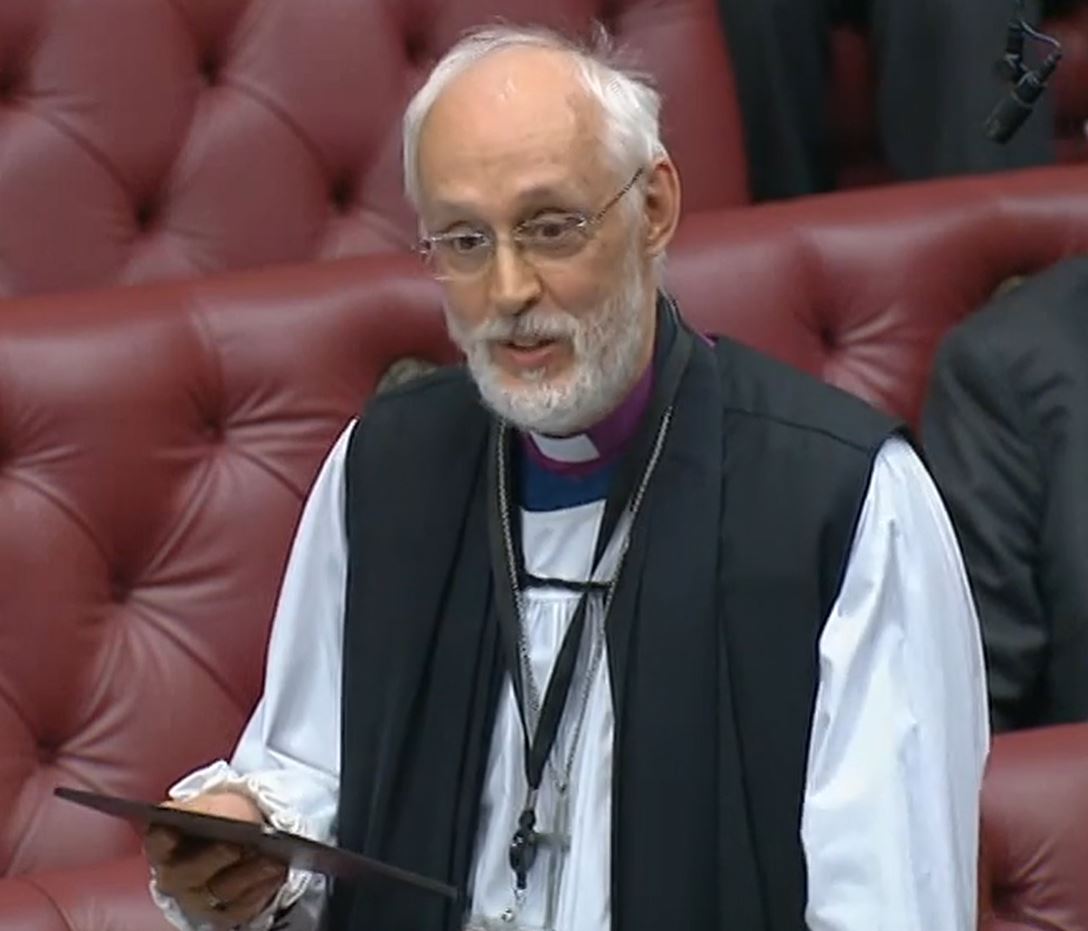
The Lord Bishop of Manchester: My Lords, care leavers under the age of 25 who are claiming universal credit receive the same rate as their peers, who are far more likely to be able to access support from their parents. That means that young people under 25 receive £81.77 less in universal credit per month compared to those over 25—a 21% reduction. This Bill would complement proposals by providing increased financial support for care leavers currently living on the lowest incomes. It would mean that care leavers claiming universal credit would see their monthly payment increase to a total of £393.45. That monthly figure is not dissimilar to the daily allowance that Members of your Lordships’ House can claim; it is not a huge sum to live on.
I thank those who have made time to participate in this debate on a Friday—not least the Minister and shadow Minister, with whom we had constructive conversations in advance—and the group of care-experienced young people, facilitated by the charity Become, who were very generous with their time and shared some extremely perceptive insights with me and my right reverend friend the Bishop of Derby about the differences that this policy change would make to their lives. They have agreed that we can name them in our speeches today.
There are over 92,000 care leavers in England under the age of 25. This cohort of young adults is in particular need of further support, including through the social security system. This Bill would equalise the standard allowance for universal credit for care leavers under the age of 25, but that is just one of a number of steps that could be made to ensure that young care leavers receive the support they need to flourish. I hope that, in this debate, there will be an opportunity for noble Lords to explore those, and perhaps other, steps and for us to commit ourselves to supporting young adults leaving care.
I will set out the problem. Many of the young people we talked to last week spoke about the additional support that they would have benefited from, particularly leading up to the age of 18. Research shows over and again that being in care is one of the key adverse childhood experiences that can exacerbate problems in later life. You often go into care because of other things that are on that list of key adverse childhood experiences.
No matter how well the state has performed its role as a corporate parent in those formative years—whether through foster parents or a children’s home—young care leavers are still likely to have had significant adverse experiences, and so they merit a higher level of support as they enter those early years of adulthood.
At the same time, we know—many of us have personal experience of this—that financial dependence on older relatives continues longer into adulthood than in previous decades. While around half of 24 year-olds still live with their parents, less than one-fifth of all care leavers in that 19 to 21 age group live with a parent, relative or foster carer. To put it bluntly, most young care leavers do not have the financial cushion of the “bank of mum and dad” or any equivalent. Some foster carers manage to provide an important bridging facility through the Staying Put and Staying Close schemes, but for a very large number of young care leavers there is no family home to go back to. The state has been their family, so it should accept some ongoing responsibility, which is what I am trying to achieve through this Bill.
Moreover, young care leavers are significantly more likely not to be in education, employment or training compared to the general population. In fact, they are three times more likely: 39% of care leavers aged 19 to 21 are what we call NEETs, compared with an estimated 13% of all young people in that age range. That is almost two in every five, compared with a figure of about one in eight.
The benefits system does not currently recognise the specific circumstances that have led a young person to be taken into care or recognise their unique issues that they will face throughout their life. It is vital, for example, that staff at job centres can identify care leavers and are equipped to respond to their particular needs. We have also learned from the conversations we have had that care leavers are three times more likely to be sanctioned in the benefit system than their peers. One young woman, Louise, explained that it was not a simple process. She had to work through pages and pages of information; there was no proper guide and no help if she missed an appointment because of morning sickness during her pregnancy, and job coaches who she was assigned to did not know what a care leaver was.
It is now almost a decade since the Children’s Society produced its research on sanctions for care leavers. Will the Department for Work and Pensions look into whether under-25s who present as care leavers are disproportionately affected by benefit sanctions? Some young care leavers, as a result of sanctions combined with the lower rate, are left with something closer to £200 a month—£50 a week. That cannot be enough to live on. Equalising universal credit is one small thing the state could do to perhaps exercise its extended parental role and put those young care leavers on a path that is a bit closer to that of their peers. The Bill is a way of achieving that.
There was universal agreement among the care leavers who met us last week that the under-25 rate is not sufficient to meet their needs. Many are struggling to pay bills. The Joseph Rowntree Foundation and the Trussell Trust have shown that that reduced rate means that young people are left with about half of what is needed to afford essentials such as food, water and clothing, even though under-25s are the age group at greatest risk of experiencing destitution. Chereece, who met us, noted that care leavers are much more likely to be living independently from a younger age. After gas, electric bills, TV licence and so on, she had about £60 per month—for food. As a result, she was visiting food banks to survive, could not meet up with friends and could barely even travel. Again, when you do not have family behind you, to be able to travel to meet up and maintain such relationships as you have been able to form is really important.
Some local authorities help: there is a discretionary rule that they can exempt care leavers from council tax in those early years, and the majority of local authorities do that. But, of course, they may move to a different authority. We know that many care-experienced young people are in care homes in the poorest parts of the country; if they are going to get a job—and we want them to get jobs—they have to move to somewhere where it is easier to find work. However, the local authority in their new setting is much less likely to grant them exemption from council tax than where they were officially in care. So many whom we spoke to noted that if they just had the extra 21%—the over-25 rate of universal credit—it would have given them stability, avoided debt, and helped with their mental health.
We are not creating a new principle with the Bill. The local housing allowance system already recognises that care leavers are a special case, and they get the one-bedroom rate rather than the lower shared accommodation rate. So the principle that we could treat care leavers as a special case is already there in law; the Bill simply wants to extend it to the universal credit part of the welfare system.
How much will it cost? Barnardo’s and the Children’s Society have estimated that it would cost just under £25 million per year if we considered all care leavers under the age of 25 who are not in employment, education or training. It could be even less than that, because some will be in other households where others are earning. This small investment—it is small in national terms—could have significant human and financial benefits, reducing the risk of poverty, mental ill-health, homelessness and debt. Will the Department for Work and Pensions look at the data it holds on care leavers to assess what the cost would be of raising the standard allowance for this cohort? We are going with the charity figures because those are the only figures that we have.
I note a number of measures contained within the Children’s Wellbeing and Schools Bill, currently making its way through the Commons, that would support young care leavers. Perhaps that would be another way of bringing about this change. I would welcome any conversations with noble Lords about introducing such changes when that Bill makes its way to your Lordships’ House.
In conclusion, with targeted support through the social security system as they take their first steps into adulthood, young care leavers would have a basis from which to afford essential goods, maintain contact with their support networks and enter the world of work.
The moral case for making the change is strong. These are young people for whom the state has effectively been the corporate parent, and as the corporate parent the state can support them better into adulthood, in the same way that parents—including me, I declare an interest—have done for our own children, well into adulthood.
I look forward to hearing the speeches of other noble Lords today, not least from those who were in the care system or who have experienced being fostered, formally or informally, as children themselves, and to working with Peers across this House to facilitate this important change. I beg to move.
Extracts from the speeches that followed:
Lord Davies of Brixton (Lab): It has been said today that many people come through the care system and move on to a full, successful life, but—and it is a big but—it is tougher for people who come out of the care system, and they deserve the support which is suggested by this Bill. I thank the charitable organisations for the briefings they have provided, which highlight the financial challenges faced by care leavers and certainly their entitlement to this additional support.
As the right reverend Prelate said, each year, 13,000 young people leave care in the UK, transitioning to independence far earlier than young people more generally, most of whom continue to receive some sort of support from their parents. Typically, and now increasingly, young people are living with their parents and retaining that support, unlike people from care backgrounds. Of course, the picture is mixed. Many foster parents keep supporting children even after the age of 18, but it is still more difficult for care leavers, and the system should recognise this.
As the right reverend Prelate mentioned, the Joseph Rowntree Foundation has highlighted that the current rate of universal credit provides only about half of the level of what is required for food, shelter and clothing; the justification for paying them a lower rate of universal credit just is not there. The financial penalty disproportionately impacts care leavers, many of whom, because of the greater struggles they face, depend entirely on universal credit due to the problems they have had with education and employment opportunities. As has been mentioned, the statistics from 2024 show that around two-fifths of care leavers aged 19 to 21 are not in education, employment or training, compared with 13% of children more generally. Care leavers themselves have made clear how they struggle and what a significant difference this measure would make.
Lord Palmer of Childs Hill (LD): My Lords, first, I must compliment the right reverend Prelate the Bishop of Manchester on bringing this Bill forward and eloquently supporting it in his opening speech.
I listened to my noble friend Lady Benjamin, who was right to stress the point about carers leaving for adulthood and the need for financial stability, which is not that clear. The noble Lord, Lord Davies, rightly spoke about the moral issue. We tend to deal in pounds and pence all the time, but there are morals as well; we ought to be aware of our moral responsibilities to those people in society who are less fortunate.
We on these Benches clearly support this Private Member’s Bill but, like so many Bills, it does not go far enough. That is easy to say, but we maybe start with small things and go on to more. Under-25s receive £81.77 less per month in universal credit, because the assumption is that they can call on support from family members, but do they in fact receive that support? Are they actually required to pay their very reduced universal credit into the family coffers? There are responsibilities for everybody, and the people leaving care have that problem.
What are we actually concerned about? We are concerned about people slipping through the holes in society. As has been said, this is a real moral issue. Again, I stress that we should extend the full rate of universal credit to under-25s from care—I would welcome this—but they should not receive less than the full rate anyway because people have costs. As my noble friend Lady Benjamin said, the idea is to give people both financial stability and the fact that they are paying for themselves.
The Earl of Effingham (Con): Children in care and care leavers are some of the most vulnerable people in our society. It is our collective responsibility to do more to reduce this vulnerability. Additional financial assistance is one potential way of improving outcomes, as the right reverend Prelate the Bishop of Manchester is suggesting, but other measures may be necessary.
I turn now to the wording of the Bill and the fact that parliamentary oversight is essential. It is a concern for His Majesty’s Official Opposition that statutory instruments made under powers bestowed on the Secretary of State by the Bill will not automatically be scrutinised by this House. Given the likely potential cost of implementing the provisions in the Bill, an assessment must first be conducted to ascertain the cost to the taxpayer, particularly in light of the fact that there may well be more efficient and effective ways to deliver positive outcomes to support care leavers. It is indeed possible, as mentioned by many noble Lords, that there would be positive cost benefits, such as less homelessness and less dependence on local services, but until such an assessment has actually been made, we simply do not know.
In conclusion, there are measures in place to support care leavers as they take their first steps into the world, which we hope will lead to them becoming thriving, independent adults. However, as the right reverend prelate the Bishop of Manchester correctly identifies in this Bill, there is always more that can be done. We must consider all options, as a nuanced approach may prove more beneficial for care leavers, with things such as tailored work coaches, mental health support and mentors, to name but a few.
Please allow me to end by highlighting to all noble Lords that many children in care and care leavers deserve our support and protection from those who would do them harm. I am absolutely sure that every speaker in this debate wants that 100%. When later this year we see the results of the urgent national review, announced yesterday, into the scale of grooming gangs, we very much hope that positive action will be taken to stop this happening once and for all.
Baroness Blake of Leeds (Lab): My Lords, it gives me enormous pleasure to respond on behalf of the Government. I thank the right reverend Prelate the Bishop of Manchester for introducing the Bill, for his eloquent advocacy and for taking the time for the briefing we had. I am sure that all noble Lords pass our best wishes to my noble friend Lady Sherlock for a speedy return to her rightful place on this Bench.
I will be open and honest in saying that this subject is very close to my heart. Before I became leader of Leeds City Council, I was the executive member for children’s services on Leeds City Council and moved an inherited inadequate service to one with outstanding provision. My experience in local government, across the piece at the LGA, has stood me in good stead to have some understanding and has left me with the firm conviction that everyone in all our communities has a responsibility and a role to play in addressing the challenges facing care leavers. We have heard about many of these from Members across the House, and I thank everyone for their contributions. Every partner organisation and every sector, whether it is public agencies or the private sector, have a contribution to make. We have heard some brilliant examples of where work is being done to address the challenges.
What we have heard today, and what we all know, is that the adverse experiences faced by many care leavers can have a significant impact on their ability to transition into independent living. Without meaningful support, many struggle with financial, emotional and health challenges, and are often left lonely and isolated, without support from family—the mental health issues that have been brought up by noble Lords today.
On the long-term impact, we have had quite a good discussion about the increased number of NEETs. I suggest that there is another category that we need to take account of: the not knowns, the ones for whom we do not have any data. The right reverend Prelate the Bishop of Manchester, my noble friend Lord Davies and the noble Earl, Lord Effingham, all raised issues around that.
(…) In response to the right reverend Prelate the Bishop of Manchester, statutory guidance requires local authorities to work with children in care aged 16 and 17 to develop a pathway plan setting out what support will be provided when they leave care. This includes how they will support the young person to develop their financial capability and money management skills. It is vital that care leavers, and their supporters, understand the full extent of the support available to them. This is the issue about consistency across the piece. We are working with partners in local authorities and elsewhere to raise awareness, including through factsheets to signpost how and where to access support. We know that this needs to be extensive, inclusive and continually updated.
(…) Again, I thank the right reverend Prelate the Bishop of Manchester for bringing this matter to the House. I look forward very much to the continuing discussions. The Government share his commitment to supporting care leavers. We will continue to build on existing support to ensure that care leavers, and indeed all young people, receive the support that they need to live securely and independently into adulthood. I have not had time specifically to refer to the comments about mental health issues, but we know how significant that is—and I reference the work ongoing in this area.
One thing that we know in this area of work is that we all need a relentless focus. We know that too many of our vulnerable young people have been let down in the past. I emphasise that we remain committed to working closely with care leavers and those who support them to bring about the transformation that we need in the way that support is given to them.
The Lord Bishop of Manchester: I thank all noble Lords who have taken part in this debate this afternoon, and thank them for the concern for care leavers that has come from all sides of this House.
Particularly in the past few minutes, we have heard that we do not have adequate data. Of course, waiting for data can be an excuse, so can we commit to collecting the data that we need so that we can have an informed debate—particularly as the Children’s Wellbeing and Schools Bill goes forward? That may be a place where we can continue some of these conversations beyond the scope of this Bill. We have heard also that, while lots of statutory guidance exists, its application, in the Minister’s own words, is at best patchy. The advantage of tackling this matter through universal credit is that it takes away the postcode lottery.
I know that many noble Lords are here for the next debate, so I shall be brief. In my years with the Church Commissioners, I discovered that, when you are prepared to look at things in the long term, the moral and financial cases often point in the same direction. We have heard many noble Lords speak in this debate about the moral and financial case. If we improved universal credit rates for young care leavers, we would in the long term save money. I know that I do not have to be re-elected every five years and I can take a long-term view—but please can we recognise that, if we take a moral and financial case, they can both point in the same direction, particularly when we look long term?
Today sees the retirement of the reverend canon Dr Malcolm Brown, who has led the Church of England’s public affairs work nationally for something like 18 years. I want to thank him for his support of me and my friends on these Benches over so many years. I am glad to be able to put that on the record of your Lordships’ House. I also echo the Minister in wishing the noble Baroness, Lady Sherlock, who is just as gifted in the pulpit as she is in explaining universal credit, a speedy recovery.
I finish on the words of the noble Lord, Lord Watson of Invergowrie. He said, “Would this be appropriate for my child?” With that question echoing in my heart, I beg to move.
Bill read a second time and committed to a Committee of the Whole House.
 The Church of England in Parliament
You must be logged in to post a comment.