
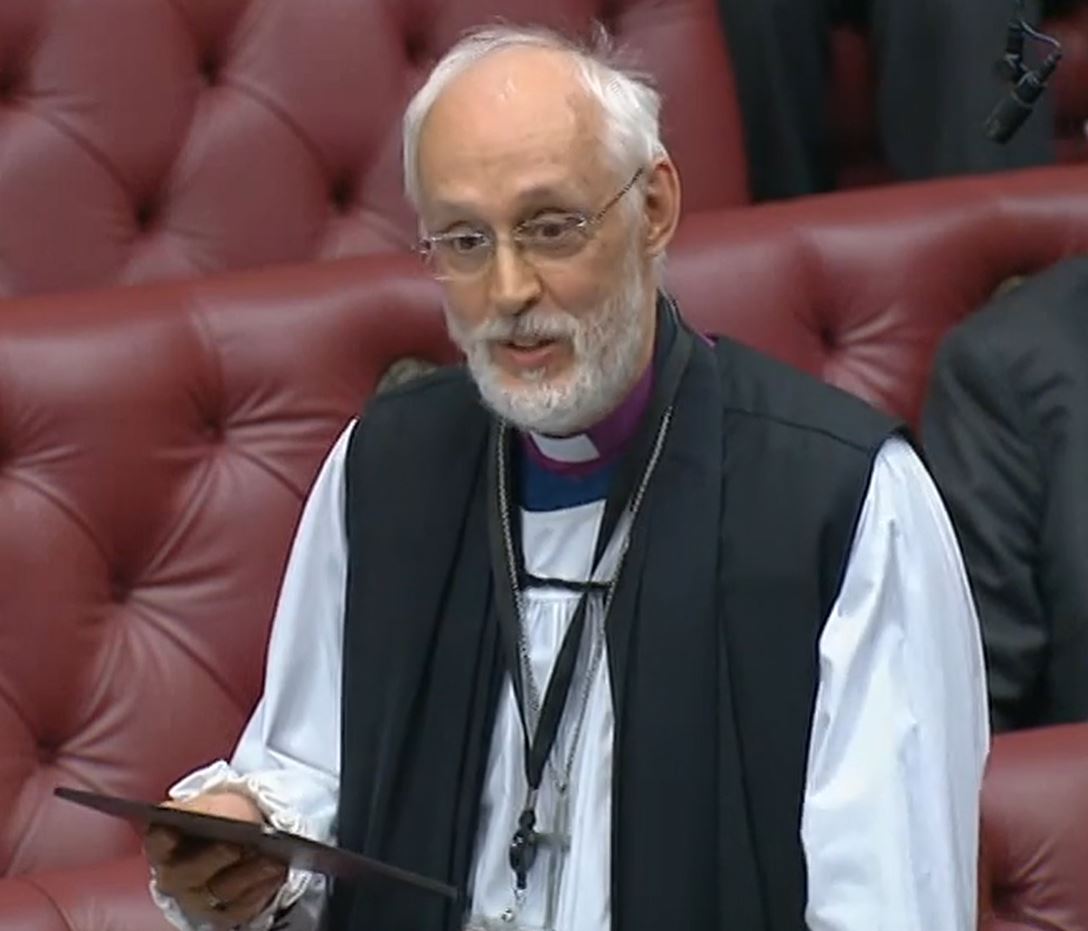
On 12th February 2025, the House of Lords debated amendments to the Terrorism (Protection of Premises) Bill. The Bishop of Manchester spoke in support of amendments to the bill tabled by Lord Murray of Blidworth aiming to provide further support for community and voluntary organisations under the bill:
The Lord Bishop of Manchester: My Lords, I support the amendments of the noble Lord, Lord Murray of Blidworth, in this group. As the Bishop of Manchester, I have got something like 400 churches and church halls in my diocese, but these amendments go rather wider than that. For places of worship, there are already some grant schemes for protecting against terrorism, given the particular threat that places of worship, especially Muslim and Jewish places of worship, have traditionally faced.
Back in my days as a vicar—25 years or more ago now—I seem to recall that, when I was trying to do good things to improve disabled access in my church, it was possible to do the work and then reclaim the VAT, which would not have been possible on other works. The principle that the Government fund by way of tax relief works that are important to the well-being of the community, to enable people to participate safely in events and activities, is well established in law. If small venues, particularly village halls, have to do physical work to premises, I urge that we find ways to defray not all but part of the cost, recognising that that shows this is something that is strongly supported by the state.
Extracts from the speeches that followed:
Lord Hanson of Flint (Lab): On Amendment 41, the noble Lord, Lord Udny-Lister, is right that local authorities will have a number of premises—swimming pools, theatres and other large venues—that might well fall in the standard or enhanced tier. I do understand that. But, again, I hope he will
accept that the responsible person will have a responsibility to put those protection measures in place, at the costs that I have indicated, mostly in time but potentially in some limited resource. Ultimately, overseeing the work of local authorities and putting those things in place is down to a responsible officer appointed by the local authority. But the overseeing of the overseeing is not the local authority’s collective role, for village halls or other organisations. That will be firmly placed within the responsibility of the Security Industry Authority.
The compliance, the qualifying premises, the scrutiny and the regulation will fall on the SIA, for which we have made additional staffing and financial provision, which I reported on Second Reading and earlier in Committee. Local authorities will have a responsibility, yes, for the areas they have a responsibility for as responsible officers. Again, I hope I can reassure the noble Lord and other colleagues such as the right reverend Prelate the Bishop of Manchester that the intention of the Bill is not to have a high level of cost for organisations such as those in Manchester that the right reverend Prelate mentioned. It is to provide a simple template of steps that can be undertaken and a responsible person knowing what those steps are and making sure that individuals within the organisation take them.
Lord Murray of Blidworth (Con): I am also grateful to the right reverend Prelate the Bishop of Manchester for supporting these amendments, and I share his sentiment that a large number of faith-based institutions that operate on a shoestring budget are going to struggle to implement the measures in the Bill. On the same theme, I wholly endorse the amendments from my noble friend Lord Udny-Lister, particularly in respect of small arts venues and theatres and, more generally, in terms of meeting the additional expenditure to be imposed on local authorities. As ever, I am grateful to my noble friend Lord Davies of Gower, who always speaks great sense.
The Minister makes many fair points. The Bill did pass through the Home Office when I was there, but I was the Minister for Migration and Borders. I know the Bill was the subject of considerable comment and constructive criticism by the Home Affairs Select Committee. The Home Office responded to the consultation and the Bill was reconsidered. There was a consultation paper and the decision taken to increase the threshold was done in light of the consultation that was launched by the last Government. I suspect that, had we been there, we would have made that sensible decision too. As I said in my earlier speech, I commend the Government for raising that threshold to 200.
That having been said, I do think the Government should ensure some sort of short-order post-legislative scrutiny to ensure that the burdens imposed by this legislation are not very damaging to our micro-businesses and small communities. I know there is always a measure of post-legislative scrutiny, but I would be very grateful if the Minister could write to me just to confirm what arrangements are in place in relation to this Bill—and, ideally, before Report, so we can consider how best to see whether there is an impact, as I fear there may be and, if there is, what measures we can take to ameliorate it. With that, I withdraw my amendment.
 The Church of England in Parliament
You must be logged in to post a comment.