
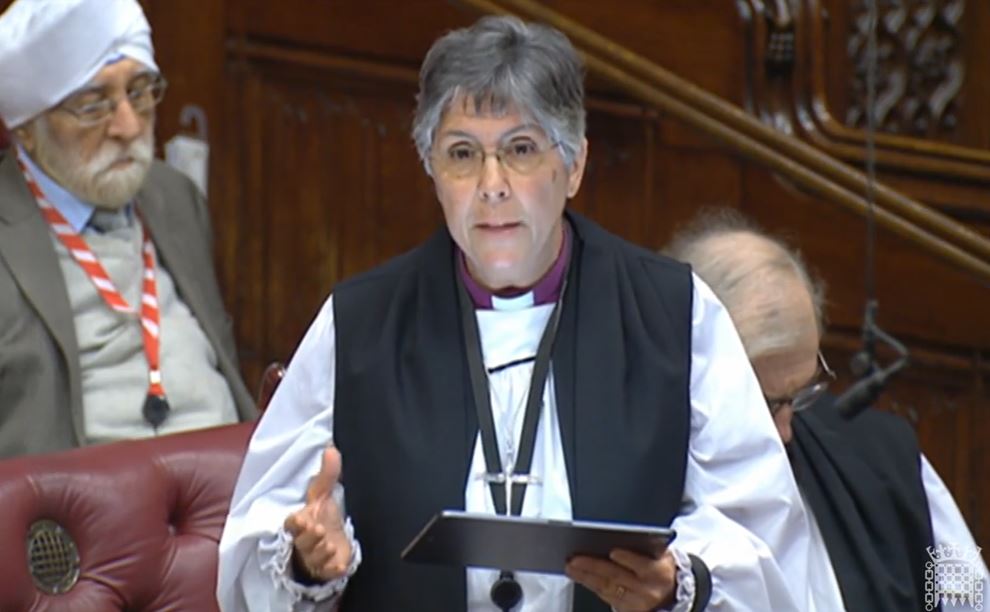
On 25th February 2025, the Bishop of Chelmsford spoke at a committee debate on the Social Security Benefits Up-rating Order 2025:
The Lord Bishop of Chelmsford: My Lords, it is very good to be here today and I am glad to be able to contribute on this important subject. As we consider a proposed uprating of 1.7%, as compared with 6.8% last year and 10.1% the year before, I am mindful of the different backdrop to this year’s decision. We may no longer be in a period of soaring inflation, but costs remain high in just about every area of life. The discrepancy between the inflation rate from September 2024, by which most means-tested benefits will be uprated, and the current rate of 3% will be felt particularly by those who have not benefited from wage growth this year. This is a timely moment to explore social security as the Government set out their wider agenda in this area.
The manifesto commitments to review universal credit as a means of supporting people into work and addressing poverty and to produce a child poverty strategy could give us a basis on which to improve the lives of millions of people in our country. Indeed, bold action is required in both these areas and, like other noble Lords, I await the outcome of these reviews with keen interest.
As the Church of England’s lead bishop for housing, I see the consequences of not aligning housing support with housing costs, with half of private renters on housing benefit experiencing poverty. I suggest that local housing allowance ought to be linked to private rents as a matter of course, especially taking into account research from the Joseph Rowntree Foundation, which shows that 81% of low-income private renters in receipt of housing benefit are going without essentials such as food, heating and warm clothing. I very much hope that the Government will consider the adequacy of social security in their review of universal credit. For the first time since its introduction, we have an opportunity to explore how well the system works and to consider carefully the impact of sanctions, deductions and the five-week wait on the lives and incomes of people who rely on social security simply to make ends meet.
I welcome the introduction of the fair repayment rate, which is an important step towards ensuring that deductions do not cause people to fall below the threshold of what we would consider an acceptable standard of living. Despite this, I still worry about the impact of the deductions. I draw the Committee’s attention to the Private Member’s Bill brought forward by the right reverend Prelate the Bishop of Manchester, which would equalise the standard allowance of universal credit for care leavers under the age of 25. Care leavers have shared their experiences of deductions from their universal credit, which, when taken from an already lower rate, can leave them struggling to afford essentials. This cohort of young adults cannot necessarily rely on the same level of family support as many of their peers.
Even though we have resumed uprating benefits in line with inflation, their real-terms value is low by historic standards. The major issue is that benefits are not calculated in relation to the day-to-day costs people face. One solution could be for benefits to rise in line with wages rather than prices, as advocated by, among others, the Resolution Foundation. Another could be to introduce a minimum floor in universal credit to ensure that people have the money they need to afford the essentials, as advocated by the Trussell Trust and the JRF. It seems eminently sensible to calculate benefits in relation to the day-to-day costs people face. We have a precedent for this, with pensions credit calculated by comparing a person’s income with the amount the Government think necessary to live on. I would be grateful to hear the Minister’s views on whether means-tested benefits could be subject to a similar assessment.
As I close, I reflect on the impact of poverty on our places of worship and wider communities. There will always be a place for voluntary provision, particularly when it comes to support that requires a more human and relational touch; but we must be attentive to the reasons why there is so much demand for food banks, warm spaces, breakfast clubs and the many other activities hosted in church buildings and by other faith groups and charities. We see first hand what the statistics bear out: poverty is deepening in our country. Investment in social security, alongside reforms in other areas, is essential in order to turn the tide on poverty.
Extracts from the speeches that followed:
Viscount Younger of Leckie (Con): The uplift will see the benefits rise in line with inflation. The level of the rise is based, as we know, on retrospective statistics—1.7%—in line with the September CPI rate of inflation, which has been alluded to today. As the noble Baroness, Lady Lister, and the right reverend Prelate the Bishop of Chelmsford have said, we should all be concerned about the latest ONS figures on inflation, up 0.5% from December and now at 3% for January. Inevitably, this will erode the value of family finances. Price rises of certain goods are the core of the problem. This is another blow on top of the winter fuel allowance cut for pensioners and the employer national insurance contribution rises, with their impact on businesses and job security, and the emerging evidence of a chill on recruitment, I am afraid.
Baroness Sherlock (Lab, DWP): My noble friend Lady Lister, the right reverend Prelate the Bishop of Chelmsford and the noble Baroness, Lady Janke, raised the levels of benefits and the need to tackle poverty. The Government are committed to tackling poverty and making work pay, and they have already taken some steps. I really appreciate the right reverend Prelate the Bishop of Chelmsford welcoming the decision to fund what we call the fair repayment rate. I am so grateful that my boss, Liz Kendall, wanted to spend a significant sum of money on that, even though most people will have no idea what it is. It genuinely targets those most in need by helping them to keep more of their money. But we know we have more to do on this.
The Child Poverty Taskforce is continuing its work and will explore all levers, although I am not in a position to say anything today about changes to matters such as the two-child limit. The Child Poverty Taskforce will look to span the key themes of increasing incomes, which will include social security reforms and reducing essential costs, and increasing financial resilience and better local support, especially in the early years. We will continue to watch this space as best we can.
The noble Viscount, Lord Younger, and the right reverend Prelate, among others, asked about the Government’s review of universal credit. We have now started the review, and the idea is to make sure that universal credit does its job in tackling poverty, helping people manage their money, making work pay and improving work incentives. We want to maximise the potential of universal credit, looking at its impact on customers. I say to the noble Viscount that there are things that universal credit does well, but aspects of its design have caused significant challenges to the people using it. This is an opportunity to look at how it is designed, to listen to those with experience of it and to look at whether there are ways we can better achieve the objectives I have outlined.
 The Church of England in Parliament
You must be logged in to post a comment.