
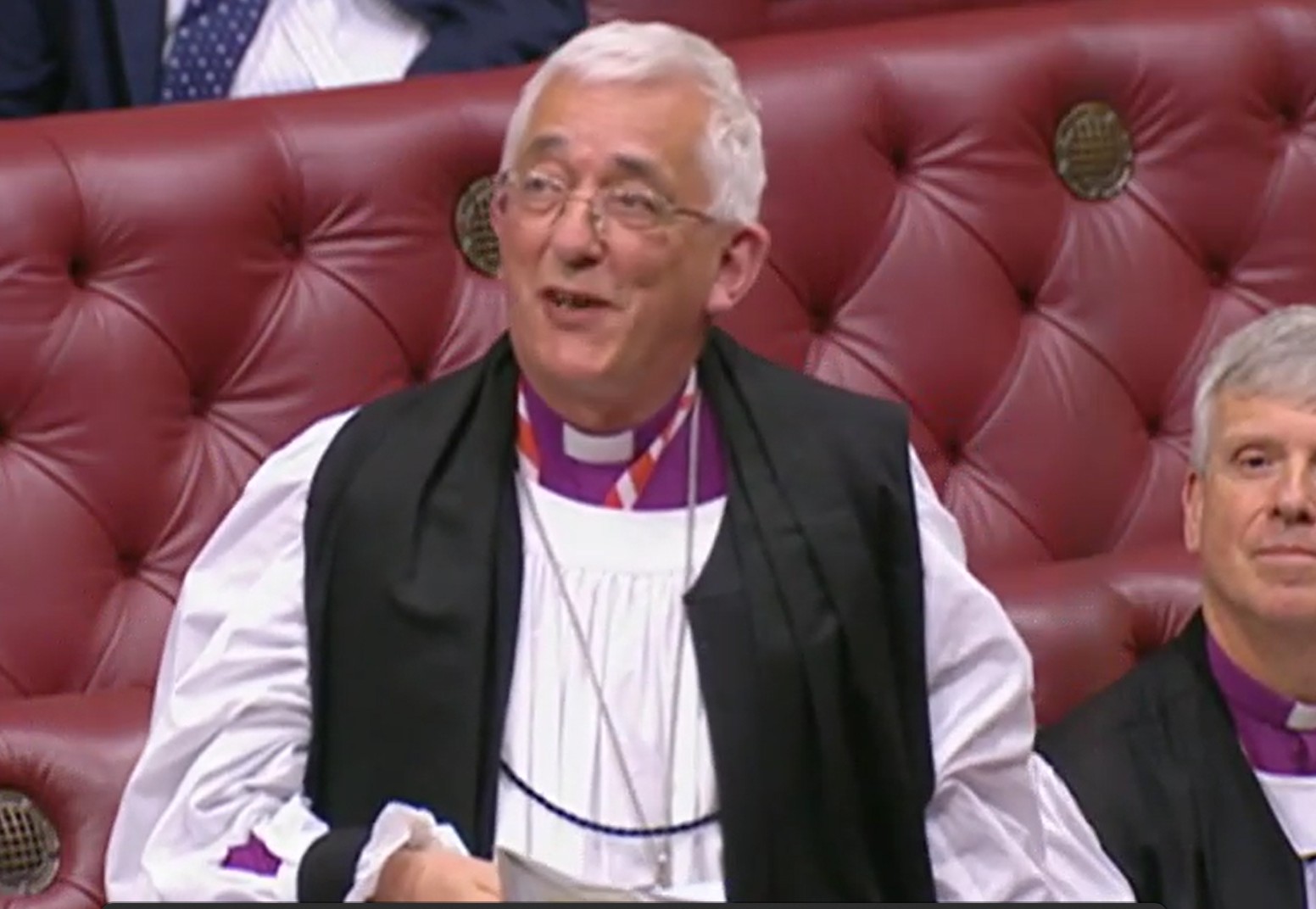
The Bishop of Lichfield spoke at the second reading of the Public Authorities (Fraud, Error and Recovery) Bill on 15th May 2025, raising concerns regarding the impact of the bill on the social security system:
The Lord Bishop of Lichfield: My Lords, I am very glad to see the name of the noble Baroness, Lady Spielman, on the speakers’ list for this debate; I look forward to her maiden speech and her future contributions to this House.
We all need to acknowledge the understandable frustration, felt from government downwards, about waste in public spending and fraud perpetrated at the public’s expense. It is right that expenditure be managed carefully, ensuring that people receive support when they need it, and eliminating fraud and error within the system as far as that is possible.
At the encouragement of my right reverend friend the Bishop of Leicester, who much regrets that he cannot be in his place today, I will focus on the second limb of this Bill, which concerns individual claimants of social security. This is a matter of morality. To support people into work, where they are able; to ensure that people can enjoy an acceptable standard of living when they cannot work or to top up their low income; and to deliver a fair and sustainable social security system now and in the future: these are all moral imperatives. Addressing fraud and error—ensuring that government can recover money when required—is also a morally vital matter of maintaining public consent, which should be a welcome outcome of this proposed legislation. Put simply, our social security system must both be fair and be perceived as fair by the public.
There is clearly work to do to rebuild trust in the system, which includes the trust of claimants that support will be there for them when they need it, and that they will always be treated with dignity. As one ingredient of a fair system, we need to ensure that people receive the benefits to which they are entitled. The Government’s efforts to encourage take-up of pension credit is a good recent example of that.
There may be circumstances when benefits are left unclaimed for good reasons, but most often this occurs when people do not realise there is support available to them. If this is about access to information, we must do more to inform. If it is about stigma, we must state clearly that our social security system, like our schools or our health service, is a public good on which people should not be ashamed to draw when required.
I welcome the department’s plans to review and improve its safeguarding practices through wider reforms on disability benefits. Ensuring that people are always treated with respect is a necessary step towards earning trust, and it is particularly timely—as the noble Lord, Lord Vaux, pointed out—that this debate coincides with the publication of the Work and Pensions Select Committee report on safeguarding claimants. Fraud, error and recovery will inevitably overlap with the department’s safeguarding responsibilities, and that committee’s report highlights some of tragedies that have happened to people—made particularly vulnerable by their circumstances—who interact with a system that can often feel complicated and impersonal. I wish the Minister and her department well in reviewing safeguarding and in making the important changes needed for the sake of those people.
The expansion of social security means that millions of people are potentially within the scope of this Bill. Half of all children live in a family that interacts with the system in some form, and there is concern that expanding the DWP’s recovery powers through direct deduction orders might risk affecting children at risk of poverty. It would be good to have the Minister’s reassurance about the affordability assessments to be made before recoveries occur.
There is considerable concern too, already voiced in this debate, about removing driving licences and the comparatively low threshold at which this could happen, even if court approval must be sought. This too could impact children who are not at fault for the actions of their parents, as they might miss out on activities, opportunities and vital services if their parents are no longer able to drive—this is particularly an issue in rural areas.
At a time of competing priorities and limited financial resources, a Bill that focuses on cracking down on fraud has arrived in this House before the publication of the child poverty strategy. In the diocese where I serve, I hear more about the latter than the former, and the Government should be wary that the Bill does not inadvertently limit their room for manoeuvre in reducing child poverty.
I also wish to express some concern or caution about the risk of overreliance on automated algorithmic systems to monitor the bank accounts of welfare recipients. With any reliance on automated systems, we know that there is a chance for error, presenting a risk of false positive matches. Errors resulting in wrongful benefits investigations would have profound consequences for some of the poorest people in society, disproportionately impacting disabled and elderly people, carers, single parents and those seeking work. While occasional human error is inevitable in the maintenance of a complex system, there is a need to ensure that we harness technology appropriately and always involve people in potentially sensitive decisions affecting them.
The Government have included in the safeguards for the Bill that there will be human intervention in further investigations—of course, I welcome that—but I urge them to clarify how they will ensure that there is indeed human oversight and whether a human being will be involved in the initial decision on whether to investigate an individual.
At their heart, the issues we are considering today are not only about money, they are about people. The Bill presents an opportunity to deal with one challenge facing the social security system, and I look forward to hearing how it ties in with other important issues in that area that the Government are seeking to address.
Extracts from the speech that followed:
Baroness Stedman-Scott (Con): The Bill proposes a substantial increase to the DWP’s workload and, from what I understand of the detail that the Government have outlined, the DWP can expect to receive thousands on thousands of signals from banks flagging potentially fraudulent activity. These will then have to be individually checked by a human being. The Government have rightly said that they will approach this with a deep attention to vulnerability. We must welcome this. This was also raised by the right reverend Prelate the Bishop of Lichfield, but does this mean that DWP civil servants will be checking not only the movement of money into an account but also whether the person in question is someone with a disability—in other words, perhaps someone with reduced capacity or someone who is at risk of being coerced? None of this detail is clear, and the Government have failed to publish an impact assessment showing the cost of this additional work.
Baroness Sherlock (Lab, DWP): DWP knows the bank accounts into which benefits are paid, so DWP will tell the banks to look specifically at the bank accounts into which those benefits are paid. It will tell them specifically the criteria they are looking for, and all they are being asked to provide is enough information to identify accounts which may, on the face of it, be in breach. Then, that information will be used along with other information that DWP holds, and it will be examined by—to reassure the right reverend Prelate the Bishop of Lichfield—a human being, who will make a decision on whether to investigate. There could be a number of outcomes. The outcome could be that the person may have had, for example, more money in their account than the benefit allows, but for one of the many acceptable reasons. There could be a perfectly good reason. The person may have made a genuine error, and that will be dealt with in a different way, or in some cases there may be evidence of fraud, and that might move into a fraud investigation.
(…) A number of noble Lords, including the noble Lord, Lord Vaux, the right reverend Prelate the Bishop of Lichfield and the noble Baroness, Lady Stedman-Scott, raised the use of AI and automated decision-making. To be clear, we are not introducing any new use of automated-decision making in the Bill, so no such new use will happen as a result of it. The DWP and the PSFA will always look at all available information before making key decisions about the next steps in fraud investigations or inquiries into error. Fraud and error decisions that affect benefit entitlement will be taken by a DWP colleague, and any signals of potential fraud or error will be looked at comprehensively.
 The Church of England in Parliament
You must be logged in to post a comment.