
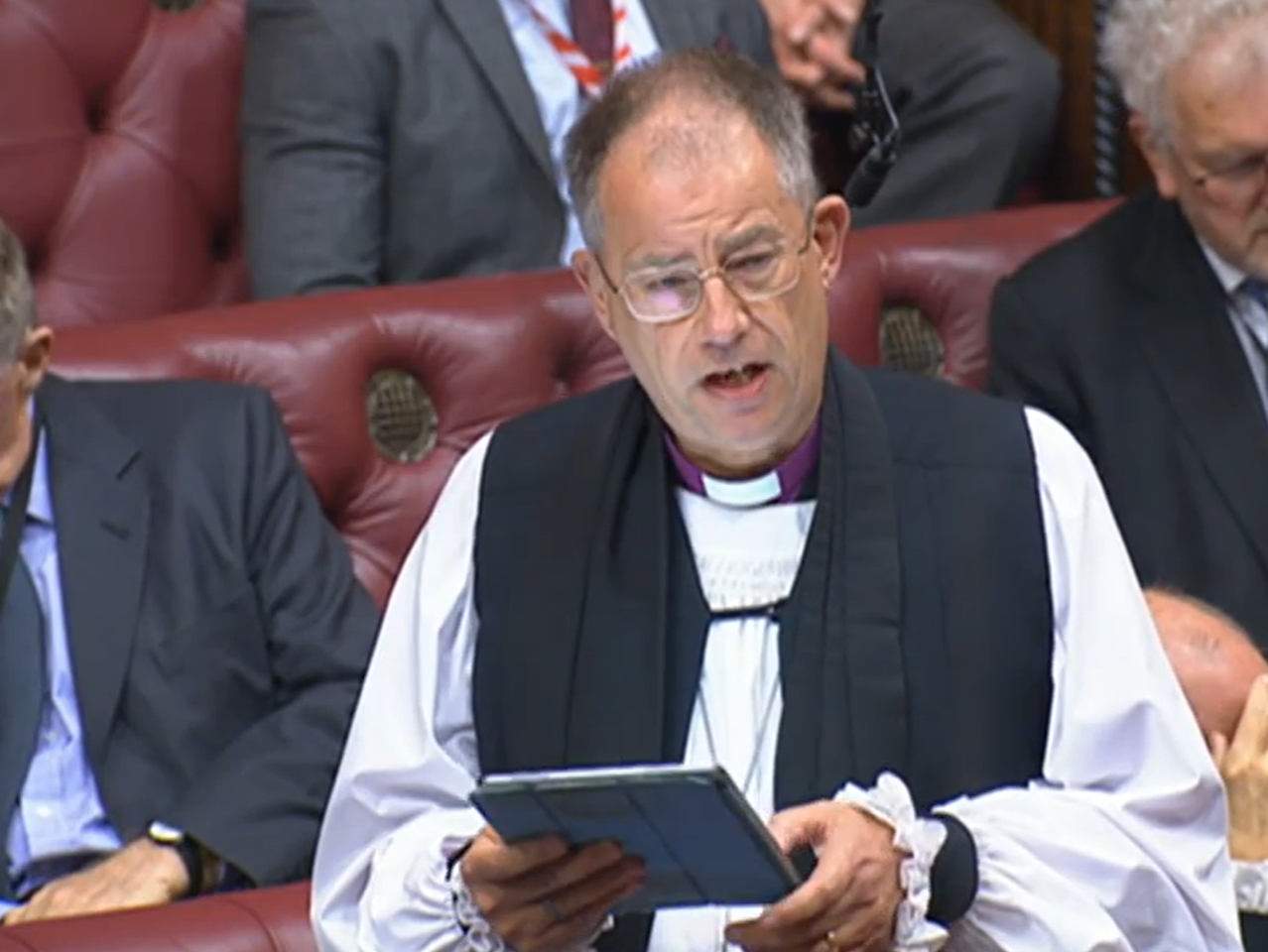
The Bishop of Oxford spoke in favour of an amendment to the Children’s Wellbeing and Schools Bill on behalf of the Bishop of Manchester on 10th September 2025, outlining the unintended effects of the bill on volunteer run-settings, including faith based provision:
The Lord Bishop of Oxford: My Lords, it is a pleasure to follow the noble Lord, Lord Lucas, and to associate myself with his remarks. I speak to Amendment 427C on behalf of my colleague, the right reverend Prelate the Bishop of Manchester, in whose name the amendment stands. He very much regrets his inability to attend today’s Committee debate. His amendment offers a reasonable and practical solution to the finely balanced tension between freedom and regulation in education provided by religious bodies.
As things stand, the Bill recognises two types of full-time education: education undertaken in either a school or an independent educational institution. The latter would need to be registered according to the 2008 Act and the requirement to register would apply to education that is more than “part time”. The need to include education provided by religious bodies in national mechanisms for oversight is well understood by all. The Church of England, for example, has taken enormous strides forward in both safeguarding training and safeguarding processes in local parishes that welcomed an average of 95,000 children each week in 2023.
We welcome the Government’s goal to strengthen educational oversight across the nation but, in relation to education provided by religious bodies, there are three issues with the Bill as it stands. First, as the National Society for Education wrote in its response to the Government on safeguarding in out-of-school settings:
“Compulsory state registration for religious activity involving children would significantly extend the role of the state in civil society and represents a considerable and major change to the nature of religious freedom”.
Freedom of religion and belief is a precious human liberty and legislators should think very carefully about the unintended consequences, as well as the intended ones, before enacting regulations that might inadvertently threaten that freedom and inhibit religious diversity.
The possibility of unintended consequences brings me to my second point. There is a risk that imposing extra bureaucratic burdens on many volunteer-run out-of-school settings would have an unintended chilling effect. Those unintended consequences might easily follow from a new burden to tot up religious educational activities, such as choir practice, for fear of exceeding the part-time hours below which registration is not required. This is to say nothing of the practicalities of securely and safely holding all the personally identifiable data that registration and keeping details current would impose on the Government as well as the religious educational institution.
Thirdly and finally, there are the difficult edge cases such as yeshivas that do not quite fit any of the categories that the Bill proposes. No one disputes that such out-of-school cases demand adequate scrutiny to ensure that children are being educated both broadly and safely, in addition to any religious component of their education.
This brings me to the amendment proposed by the right reverend Prelate the Bishop of Manchester. It would offer a balanced and proportional route forward by ensuring that the provisions of the Bill can be met where a setting such as a yeshiva limits itself only to religious education; that the local authority has been clearly notified that an attendee has suitable out-of-school education separately and with sufficient time set aside to allow children to receive that broader education; and that the provider of that religious education demonstrates to the local authority that it provides the required safeguarding measures. I commend the amendment to the Minister and the Committee.
 The Church of England in Parliament
You must be logged in to post a comment.