
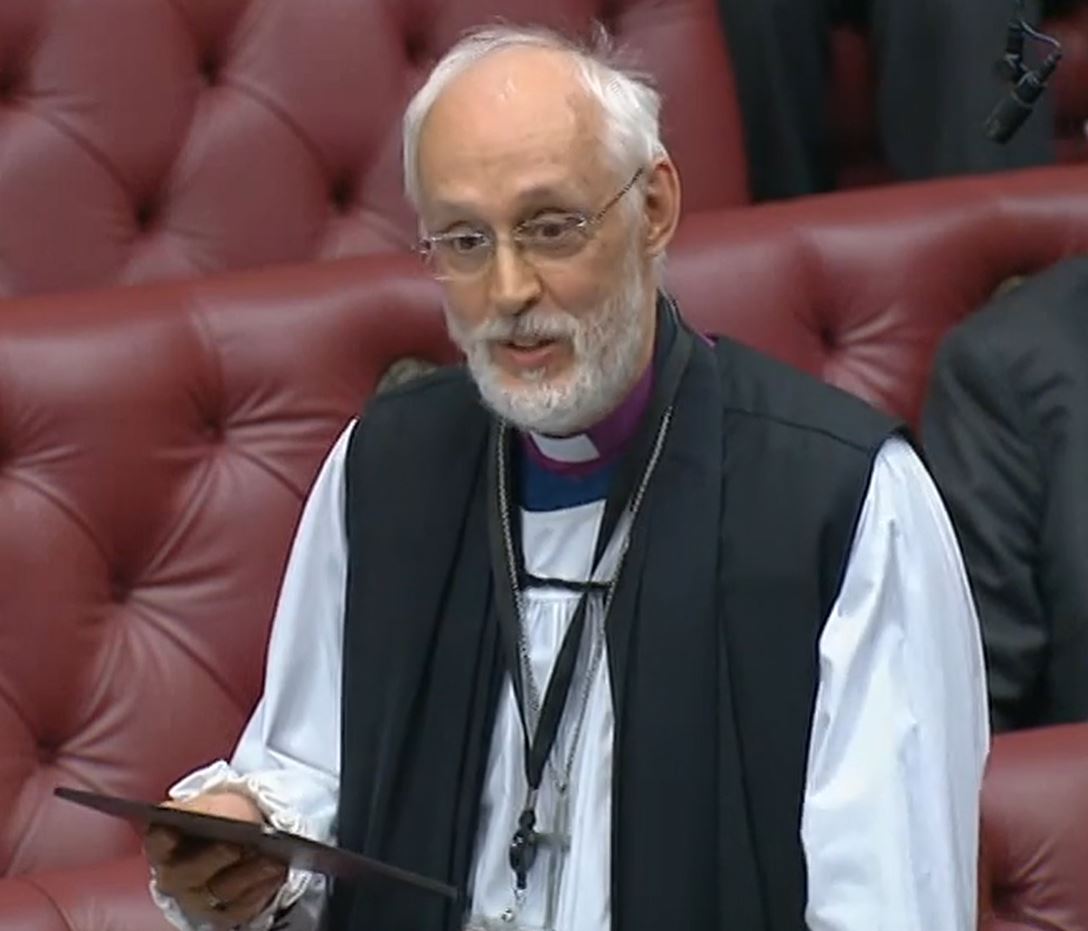
On 27th November 2025, the Bishop of Manchester spoke in support of an amendment to the Crime and Policing Bill which would expand the definition of exploitation under the Modern Slavery Act 2015 to include children who have been recruited into residential care institutions that engage in orphanage trafficking:
The Lord Bishop of Manchester: My Lords, I too support this amendment in the name of the noble Lord, Lord Randall of Uxbridge. It is my privilege, as I travel around the world visiting Anglican provinces, often to visit orphanages and see some of the work they do. As noble Lords have already said, many of these children still have a living parent somewhere, but that parent, for whatever reason, no longer feels able or wishes to look after them, particularly if the mother has died in childbirth.
As well as the bad orphanages and bad practices, there are also the good ones, and I have been honoured to visit some of them. Yet the bad practice creates a stigma against the whole sector. Therefore, I support this amendment because if we can drive out the exploitative orphanages, maybe then the good orphanages—which do sterling work, often in very difficult circumstances with very limited finances—can get on with doing the job and raising the money they need from around the world to continue their excellent work.
The Bishop of Manchester also spoke to amendments aimed at improving safeguarding regulations, expressing gratitude for the work done on this topic and the need for continued engagement:
The Lord Bishop of Manchester: My Lords, I am grateful for the chance to speak in this debate. Probably the most harrowing date in my life as a bishop was when I had to give evidence in person to IICSA as the Church of England’s lead bishop on religious communities— we knew that some of the horrific abuse that had taken place was in religious communities. Ever since then, I have worked really hard on these matters. I sought to add my name to Amendments 286A and 287, but I missed the deadline, sadly, so I am grateful for the chance to support them now.
I was going to say quite a bit about Amendment 286A, but the noble Lord, Lord Bethell, said just about everything I wanted to say, so I will not detain the Committee any further on it. On Amendment 287 on training, I am very grateful to the noble Lord, Lord Polak, and others. It is important that the Bill will apply not only to already knowledgeable professionals but to volunteers, who will have a whole variety of levels of funding, of safeguarding experience and of experience in dealing with child sexual abuse. We cannot assume that mandated reporters will already have the necessary understanding to fulfil these new legal obligations, so I think this is an appropriate probing amendment to see what support there can be to ensure that those who will have a duty are equipped to discharge that duty properly. Without that, I think we will fail to hit what we are trying to do.
I am sorry that it has taken us this long to get this far with the IICSA report. I think we have made a bit more progress implementing its recommendations in the Church of England than we have in this House, but I am glad that we got this opportunity today. I am grateful to the many noble Lords who have proposed amendments.
I want to say a few words about Amendment 273, as the noble Baroness, Lady Miller, invited me to do so. On the seal of the confessional, if it is possible for a churchman to say this, I remain a bit agnostic. I am interested in what will actually produce good safeguarding. I have heard people say, including survivors sometimes, that the chance to go and talk to a priest, and know it would not go beyond that priest, was what gave them the courage—often with a priest going with them—to make a disclosure to the relevant authorities. I can see that if we change that, some disclosures would happen but some would not, so I am keen to hear a bit more about that.
The other part of the amendment talks about extending it to all those who volunteer. I am not quite sure how wide that needs to go. Certainly, I am happy for it to apply to Church leaders, lay or ordained, paid or unpaid, but it should not be the person who cleans the coffee cups in the church hall on a Sunday morning, or who puts out the “No parking” cones, or who photocopies the parish magazine or arranges the church flowers once a month. Let us be clear exactly what categories we are going to extend any duty to, and whether that is dealt with best in the Bill or in some sort of secondary advice, guidance, legislation or other instrument. I am keen to explore that more. I am very grateful for these matters being raised, and not before time.
 The Church of England in Parliament
You must be logged in to post a comment.