
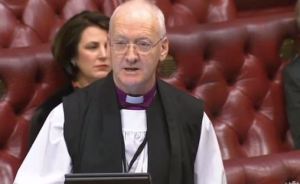
 On the 18th December 2017 the Bishop of Leeds, Rt Revd Nick Baines, responded to a Government Statement on the recent European Council Meeting: He asked about the UK approach to Russian foreign policy and the progress made with the Brexit negotiations:
The Lord Bishop of Leeds: My Lords, the Leader seems disappointed that the Statement has not been welcomed as it might have been. I do welcome it but I do not think it is as it has been portrayed; that is, the progress that has been made thus far is simply the opening gambit and the real hard work is going to come in the next phase. It seems to me that so far not a great deal has been achieved, except that we can go on to talk about the next phase. I will make a quick observation and then put a question. Continue reading “Bishop of Leeds says conduct of Brexit is aiding Russian policy of destabilising the West.”
 On the 18 December 2017 Baroness Tyler of Enfield led a debate on the report of the Select Committee on Financial Exclusion – Tackling Financial Exclusion: A country that works for everyone? (
 On the 18th December 2017 Lord Whitty led a debate on the report of the European Union Committee – Brexit: trade in non-financial services (
 This week in the House of Lords bishops spoke in a debate on the root causes of poverty and supported the Refugees (Family Reunion) Bill. They asked questions about the two-child limit on benefits, credit limits and recycling.
 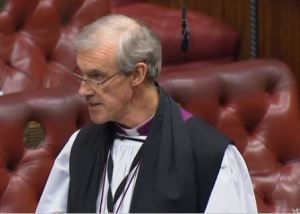 The Lord Bishop of Carlisle: My Lords, I too am most grateful to the noble Baroness, Lady Hamwee. I am delighted that this debate is about families, which is an apt topic as Christmas approaches. I am not speaking of the nostalgic image of a nuclear family around a groaning table; the Christian table is plainer but more welcoming and inclusive, a table around which all are welcome.
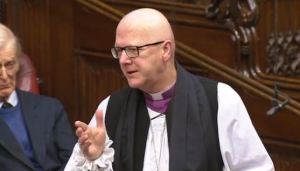 The Lord Bishop of St Albans: I too thank the noble Lord, Lord Bird, for this debate. I want to make just a couple of points in the time I have.
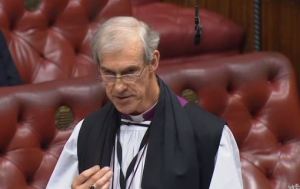 The Lord Bishop of Carlisle: My Lords, I, too, thank the noble Lord, Lord Bird, for securing this debate. As we have just heard, poverty cannot be measured simply in economic terms. It affects every area of a person’s life and, as a recent Demos report put it:
 On 14th December 2017 the Bishop of St Albans, Rt Revd Alan Smith, received a written answer to a question on credit:
 The Lord Bishop of St Albans: My Lords, in the past the Minister has quoted the very different levels of recycling in local authorities. Can he tell us Her Majesty’s Government’s thinking on how to incentivise local authorities that are not performing well to improve, and how to share best practice to increase their level of recycling?

You must be logged in to post a comment.