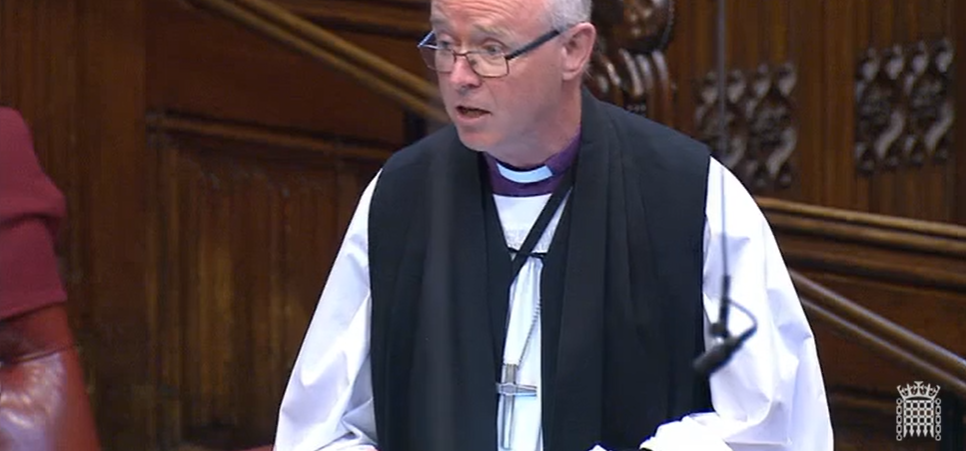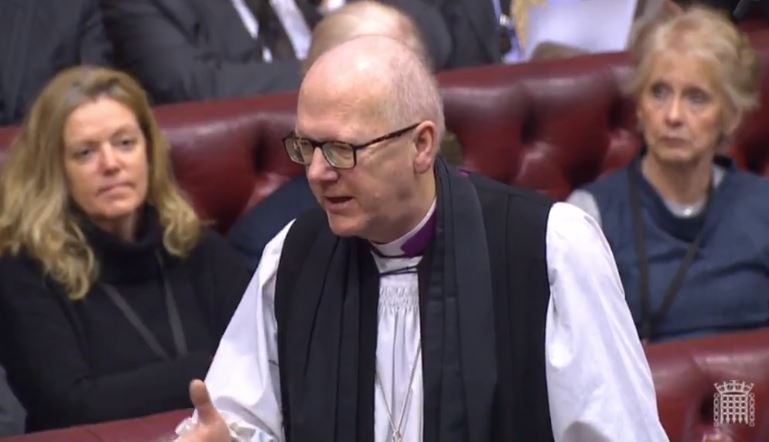
Financial Services Bill: Bishop of St Albans speaks at second reading

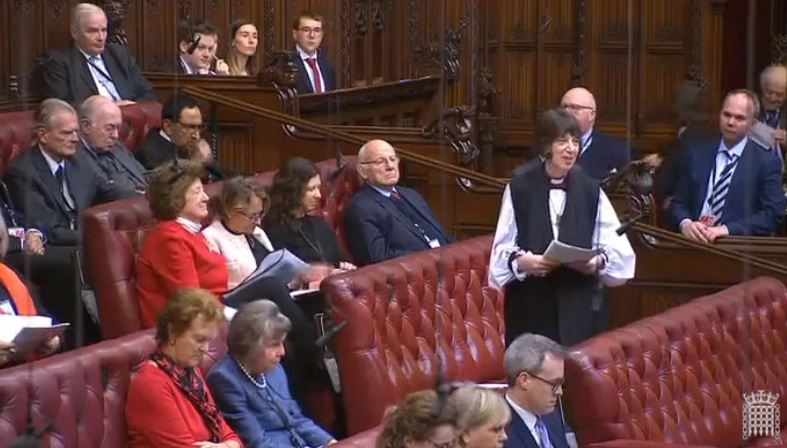
The Bishop of St Albans spoke at the second reading of the Financial Services Bill on 28th January 2021, raising issues of ethical investment and tax avoidance:

The Lord Bishop of St Albans: My Lords, it is right to underline the importance of the financial services sector in our country and the huge contribution it makes. There are many laudable things in this Bill: the strengthening of money laundering regulations; encouraging saving; and the creation of parity between white collar crimes, such as market manipulation, and general fraud by extending the maximum sentence.

I was disappointed, however, to hear that the Commons amendment exploring the whole issue of ethical investment with reference to genocide did not make it into the Bill. I understand the Government’s reservation—they do not want to politicise the FCA. Nevertheless, I hope that “global Britain”, as laid out by the intentions of the Bill, will also be very much “ethical Britain” as we place ourselves in the world under the new freedoms that we have. I also note, with other noble Lords, the concern that there seems to be so little clarity on the question of parliamentary scrutiny. I am sure we will return to this as the Bill passes through your Lordships’ House. Of course, fundamental to this whole future is that the FCA is adequately resourced to fulfil its task.

Continue reading “Financial Services Bill: Bishop of St Albans speaks at second reading”
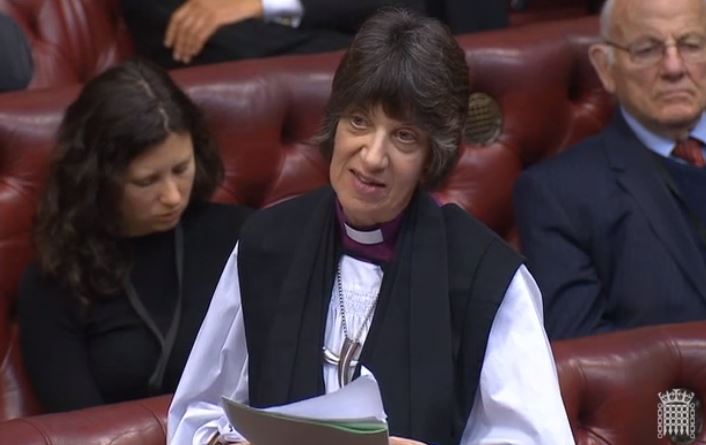
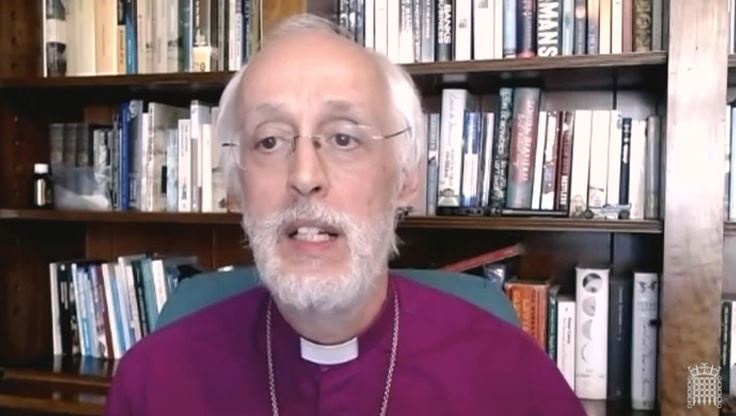
Domestic Abuse Bill: Bishop of Gloucester speaks in favour of amendments on use of data and communications between official bodies

The Bishop of Gloucester spoke during a committee debate on the Domestic Abuse Bill on 27th January 2021, supporting amendments on the use of data regarding domestic abuse by public authorities and communication between official bodies when handling that data:

The Lord Bishop of Gloucester: My Lords, I am hugely encouraged by listening to all these debates around this Bill, because I know that every single one of us wants this Bill to be as good as it possibly can be. I will keep my comments brief.

In relation to Amendment 54, the issue of data is critical. We have to take time to remember that behind statistics are precious individuals—women and men. I support a duty on public authorities to notify the Home Office and the domestic abuse commissioner in cases of death where domestic abuse has been identified as a contributory factor.

Continue reading “Domestic Abuse Bill: Bishop of Gloucester speaks in favour of amendments on use of data and communications between official bodies”

Domestic Abuse Bill: Bishop of Manchester supports amendments on universal credit rules for victims of domestic violence

The Bishop of Manchester spoke during a debate on the Domestic Abuse Bill on 27th January 2021, supporting an amendment which would aim to disapply the benefit cap for those fleeing domestic abuse:

The Lord Bishop of Manchester [V]: My Lords, I am very grateful to the noble Baroness, Lady Lister, for proposing Amendment 152, which it is my privilege to co-sponsor, and, indeed, for her excellent speech in opening the debate on this group of amendments. I also look forward to the speech from the noble Lord, Lord Best, who knows more about housing matters than anyone it has ever been my pleasure to work with.

This amendment concerns the application of universal credit, so perhaps I need to say at the outset that the notion of a unified benefits system is one that I and, I suspect, my right reverend and most reverend friends on these Benches will heartily endorse. The mix and mess of the separate systems that it replaced was well overdue for retirement. There are, of course, proper questions about the level of such benefits and what caps, if any, should generally apply if we are to maintain a proper incentive to find work. However, as the noble Baroness, Lady Lister, indicated, those are for another day.

The amendment is simply about how far rules designed for the general context can safely be applied to the very specific circumstances of victims of domestic abuse and their dependants without those rules themselves becoming abusive. As a priest and, for two decades, a bishop in the established Church and as chair of numerous housing associations and housing charities over many years, I have seen all too often the enormous obstacles that lie ahead for anyone, especially a woman with children, fleeing domestic abuse. Too many too often give up and return to a place of damage and danger. Too many who escape face long periods in temporary and unsuitable accommodation, often beyond the point when they need the particular support services offered there. Sadly, too many die at the hands of their abuser.

Continue reading “Domestic Abuse Bill: Bishop of Manchester supports amendments on universal credit rules for victims of domestic violence”

Domestic Abuse Bill: Bishop of Gloucester supports amendment on impact of domestic abuse on children

The Bishop of Gloucester spoke during a debate on the Domestic Abuse Bill on 25th January 2021, supporting an amendment tabled by Baroness Stroud stipulating that the Bill should consider the impact of domestic violence on pregnant women and their unborn children:

The Lord Bishop of Gloucester: Following the informative speech of the noble Baroness, Lady Stroud, on these amendments I will be very brief. I simply would like an assurance from the Minister that all age groups will be included in this legislation, and that it will provide support and provision not only for pregnant women and the unborn child but for children of all ages whose trauma began in utero.

Hansard

Bishop of St Albans raises issue of housing in debate on intergenerational unfairness

The Bishop of St Albans took part in a debate on a report from the Select Committee on Intergenerational Unfairness on 25th January 2021, focusing on access to and provision of housing:

The Lord Bishop of St Albans [V]: My Lords, the decrease in the rates of home ownership for the younger generation is a major issue and not one of their own making. As this excellent report demonstrates, it is an important factor in addressing issues of intergenerational fairness. For many years, there has been a failure to supply housing adequately—an issue exacerbated by a cycle of stagnation fuelled by low market absorption rates and stalled developments.

The Letwin report suggests that one of the most important reasons for this is that developers will build new homes only at a rate that the market can absorb and that, by diversifying housing products, rates of absorption will increase. However, when I put down Written Questions to Her Majesty’s Government on this topic, never once has it been acknowledged that it might be in the interest of developers to land bank, as increased supply is likely to reduce house prices. While I believe that this has contributed to the lack of supply, I agree that low absorption remains a real issue. However, I do not think that diversification alone will solve it.

Continue reading “Bishop of St Albans raises issue of housing in debate on intergenerational unfairness”

Bishop of Oxford takes part in debate on report on tackling intergenerational unfairness

The Bishop of Oxford spoke in a debate on a report from the Select Committee on Tackling Intergenerational Unfairness on 25th January 2021, raising the issues of education, the gig economy, and all-age communities:

The Lord Bishop of Oxford [V]: My Lords, I welcome this key report on intergenerational unfairness and this debate. It is a privilege to take part. I want to focus my contribution on three issues.

The first concerns education and training. I welcome the report’s perspective and recommendations; as others have said, they are even more relevant now. However, as we know, the landscape is shifting significantly beneath our feet because of the immediate demands of the pandemic and the likely longer-term shifts in working patterns created by the fourth industrial revolution. We are sorely in need of creative, imaginative, cross-party and cross-society intergenerational thinking on education for life, not simply for work.

Continue reading “Bishop of Oxford takes part in debate on report on tackling intergenerational unfairness”

Bishop of Portsmouth takes part in debate on tax justice

The Bishop of Portsmouth spoke in a debate on tax justice on 21st January 2021, pointing out issues in the interaction of national insurance and income tax and the need for the government to address inequalities in the tax system:

The Lord Bishop of Portsmouth [V]: My Lords, I am delighted that my good friend and close colleague the right reverend Prelate the Bishop of St Albans secured this debate. I congratulate him on bringing these reports from Church Action for Tax Justice to wider attention. I urge the Government to assess and act on them.

I particularly endorse the right reverend Prelate’s drawing attention to the often pernicious interaction of income tax and national insurance so-called contributions. The reality is that such “contributions” are no such thing. These are two direct tax systems working alongside each other, but crucially not together, and often unfairly. This is exacerbated when the impact of other taxes, such as council tax, is factored in.

Continue reading “Bishop of Portsmouth takes part in debate on tax justice”

Bishop of St Albans chairs debate on tax justice

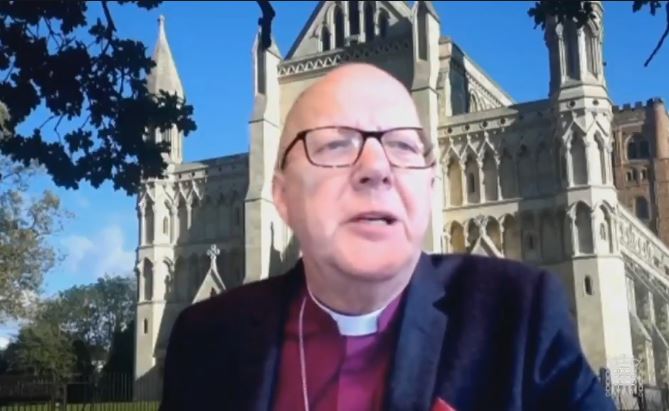
On 21st January 2021, the Bishop of St Albans chaired a debate on a reports by Church Action for Tax Justice:

The Lord Bishop of St Albans: To ask Her Majesty’s Government what assessment they have made of the reports by Church Action for Tax Justice (1) Tax for the Common Good, published in February 2019, and (2) Fair Tax Now, published on 4 January 2021.

My Lords, I thank all those speaking in this evening’s debate. I am no expert on tax, but it does not take an expert to see that there are some deeply entrenched tax inequalities. This 2019 report by Church Action for Tax Justice, and its 2021 report, Fair Tax Now, are more relevant than ever, not least with the financial impacts of the Covid-19 pandemic being felt in all parts of society, and with Her Majesty’s Government’s commitment to “levelling up”.

The proposals laid out by Church Action for Tax Justice seek not to harm wealth generation, but to level the playing field and facilitate a fairer tax system that ensures that those with the deepest pockets do their duty to the societies that provided the context in which they were able to amass their wealth. This is a vast topic, so I will make a couple of preliminary comments and then suggest four of the most important areas that must be addressed.

Continue reading “Bishop of St Albans chairs debate on tax justice”

Bishop of Portsmouth speaks in debate on role of the armed forces in “Global Britain”

The Bishop of Portsmouth spoke during a debate on the role of the UK armed forces in the government’s Global Britain agenda, raising the issue of the Armed Forces Covenant and the need to support the wellbeing and mental health of members of the armed forces and armed forces veterans:

The Lord Bishop of Portsmouth [V]: My Lords, if the Armed Forces are to continue to promote global Britain, we must look after them and fulfil our obligations under the Armed Forces covenant. Research by the Royal British Legion and Poppyscotland points to the difficulties that veterans are encountering in getting benefits assessors to understand post-traumatic stress disorder when scoring health assessments for disability benefits. One stated that:

“I supplied a consultant psychiatrist’s letter stating all my mental health conditions. I scored zero. This is laughable”.

I agree. A government spokesman has said that the report would be given careful consideration, but consideration must be given both carefully and urgently if we are to continue to promote global Britain.

Hansard

Bishop of Rochester speaks in debate on UK-EU trade and cooperation agreement

On 8th January 2021, the Bishop of Rochester took part in a debate on the EU-UK Trade and Cooperation Agreement, raising the difficulties faced by multinational families:

The Lord Bishop of Rochester: My Lords, I wish to address an issue which, despite all that is covered by the agreement, remains, at least in part, unresolved. It concerns the position of UK nationals living and/or working in the EU. I declare a personal interest which will become clear. I am indebted to the Bishop in Europe for briefing me on a range of situations which have a serious impact on UK nationals living in his diocese, which covers 25 out of 27 EU states plus the EEA and Switzerland.

Continue reading “Bishop of Rochester speaks in debate on UK-EU trade and cooperation agreement”