
On the 11 February 2016 the Bishop of Portsmouth, the Rt Revd Christopher Foster, spoke during the second reading debate on the Government’s Armed Forces Bill. He highlighted the work of the Church of England to support the military covenant, the need to support service families and the significant work of military chaplains.
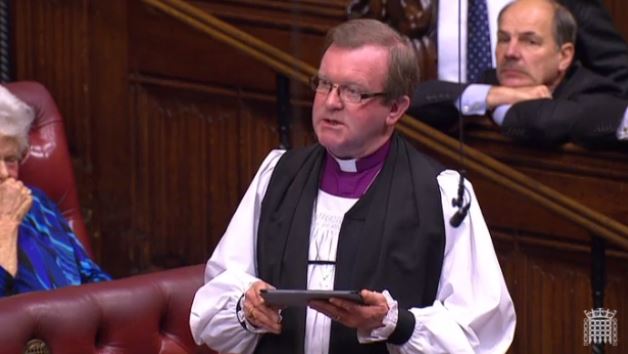 The Lord Bishop of Portsmouth: My Lords, by happy coincidence, this debate takes place almost exactly on the anniversary of the signing of the Armed Forces corporate covenant by the right reverend Primates the Archbishops of Canterbury and York. There has been excellent work with the Minister in developing the impact of that covenant, and it is a pleasure to mark that anniversary today and anticipate the maiden speeches this afternoon.
This Bill properly clarifies the obligations and responsibilities of those serving in the Armed Forces and strengthens provision for maintaining good order and handling any instances of indiscipline with proper regard for justice. These provisions and the contributions that we have heard already remind us, although they are often technical, that individuals in our Armed Forces serve, and occasionally offend, in situations of stress and danger.The House will not be surprised therefore if I briefly draw attention to the importance—and I hope the Minister in summing up can confirm this—that we should all give to the areas of pastoral and family support for those who volunteer to serve us and the nation in this way in the Armed Forces, even when their behaviour falls below highest standards. Continue reading “Armed Forces Bill: Bishop of Portsmouth highlights support for service families and work of military chaplains”
 The Lord Bishop of St Albans: My Lords, the Minister has twice mentioned the changing nature of libraries. Of course, they are not just about books. Nowadays, they are a major and vital source for internet access, especially in poorer areas, where people need them to apply for jobs and where fewer households have broadband. Especially in rural areas where broadband coverage is much lower, they are a vital part of rural sustainability. The Government are rolling out broadband very quickly, and that is encouraging, but it does need time. What support are they giving to those vital online centres, many of which are closely related to libraries or in libraries, both for the sake of heritage but also for the sake of our economy?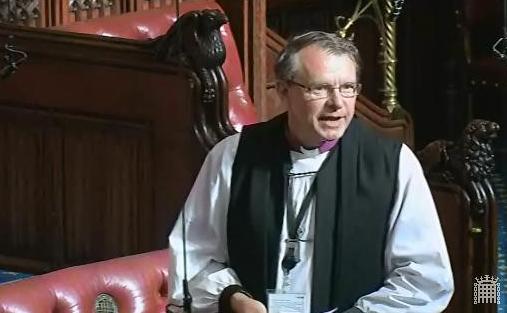
 On the 10th February 2016 Lord Storey asked the Government “whether they plan to legislate to ensure that food and drink provided in all types of schools follow Food Standards Agency food and nutritional guidelines”. The Bishop of Chester, the Rt Revd Peter Forster, asked a follow up question.
 The Lord Bishop of Chester: My Lords, although I agree with all that the Minister has said in response to the questions, is it not the case that engaging parents—making sure that what is taught in schools relates to and engages parents as much as possible—is also important to any government action which may be forthcoming in the future?
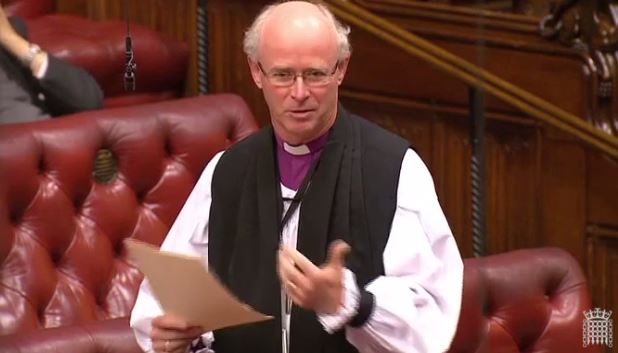
 On 8th February 2016, the House of Lords considered the Government’s Trade Union Bill in committee. The Bishop of Chester, Rt Revd Peter Forster, spoke in favour of amendments to allowing electronic voting in union ballots alongside the Bill’s introduction of mandatory thresholds for strike ballots. Baroness Neville-Rolfe responded for the Government.
  The Lord Bishop of Rochester: My Lords, as one of the bishops from Kent, may I take the Minister back to his previous answer? In fact, some 1,300 unaccompanied refugee children are housed in Kent, and the local authorities and the voluntary agencies are under very significant pressure. May I push him a little as to whether, in the light of the somewhat unencouraging response from other local authorities, Her Majesty’s Government intend to do anything else to ensure a more effective national dispersal programme—given that we are talking not just about this moment, but about the likely 10 years that will be needed to get a young person from the point of arrival to full integration, with all the work in education, language and healthcare needed to go with that, and the considerable investment required? Some assurance would help my colleagues in Kent.
  The Church of England in Parliament
You must be logged in to post a comment.