Welcome to the Church of England’s weekly round-up of activity in Parliament.

This week bishops in the House of Lords spoke to amendments on the Government’s Immigration Bill and in debates on education and renewable energy. Bishops also asked questions on extremism and offence, fixed odds betting terminals, Palestinian statehood and house building on floodplains.
In the House of Commons the Second Church Estates Commissioner answered questions on the Queen’s 90th birthday, street pastors, ethical investments, women and BME clergy, credit unions, churches and community use and debt and poverty counselling.
Monday 1st February
 The Bishop of Norwich asked a question on Palestinian statehood.
The Bishop of Southwark spoke during the committee stage of the Government’s Immigration Bill.
Tuesday 2nd February
 The Bishop of St Albans received a written answer to a question on fixed odds betting terminals.
The Bishop of Salisbury spoke and voted on a motion to annul Regulations on renewable energy feed in tariffs.
Wednesday 3rd February
 The Archbishop of Canterbury asked an oral question on extremism and offence.
 The Bishop of Norwich spoke to amendments on the Government’s Immigration Bill, on the welfare of children, asylum support cuts, unaccompanied young people and care leavers, and family reunion.
Thursday 4th February
The Bishop of St Albans received an answer to a question on building homes on floodplains.
 The Second Church Estates Commissioner published a written answer to a question on church buildings and community use. She also answered questions in the House of Commons on the Queen’s 90th Birthday, street pastors, ethical investments and tax avoidance, women and BME clergy and credit unions.
The Bishop of Norwich spoke in a debate on education.
Friday 5th February
The Second Church Estates Commissioner published a written answer to a question on work with debt and poverty campaign groups in Blackburn diocese.

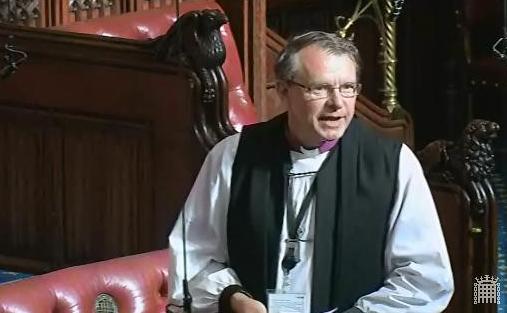 On 11th February 2016 the Bishop of Durham, Rt Revd Paul Butler, recieved a written answer to a question on Burundian refugees.
 On the 10th February 2016 Lord Storey asked the Government “whether they plan to legislate to ensure that food and drink provided in all types of schools follow Food Standards Agency food and nutritional guidelines”. The Bishop of Chester, the Rt Revd Peter Forster, asked a follow up question.
 The Lord Bishop of Chester: My Lords, although I agree with all that the Minister has said in response to the questions, is it not the case that engaging parents—making sure that what is taught in schools relates to and engages parents as much as possible—is also important to any government action which may be forthcoming in the future?
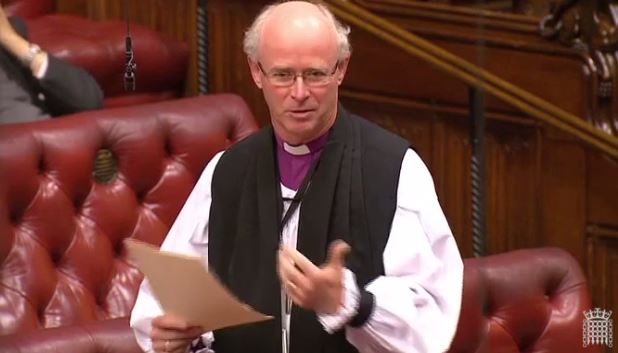
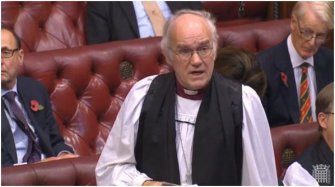 On 8th February 2016, the House of Lords considered the Government’s Trade Union Bill in committee. The Bishop of Chester, Rt Revd Peter Forster, spoke in favour of amendments to allowing electronic voting in union ballots alongside the Bill’s introduction of mandatory thresholds for strike ballots. Baroness Neville-Rolfe responded for the Government.
  The Lord Bishop of Rochester: My Lords, as one of the bishops from Kent, may I take the Minister back to his previous answer? In fact, some 1,300 unaccompanied refugee children are housed in Kent, and the local authorities and the voluntary agencies are under very significant pressure. May I push him a little as to whether, in the light of the somewhat unencouraging response from other local authorities, Her Majesty’s Government intend to do anything else to ensure a more effective national dispersal programme—given that we are talking not just about this moment, but about the likely 10 years that will be needed to get a young person from the point of arrival to full integration, with all the work in education, language and healthcare needed to go with that, and the considerable investment required? Some assurance would help my colleagues in Kent.


You must be logged in to post a comment.