Bishop of Sheffield makes maiden speech in debate on end of life choices

“The ministry of chaplains in our hospitals and hospices remains a vital part of end-of-life care. Chaplains are present to minister to those of all faiths and of none. They are drawn, of course, from every faith. They are present to offer spiritual support to the dying and to the bereaved, to patients and staff. They are a vital part of the team in end-of-life care as a specialist resource, as experts able to offer training to colleagues and as a point of referral in moments of crisis” – The Bishop of Sheffield

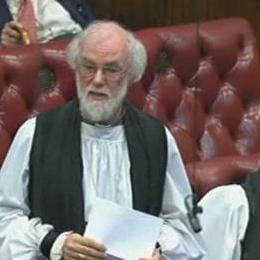
On 12th December 2013, the Bishop of Sheffield made his maiden speech in a debate on patient choice at the end of life. The Bishop of Chester also spoke in the debate, and his speech can be read here.

14.03.27 Bishop of SheffieldLord Bishop of Sheffield: My Lords, I must begin by thanking your Lordships for the warmth of welcome extended to me here. Thank you also to the staff for their guidance and help. I look forward very much to serving with you in this House and count it an immense privilege to be here. Continue reading “Bishop of Sheffield makes maiden speech in debate on end of life choices”

Bishop of Wakefield takes part in debate on assisted suicide

On 5th December 2013, the Bishop of Wakefield took part in a debate on assisted suicide. The Bishop of Derby also spoke during the debate – his comments can be read here.

Bishop Stephen Platten

The Lord Bishop of Wakefield: My Lords, I imagine that after clinicians, clergy—of a variety of faiths—are those who have the most frequent experience of being alongside those who are terminally ill and dying. That gives clergy no privilege in our opinions, but it does offer us a unique set of experiences in the care and support of the dying.

Part of that support, from all concerned in such caring, is reassurance to those who are terminally ill. The framing of the present law is integral to such reassurance. Fears of being a family burden, uncertainty about one’s own self-worth or society’s pressures on limited resources can undermine the feelings of the terminally ill. That calls out of us compassion. Choice is a two-edged sword.

Continue reading “Bishop of Wakefield takes part in debate on assisted suicide”

Bishop of Derby speaks during debate on assisted suicide

On 5th December 2013, the Bishop of Derby spoke during a debate on assisted suicide. The Bishop of Wakefield also spoke in the debate – his speech can be read here.

Bishop of DerbyThe Lord Bishop of Derby: My Lords, two quotations. John Donne:

“No man is an island”.

and the Book of Job:

“The Lord gives and the Lord takes away”.

Continue reading “Bishop of Derby speaks during debate on assisted suicide”

Archive speeches: Rowan Williams on Assisted Dying for the Terminally Ill

“what will we be heard to be saying about the worthwhileness of life under certain conditions? Do we, by legally accommodating the mental suffering of some, debase the currency for all? These are not trivial considerations; nor are they parochially religious ones.” – Rowan Williams, 12/5/06

On 12th May 2006 the House of Lords debated a Private Members’ Bill from Lord Joffe: the ‘Assisted Dying for the Terminally Ill Bill’. The then Archbishop of Canterbury, Dr Rowan Williams, was one of three Lords Spiritual who spoke against, in a debate that lasted over seven hours and featured 90 speakers.

The Bill would have allowed a doctor to prescribe medication upon request from a terminally ill patient with capacity, so that by means of self-administration, that patient could end his or her life.

Following the debate a vote took place on whether to allow the Bill to proceed any further. Peers voted to not allow it to proceed by 148 to 100. 14 Lords Spiritual joined those voting against the Bill.

A transcript of the Archbishop’s speech follows:

The Archbishop of Canterbury: My Lords, opposition to the principle of this Bill iPicture (Metafile) 1s not confined to people of religious conviction—as we have been reminded by the noble, monotheistic and utilitarian Lord, Lord Carlile—and it would be a lazy counter-argument to suggest that such opposition can be written off because it comes only from those committed to a world view not universally shared. It is worth remembering that the secular or “enlightened” view of human autonomy assumed by many of the Bill’s defenders is no less a particular world view rather than a self-evident and universal truth. Continue reading “Archive speeches: Rowan Williams on Assisted Dying for the Terminally Ill”

1936 – Archbishop Lang and the Voluntary Euthanasia (Legalisation) Bill

In 1936 the House of Lords debated the Voluntary Euthanasia Legalisation Bill, the first of its kind to come before the UK Parliament. Its rejection set the pattern for future Bills in both Houses for the eight decades to come.

Parliament 1930sThe Voluntary Euthanasia Legalisation Bill 1936 sought to allow mentally competent adults with an incurable condition, accompanied by severe pain, to have assistance in ending their lives. It was proposed by Arthur Ponsonby, Lord Ponsonby of Shulbrede, a former leader of the Labour Party in the Lords and minister under Ramsay MacDonald. He did so in place of the late Lord Moynihan, who a year before had helped found the British Voluntary Euthanasia Society.The Bill was opposed on pragmatic as well as moral grounds by a majority of Peers and rejected at the end of Second Reading in a Division of the House. Among those speaking against were the Archbishop of Canterbury, Cosmo Lang and the Bishop of Norwich, Bertram Pollock.

Continue reading “1936 – Archbishop Lang and the Voluntary Euthanasia (Legalisation) Bill”