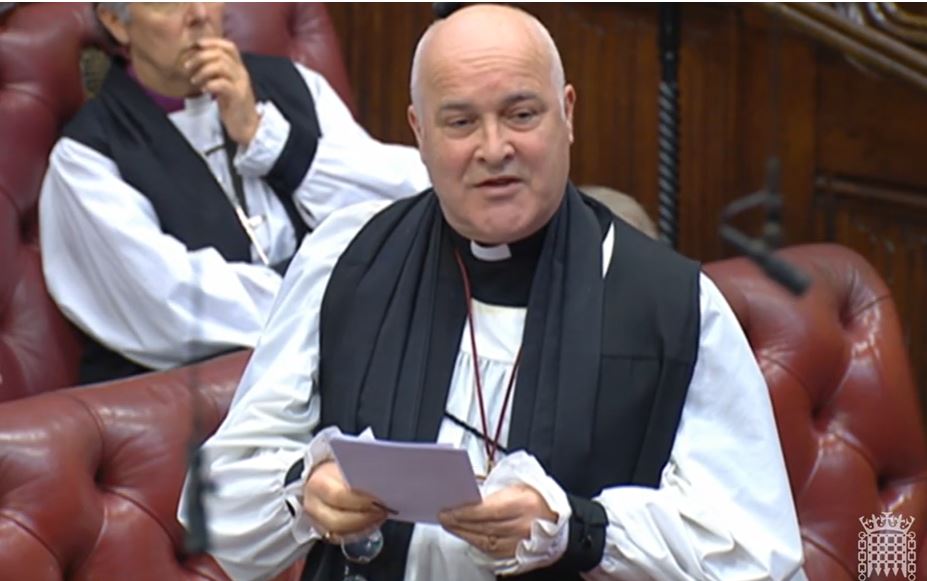
Bishop of Durham asks about asylum decisions by the UK government

The Bishop of Durham received the following written answers on 17th April 2023:
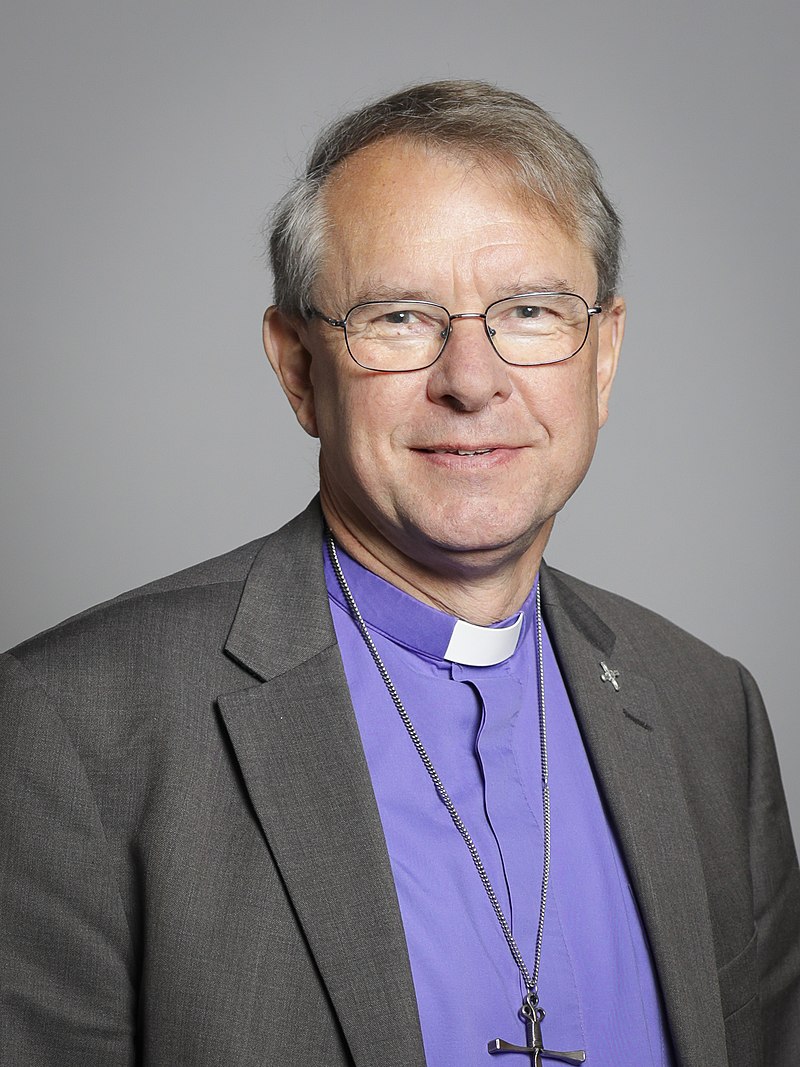
The Lord Bishop of Durham asked His Majesty’s Government how many individuals have been granted temporary protection since the Nationality and Borders Act 2022 came into force; and what proportion of such individuals were under the age of 18.

Lord Murray of Blidworth (Con): The Home Office publishes data on asylum in the ‘Immigration System Statistics Quarterly Release’ on GOV.uk. Data on initial decisions on asylum applications, by age, can be found in table Asy_D02 of the ‘asylum and resettlement detailed datasets’ on GOV.uk. Information on how to use the datasets can be found in the ‘Notes’ page of the workbooks. The latest data relate to the year ending December 2022. Data for the year ending March 2023 will be published on 25 May 2023.

Continue reading “Bishop of Durham asks about asylum decisions by the UK government”
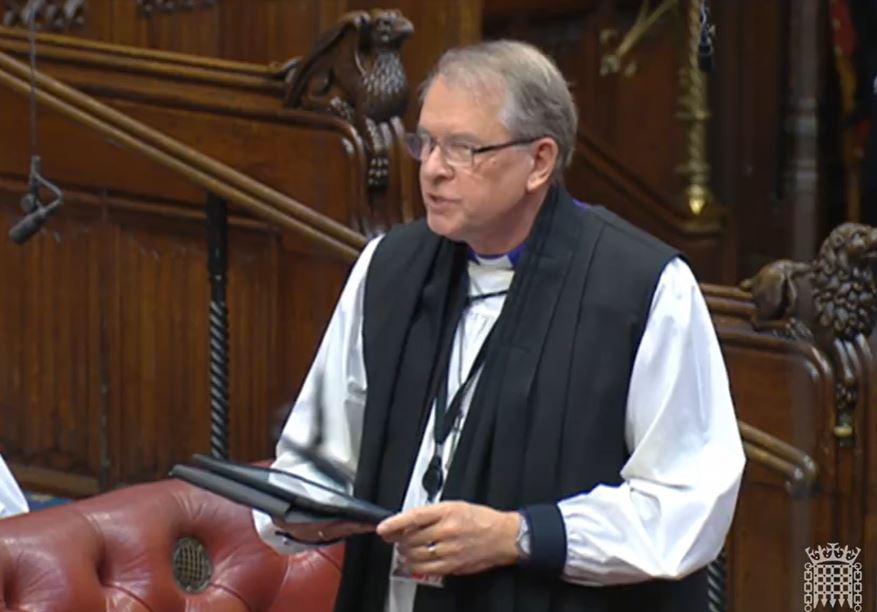
Bishop of Durham asks about admissibility of asylum applications

The Bishop of Durham received the following written answer on 28th February 2023:

The Lord Bishop of Durham asked His Majesty’s Government:

  • what is the average processing time for a decision on the admissibility of an asylum application
  • how many individuals’ asylum applications were declared inadmissible in 2022; and what percentage of such individuals were returned to a safe or third country.
  • how many individuals, whose applications were declared inadmissible for asylum but who were unable to be returned to a third country, have been added to the list of asylum applications.
Continue reading “Bishop of Durham asks about admissibility of asylum applications”

Bishop of Durham asks about emergency resettlement scheme

The Bishop of Durham received the following written answer on 22nd February 2022:

The Lord Bishop of Durham asked His Majesty’s Government what plans they have to trial an Emergency Resettlement Mechanism that is wider than existing schemes as originally proposed in the New Plan for Immigration, published on 24 March 2021.

Lord Murray of Blidworth: An Emergency Resettlement Mechanism would allow the government to provide urgent protection in exceptional circumstances to refugees referred by UNHCR as being in need of rapid emergency resettlement. The UK already works alongside the UNHCR to resettle refugees through its existing resettlement schemes; these include the UK Resettlement Scheme (UKRS), Community Sponsorship, the Mandate Resettlement Scheme, and the Afghan Citizens Resettlement Scheme (ACRS).

Continue reading “Bishop of Durham asks about emergency resettlement scheme”

Bishop of Durham asks about conditions for asylum seekers

The Bishop of Durham received the following written answers on 21st Febrary 2023:

The Lord Bishop of Durham asked His Majesty’s Government what assessment they have made of the effect on the asylum application waiting list of the requirement to reassess refugees with Group 2 status every 30 months.

Lord Murray of Blidworth (Con): The Home Office will publish further details in due course on the process for Group 2 refugees applying for further temporary refugee permission to stay after 30-months.

Continue reading “Bishop of Durham asks about conditions for asylum seekers”

Bishop of Durham speaks in debate on transfer of asylum seekers to Rwanda

On 6th February 2023, the Bishop of Durham spoke in a debate on the Government’s use of a Memorandum of Understanding rather than a treaty as the vehicle for the agreement with Rwanda on the transfer of asylum seekers, highlighting the stance of the House of Bishops against the policy and the government’s responsibility towards children and the vulnerable:

The Lord Bishop of Durham: I declare my interest in RAMP as laid out in the register. The Lords Spiritual as a whole chose to speak out against the transfer of asylum seekers to Rwanda. We did not do this lightly, knowing the privileged role we hold in the life of our nation, but the memorandum of understanding brings into question fundamental issues about individual rights, our commitment to international law and our moral standing as a nation. It is because of these deep and important questions that I believe the use of an MoU was highly inappropriate.

Continue reading “Bishop of Durham speaks in debate on transfer of asylum seekers to Rwanda”

Bishop of Durham asks about safe routes for people seeking asylum

On 24th January 2023, the Bishop of Durham asked a question on what forecast the government have made on numbers of people seeking asylum in the UK via safe routes in 2023:

The Lord Bishop of Durham: To ask His Majesty’s Government what forecast they have made of the number of people from Syria, Afghanistan, Eritrea, Iran, and Sudan who will travel to the United Kingdom via a safe route in order to seek asylum in 2023.

Lord Murray of Blidworth (Con): The United Kingdom welcomes vulnerable people in need of protection through our relocation and resettlement schemes. The number of people coming to the UK via safe and legal routes depends on many factors, including local authorities’ capacity to support them and the extent to which community sponsorship continues to thrive. There is no explicit provision within our Immigration Rules for someone to be allowed to travel here to seek asylum or temporary refuge.

Continue reading “Bishop of Durham asks about safe routes for people seeking asylum”

Bishop of Durham asks about finances for those with no recourse to public funds

The Bishop of Durham received the following written answer on 9th January 2022:

The Lord Bishop of Durham: To ask His Majesty’s Government, further to the Written Answer by Lord Sharpe of Epsom on 24 October (HL2407), what estimate they have made of the number of people with British children who have applied for a change to their asylum status from a status with no recourse to public funds (NRPF) over the last five years.

Continue reading “Bishop of Durham asks about finances for those with no recourse to public funds”

Bishop of St Albans urges better communication with local authorities when processing people in the asylum system

The Bishop of St Albans asked a question regarding lack of communication with local authorities regarding people seeking asylum on 14th December 2022, following a government statement on immigration and plans for the future of the asylum system:

The Lord Bishop of St Albans: My Lords, there are a number of aspects of this Statement which I welcome, not least that there are going to be increased numbers of people processing and that the aim is to process within weeks rather than months and get people through the system much more quickly. But there really has been quite a problem, not least at Manston, where at one stage 4,000 people were staying in a centre designed for 1,600. As they were being shipped out around the country, a whole lot were delivered into Luton, in my diocese, with no warning. Even the local authority was not able to help. So my question is: what lessons have been learned? Can we be sure that we are really communicating well with local authorities, so that we can work on this together, give people dignity and try and process them as quickly and effectively as we can?

Continue reading “Bishop of St Albans urges better communication with local authorities when processing people in the asylum system”

Bishop of Durham -need for ‘courageous, compassionate leadership, not hostility and defensiveness’ in asylum policies

The Bishop of Durham spoke in a debate on 9th December 2022 led by the Archbishop of Canterbury, on the principles behind asylum and refugee policy.

The Lord Bishop of Durham: My Lords, it is a pleasure to follow the noble Baroness, Lady Prashar. We are not often afforded the opportunity to look at asylum policy forensically and dispassionately, so I thank the most reverend Primate the Archbishop of Canterbury for choosing this debate. I also congratulate those who have given their maiden speeches today, and note my registered interests as a trustee of Reset and a principal of RAMP.

I begin by laying out clear principles that come from how ancient Israel was called to treat refugees: to welcome people, to treat them with dignity as fellow humans, to provide support, and to enable self-support and integration. It is no secret that we are not doing the mechanics of “welcome” through asylum processing well. The applications backlog means we are unable to prioritise those in need or humanely return those not recognised as refugees. There were close to 140,000 unanswered applications in the system by the end of September, so men, women and children were left in limbo and unable to rebuild their lives. This is not treating people with dignity. Chronic underinvestment in both people and systems at the Home Office has caused this, but there are workable solutions, such as to recruit more caseworkers and set up a dedicated case clearance unit that effectively triages.

Continue reading “Bishop of Durham -need for ‘courageous, compassionate leadership, not hostility and defensiveness’ in asylum policies”

Archbishop of York – asylum system does not give people dignity, safety and agency their humanity deserves

On 9th December 2022 the Archbishop of York spoke in the Archbishop of Canterbury’s debate on the principles behind UK asylum and immigration policy.

The Archbishop of York: My Lords, despite my probably sensible and timely demotion on the speakers’ list*, I am nevertheless delighted to speak in this very moving debate and to thank my brother, the most reverend Primate the Archbishop of Canterbury, for bringing it to us.

I also thank the noble Lord, Lord Robathan, for his kind words about our preaching earlier this year. I can assure him that on almost every other occasion when I rise to speak, although not on this occasion, it is to speak about the Christian gospel, whose values underpin everything I am about to say. I was also very moved by the noble Lord, Lord Singh, who quoted the Jewish and Christian scriptures to us. That is such a powerful sign of the generous spirit of the Sikh faith, which we can all learn so much from. I am also grateful for the three powerful maiden speeches that we have heard today

I want to emphasise a small but significant point. Getting this right, and doing the right thing, is a blessing for everyone in our society and the best way of shifting the opinion of the public, whose anxiety about this issue is fuelled by the dysfunction of our current system. The hard truth is that our asylum system simply does not treat everyone the same. It does not give people the dignity, safety and agency that their humanity deserves. I say to the noble Lord, Lord Lilley, that everyone is our neighbour. Of course, we cannot take everybody, but that makes it even more important that we have a fair system for everyone.

Continue reading “Archbishop of York – asylum system does not give people dignity, safety and agency their humanity deserves”