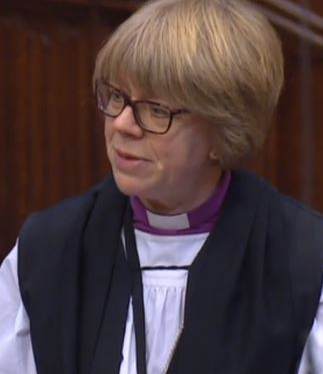
Bishop of Chichester introduces Church of England pensions and miscellaneous provisions legislation

On 23rd January 2024, the Bishop of Chichester spoke in support of two motions to direct that the Church of England (Miscellaneous Provisions) Measure and the Church of England Pensions (Application of Capital Funds) Measure be  presented for Royal Assent. The Bishop of Manchester also spoke in support of one motion.

Church of England (Miscellaneous Provisions) Measure

Motion to Direct

Moved by –

The Lord Bishop of Chichester: That this House do direct that, in accordance with the Church of England Assembly (Powers) Act 1919, the Church of England (Miscellaneous Provisions) Measure be presented to His Majesty for the Royal Assent.

My Lords, this is the latest in a series of miscellaneous provisions measures. It makes provision for a range of matters concerning the Church of England that do not merit separate, freestanding legislation. It includes provisions relating to the General Synod, ecclesiastical offices, ecclesiastical jurisdiction, Church property, elections to representative bodies, the functions of the Church Commissioners, appointments to the Church of England pensions board and the conduct of various types of meeting. I do not propose to take noble Lords through each of its 22 clauses in turn, but I thought I should draw attention to some of the more significant provisions.

Continue reading “Bishop of Chichester introduces Church of England pensions and miscellaneous provisions legislation”
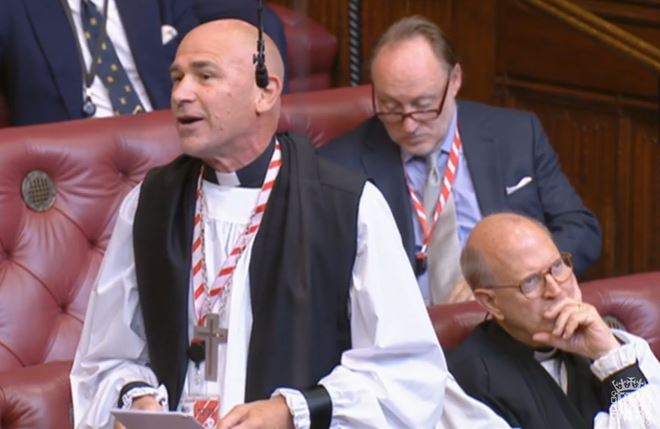
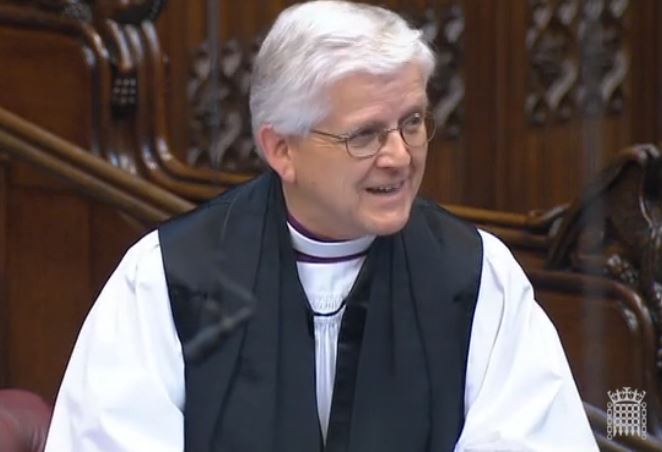
Diocesan Stipends Funds (Amendment): Bishop of Sheffield moves to pass Measure

On 27th June 2023, the Bishop of Sheffield moved a motion to direct that the Diocesan Stipends Funds (Amendment) Measure be presented to His Majesty the King for Royal Assent, and gave a speech in support of the motion:

The Lord Bishop of Sheffield: That this House do direct that, in accordance with the Church of England Assembly (Powers) Act 1919, the Diocesan Stipends Funds (Amendment) Measure be presented to His Majesty for the Royal Assent.

My Lords, I am not entirely surprised to discover that this Measure excites noble Members of the House rather less than the previous business.

In the medieval period, clergy were paid mainly from income derived from land owned by each parish, known as glebe land. The amount of land varied from parish to parish, and so accordingly did the income of the clergy. With the Industrial Revolution and the growth of cities, wealthy industrialists were often willing to give significant amounts of money to support the local church, often helping to build and endow the church in question. In my diocese of Sheffield, a number of large churches were built in this period thanks to the generosity of industrialists such as Samuel Fox, the founder of the local Stocksbridge steelworks.

Continue reading “Diocesan Stipends Funds (Amendment): Bishop of Sheffield moves to pass Measure”

House of Commons Passes Church Commissioners Diocesan Stipendiary Funds Measure

On 13th June 2023, Andrew Selous MP, representing the Church Commissioners, put an amendment to the Delegated Legislation Committee on new regulations allowing the transfer of diocesan stipend funds outside of dioceses, either to another diocese, to the Archbishop’s Council, or to another Church charity. The Committee agreed the measure:

Andrew Selous MP (Con, South West Bedfordshire): I beg to move,

That the Committee has considered the Diocesan Stipends Funds (Amendment) Measure (HC 1413).

It is a pleasure, as always, to serve under your chairmanship, Dr Huq. I hope that you will permit a very brief piece of historical context setting on the Measure before us today. In medieval times, clergy were paid mainly from income from land owned by the Church, known as glebe land, from the Latin gleba, meaning soil. The amount of land varied from parish to parish and from 1571 onwards, the amount of land a parish owned was recorded in a glebe terrier. With the industrial revolution and the growth of cities, wealthy industrialists were often willing to give significant amounts of money to support the local church, often helping to build and endow the church in question, such as, for example, St Mattias church in Stocksbridge, which opened in 1890 thanks to the generosity of Samuel Fox, the founder of the local Stocksbridge works.

Continue reading “House of Commons Passes Church Commissioners Diocesan Stipendiary Funds Measure”

Lords passes Safeguarding (Code of Practice) Measure 2021

On 16th September 2021 the House of Lords approved the Church of England’s Safeguarding (Code of Practice) Measure. The Bishop of Blackburn introduced the debate:

Moved by The Lord Bishop of Blackburn: That this House do direct that, in accordance with the Church of England Assembly (Powers) Act 1919, the Safeguarding (Code of Practice) Measure be presented to Her Majesty for the Royal Assent.

The Lord Bishop of Blackburn: My Lords, it has been a long day and we are on the cusp of a party conference recess. I do not want to detain your Lordships more than is necessary. I am somewhat anxious, and feel, to use the words of a noble Lord a moment ago, a scintilla of fear, standing here for the first time and hearing much of the previous debate about the importance of good leadership and of doing everything well. Perhaps I am a candidate for all that further training that was talked about. It is a great privilege to be allowed to spend this week as duty Bishop in this House and to lead Prayers each day.

I am grateful for your Lordships’ presence this evening, not least because the Measure before us is significant in its application and is about safeguarding. As noble Lords will know, the Church of England has been on a long journey of putting in place appropriate staff, policies and practices to make the Church a safe place for all people, especially children and vulnerable adults. That has been essential as a response to church often being unsafe and to stories—historic and current—of appalling cases of abuse by those in positions of power who should have known better and whom many were willing to trust.

Continue reading “Lords passes Safeguarding (Code of Practice) Measure 2021”

Lords passes General Synod (Remote Meetings) (Temporary Standing Orders) Measure

On 22nd October 2020 the House of Lords considered and passed the General Synod (Remote Meetings) (Temporary Standing Orders) Measure. The Bishop of London introduced the Measure, which will now proceed for Royal Assent:

Motion to Direct

Moved by The Lord Bishop of London: That this House do direct that, in accordance with the Church of England Assembly (Powers) Act 1919, the General Synod (Remote Meetings) (Temporary Standing Orders) Measure be presented to Her Majesty for the Royal Assent.

The Lord Bishop of London: My Lords, this Measure will enable the General Synod—the legislative body of the Church of England—to meet and conduct its business remotely. Current coronavirus restrictions mean it is not practically possible for the synod to meet in the usual way, with 500 people from across England gathering in the same place. Continue reading “Lords passes General Synod (Remote Meetings) (Temporary Standing Orders) Measure”
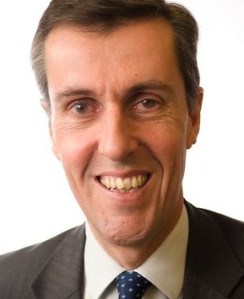
House of Commons passes General Synod (Remote Meetings) (Temporary Standing Orders) Measure

On 19th October the House of Commons considered and passed the General Synod (Remote Meetings) (Temporary Standing Orders) Measure. The Second Church Estates Commissioner, Andrew Selous MP, introduced the Measure:

First Delegated Legislation Committee [Julie Elliott in the Chair]

General Synod (Remote Meetings) (Temporary Standing Orders) Measure

The Second Church Estates Commissioner (Andrew Selous): I beg to move,

That the Committee has considered the General Synod (Remote Meetings) (Temporary Standing Orders) Measure (HC 879).

It is a pleasure to serve under your chairmanship, Ms Elliott. I reassure Members that we should be able to dispose of this matter reasonably speedily. The Measure will enable the General Synod, which is the legislative body for the Church of England, to meet and conduct its business remotely. The current coronavirus restrictions mean that it is not practically possible for the Synod to meet in the usual way with 500 people from across England gathering in the same place, either over the road in Church House here in London, or in York. In this Parliament, as we are all aware, we have been able to make provision for remote participation in sittings using the orders of the House. However, as the General Synod was created by statute law, it does not have the same freedom, and legislation is required to enable it to meet remotely. Continue reading “House of Commons passes General Synod (Remote Meetings) (Temporary Standing Orders) Measure”
House of Lords approves Church of England Channel Islands Measure

On 15th July 2020 the House of Lords approved a Motion to pass for Royal Assent the Church of England Channel Island Measure, which was introduced by the Bishop of Birmingham, Rt Revd David Urquhart. The full debate is below.

Channel Islands Measure

Motion to Direct

Moved by The Lord Bishop of Birmingham:

That this House do direct that, in accordance with the Church of England Assembly (Powers) Act 1919, the Channel Islands Measure be presented to Her Majesty for the Royal Assent.

The Lord Bishop of Birmingham: My Lords, I shall give some brief historical and current background to the Channel Islands Measure, then outline its content.

Until the 16th century, the Channel Islands were part of the Church of France and the diocese of Coutances. In 1496, Henry VII obtained a papal bull transferring the islands to the English diocese of Salisbury, but it seems this was not put into effect. The islands finally became part of the Church of England in 1569, when they were transferred to the diocese of Winchester by Order in Council of Elizabeth I. Since then, the Church of England has been the established Church of the islands.​ Continue reading “House of Lords approves Church of England Channel Islands Measure”

House of Commons passes Church of England (Miscellaneous Provisions) Measure

On 25th February 2020 the Delegated Legislation Committee of the House of Commons passed the Church of England (Miscellaneous Provisions) Measure, which then progressed to receive Royal Assent.

Seventh Delegated Legislation Committee: Church of England (Miscellaneous Provisions) Measure

The Second Church Estates Commissioner (Andrew Selous): I beg to move,
That the Committee has considered the Church of England (Miscellaneous Provisions) Measure (HC 299).

It is a pleasure to serve under your chairmanship, Mr Robertson. The Measure was laid before the House on 4 November 2019. To some colleagues, this might seem a slightly unusual format for a Delegated Legislation Committee. I should explain that the Measure has been through the Ecclesiastical Committee, which is composed of Members of both Houses, is cross-party and is chaired by Baroness Butler-Sloss. That Committee went through the Measure in considerable detail on 29 October, and the House of Lords did the same on 30 January—I have the reports of both sets of scrutiny with me today. I therefore hope that we can deal with the Measure reasonably expeditiously. Continue reading “House of Commons passes Church of England (Miscellaneous Provisions) Measure”

Lords approve Church of England (Miscellaneous Provisions) Measure

On 30th January 2020 the House of Lords considered the Church of England (Miscellaneous Provisions) Measure, a piece of church legislation that was introduced by the Bishop of Gloucester, Rt Revd Rachel Treweek. A short debate also took place on a motion to regret the Measure, tabled by Lord Trefgarne, which was subsequently withdrawn. The Measure was passed.

Moved by The Lord Bishop of Gloucester

That this House do direct that, in accordance with the Church of England Assembly (Powers) Act 1919, the Church of England (Miscellaneous Provisions) Measure be presented to Her Majesty for the Royal Assent.
The Lord Bishop of Gloucester: My Lords, although the provisions contained in this Measure are miscellaneous, some of them are nevertheless important. Rather than go through the Measure section by section, it might be helpful if I just mention some of the more significant provisions at this point.

Section 2 implements a recommendation from Dame Moira Gibb’s report following her review of the Church of England’s response to the abuse committed by Peter Ball. One of the report’s recommendations was for the introduction of a national register of clergy with permission to officiate. That recommendation has been further developed and Section 2 will now require there to be a national ministry register. Every clerk in holy orders who has authority to exercise ministry in the Church of England will have to be included in the register. There is also provision for the creation of a register of licensed lay people, and bishops will be required to provide details to the Archbishops’ Council on a regular basis so that the national registers are kept up to date. A form of the register that omits personal contact information will be published by the council and be accessible to the public free of charge.

Continue reading “Lords approve Church of England (Miscellaneous Provisions) Measure”

House of Lords approves Church Representation and Ministers Measure

On 6th June 2019 the House of Lords debated and approved the Church Representation and Ministers Measure. The Bishop of Leeds, Rt Revd Nick Baines, introduced the Measure:

Moved by The Lord Bishop of Leeds, That this House do direct that, in accordance with the Church of England Assembly (Powers) Act 1919, the Church Representation and Ministers Measure be presented to Her Majesty for the Royal Assent.

The Lord Bishop of Leeds: My Lords, it was 100 years ago this week that your Lordships’ House gave a Second Reading to the National Assembly of the Church of England (Powers) Bill. Speaking in support of the Bill, Lord Parmoor said:

“If this Bill is passed, for the first time the laity of the Church will have a recognised and substantive position in the corporate expression of church life … The very object of the Bill is to give an effective part to a large number of Church men, earnest and eager to do their best for the Church and who cannot have an effective influence at the present time. That is why I, as a layman, have laboured for this Bill”.—[Official Report, 3/6/1919; cols. 1028-29.]

The Bill was passed and became the Church of England Assembly (Powers) Act 1919. It devolved legislative power to the Church Assembly, which has since become the General Synod. It is pursuant to Section 4 of the 1919 Act that this Motion is before the House today.

Continue reading “House of Lords approves Church Representation and Ministers Measure”