
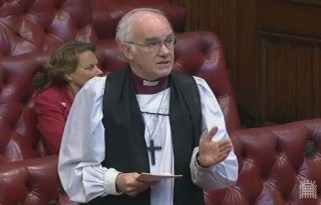
On the 20th March 2017, the House of Lords debated a Government amendment to the Digital Economy Bill at its Report Stage, on access to online pornography. Original Government proposals were that the threshold of censorship and prohibition should be as consistent as possible for material distributed online and offline. In a new amendment the Government offered a revised approach, with a higher threshold for prohibiting material online alongside a focus on age verification measures. The Bishop of Leeds, the Rt Revd Nick Baines, and the Bishop of Chester, the Rt Revd Peter Forster, spoke against the amendment, arguing to keep the original approach. The amendment was however agreed without a vote. The Bishops’ speeches are below, with an extract of the Minister’s reply. The full text of the debate on the amendments can be read in Hansard, here.
 Lord Bishop of Leeds: My Lords, it seems odd in a society such as ours that we are even thinking about how to give access to violent pornography or trying to mitigate it in some way. It seems clear to me is that most of us sitting in this House probably have less idea of how online digital communications work than a five year-old. Children—my grandchildren’s generation—are very adept and almost intuit how to do this stuff. Continue reading “Digital Economy Bill: Bishops argue against relaxation of blocking powers on online pornography”
 The Lord Bishop of Chester: My Lords, this is an important amendment because it touches upon the bigger issue of the impact of artificial intelligence on all sorts of aspects of our lives. There is a law called Moore’s law, which says that every two years the power of computers doubles. That has been true over the past 20 or 30 years and we should assume that that power will continue to develop. Artificial intelligence in all its impacting forms will be more and more prevalent in our society and more and more potent in the hands of terrorists in the years to come.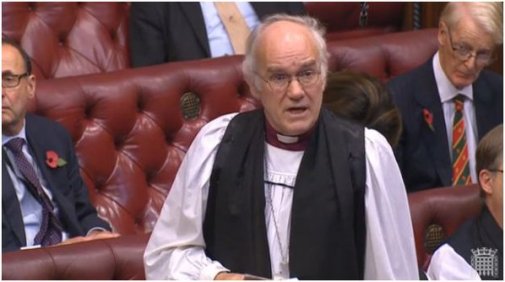
 The Church of England in Parliament
You must be logged in to post a comment.