
Diocesan Stipends Funds (Amendment): Bishop of Sheffield moves to pass Measure

On 27th June 2023, the Bishop of Sheffield moved a motion to direct that the Diocesan Stipends Funds (Amendment) Measure be presented to His Majesty the King for Royal Assent, and gave a speech in support of the motion:
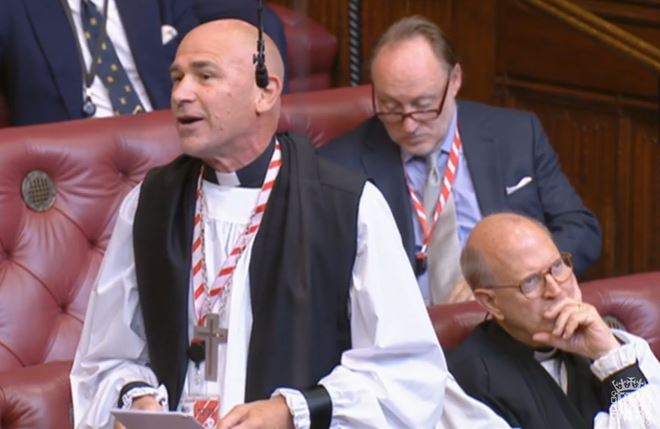
The Lord Bishop of Sheffield: That this House do direct that, in accordance with the Church of England Assembly (Powers) Act 1919, the Diocesan Stipends Funds (Amendment) Measure be presented to His Majesty for the Royal Assent.

My Lords, I am not entirely surprised to discover that this Measure excites noble Members of the House rather less than the previous business.

In the medieval period, clergy were paid mainly from income derived from land owned by each parish, known as glebe land. The amount of land varied from parish to parish, and so accordingly did the income of the clergy. With the Industrial Revolution and the growth of cities, wealthy industrialists were often willing to give significant amounts of money to support the local church, often helping to build and endow the church in question. In my diocese of Sheffield, a number of large churches were built in this period thanks to the generosity of industrialists such as Samuel Fox, the founder of the local Stocksbridge steelworks.

Continue reading “Diocesan Stipends Funds (Amendment): Bishop of Sheffield moves to pass Measure”

House of Commons Passes Church Commissioners Diocesan Stipendiary Funds Measure

On 13th June 2023, Andrew Selous MP, representing the Church Commissioners, put an amendment to the Delegated Legislation Committee on new regulations allowing the transfer of diocesan stipend funds outside of dioceses, either to another diocese, to the Archbishop’s Council, or to another Church charity. The Committee agreed the measure:

Andrew Selous MP (Con, South West Bedfordshire): I beg to move,

That the Committee has considered the Diocesan Stipends Funds (Amendment) Measure (HC 1413).

It is a pleasure, as always, to serve under your chairmanship, Dr Huq. I hope that you will permit a very brief piece of historical context setting on the Measure before us today. In medieval times, clergy were paid mainly from income from land owned by the Church, known as glebe land, from the Latin gleba, meaning soil. The amount of land varied from parish to parish and from 1571 onwards, the amount of land a parish owned was recorded in a glebe terrier. With the industrial revolution and the growth of cities, wealthy industrialists were often willing to give significant amounts of money to support the local church, often helping to build and endow the church in question, such as, for example, St Mattias church in Stocksbridge, which opened in 1890 thanks to the generosity of Samuel Fox, the founder of the local Stocksbridge works.

Continue reading “House of Commons Passes Church Commissioners Diocesan Stipendiary Funds Measure”