Bishop of St Albans leads debate on civil society, the common good and the Bishops’ General Election pastoral letter

“I am convinced that there is urgent work to be done to establish a new politics that seeks the common good. Indeed, I am keen that we will be able to explore the forms that such an approach to politics might take and the role that churches, charities and voluntary organisations, and indeed all intermediate institutions, can play in moving us in that direction.” – Bishop of St Albans, 11/6/15

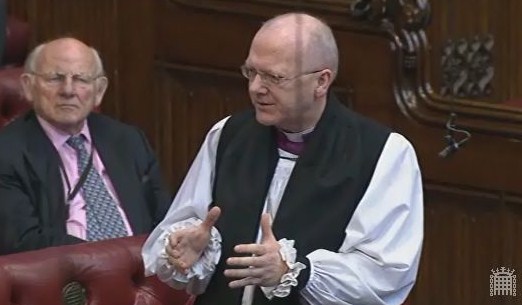
On the 11th June 2015 the Bishop of St Albans, Rt Revd Alan Smith, led a House of Lords debate on the pastoral letter of the House of Bishops for the General Election of 2015. The debate was titled:

‘That this House takes note of the role played by civil society, in the light of the pastoral letter from the Church of England’s House of Bishops, Who is my neighbour?’

The Bishop’s speech is below in full, along with his closing remarks and links to the speeches of the other 16 participants.The speech and subsequent debate can also be watched here.
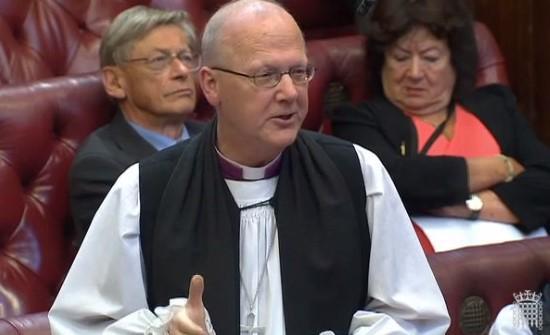
Bishop St Albans June 2015The Lord Bishop of St Albans: My Lords, there is much in our nation for which we can be profoundly grateful. Next week, as we mark 800 years since the sealing of Magna Carta, we give thanks for the long, yet sometimes tortuous, path that has led us to becoming a modern democracy. That moment was if not the birth then perhaps at least the conception of civil society at the beginning of a long gestation.

Last month, we celebrated 70 years of peace since the end of the Second World War, by which time civil society as we know it today was coming of age. As a nation, we have experienced extraordinary levels of economic growth over recent decades. Life expectancy has increased significantly and, importantly for this debate, in many communities in our nations, civil society is still strong and thriving. I for one am immensely grateful to be living in modern Britain and do not want to give any time to sentimental talk about a bygone era that probably never existed. Continue reading “Bishop of St Albans leads debate on civil society, the common good and the Bishops’ General Election pastoral letter”

Mentions of Religion and Faith in Party General Election Manifestos

The manifestos of the main parties standing for the Westminster General Election on 7th May 2015 have now been published. There are many issues across the full range of policies on which Christians and those of other faiths will be interested. The following is not an analysis of these, but are manifesto extracts where religion, faith and belief are given explicit mention in the text.

469px-Ballot_Box_Silhouette.svgLinks to the full manifestos of each party are to be found below, along with a collection of links to Christian and other faith bodies hosting material on the General Election. Continue reading “Mentions of Religion and Faith in Party General Election Manifestos”

Church Commissioner Questions – Bats, Buildings, Elections

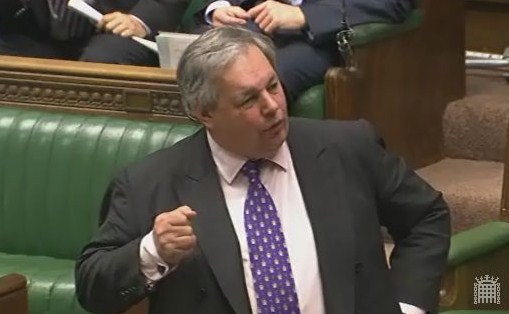
During the regular slot for questions to the Church Commissioners in the House of Commons on 11th December 2014, the Second Church Estates Commissioner, Rt Hon Sir Tony Baldry MP, was asked about maintenance of cathedrals, church repairs, bat damage in churches and general election hustings. A full transcript is below.

Church Commissioners

14.01 CCQ BaldryThe right hon. Member for Banbury, representing the Church Commissioners, was asked—

English Cathedrals (Maintenance)

Michael Fabricant (Lichfield) (Con): [Question:] What representations he has made to the Chancellor of the Exchequer on funding for maintenance of the fabric of English cathedrals that are older than 500 years. Continue reading “Church Commissioner Questions – Bats, Buildings, Elections”

Bishop of St Albans supports efforts to encourage young people to vote

On 1st July 2014, Liberal Democrat peer Lord Storey asked Her Majesty’s Government what plans they have to encourage educational establishments to take part in National Voter Registration Day 2015. The Bishop of St Albans, the Rt Revd Alan Smith, asked a supplementary question.

Bishop of St AlbansThe Lord Bishop of St Albans: My Lords, the Question is about encouraging educational establishments to encourage a whole new generation of people to engage in the electoral process. Of course, next year is a hugely significant year, with the 800th anniversary of Magna Carta. Can we not only encourage our schools to use this as an opportunity to really inspire people to think about civil participation, citizenship and so on but find some imaginative ways to give people the information in the educational packs that will be used next year?

Lord Wallace of Saltaire: My Lords, certainly. We trust that the churches will play their own role, and perhaps we will have mentions in sermons of civic duty and what one should render unto Caesar as well as unto God.

(via Parliament.uk)

Bishops vote to make membership or support of BNP or NF disciplinary offence for clergy

(press release via ChurchofEngland.org)

BNP and National Front incompatible with teaching of Church

03 June 2014

The House of Bishops of the Church of England have voted to make membership or support of the British National Party (BNP) or National Front (NF) a potential disciplinary offence for its clergy. Continue reading “Bishops vote to make membership or support of BNP or NF disciplinary offence for clergy”

Can Lords Spiritual vote in general elections?

Archbishop of Canterbury Robert Runcie and Prime Minister Margaret Thatcher

When Robert Runcie, Archbishop of Canterbury, revealed in 1983 that he had voted in the recent general election (though not who for), he was unlikely to have imagined that it would give rise to newspaper headlines and questions in parliament. He had not broken the law, though the subsequent debate shone a light on an otherwise little-known feature of the House of Lords.  Continue reading “Can Lords Spiritual vote in general elections?”

The Bishop of St Albans takes part in debate on the Charity Commission

During a debate on the effectiveness of the Charity Commission, the Bishop of St Albans welcomed the Government’s decision to extend exempted charity status to churches and similar charities by a further seven years but raised concerns about the capacity to register exempted organisations when they reach the registration threshold. He called on the Government to ensure that funding was maintained to ensure the Charity Commission could provide high-quality advice and support to charities and sought a specific assurance from the Minister that the Transparency of Lobbying Act would not affect a church’s ability to host hustings and similar events.

The Lord Bishop of St Albans: My Lords, I will not reiterate what has already been said about the levels of underfunding of the Charity Commission. There is great concern that the vital work that is going on needs proper support if we are going to develop this very important sector in our country. A number of noble Lords have spoken about the need for proper resourcing.

I want to comment briefly on the group of charities that are described by the Charity Commission as excepted charities. These include not just churches and chapels but charities that provide premises for some types of schools and Scout and Guide groups, and charitable service funds of the Armed Forces. It is very significant and helpful that Her Majesty’s Government have decided to extend exception from registration for a further seven years beyond 31 March 2014. It is unclear whether there are any plans afoot for an orderly transition to registration in the lead-up to 2021. Of course, to some extent inflation will reduce the number of excepted organisations and other charities as they reach that £100,000 registration threshold, but unless some queuing system is agreed in advance, at the end of the seven-year extension there is a real possibility of a logjam. Continue reading “The Bishop of St Albans takes part in debate on the Charity Commission”

The Bishop of Wakefield asks question on electoral fraud

Baroness Hanham asked Her Majesty’s Government what assessment they have made of the recommendations in the final report of the Electoral Commission Electoral fraud in the UK.

The Bishop of Wakefield asked a supplementary question:

The Lord Bishop of Wakefield: My Lords, following the question of the noble Lord, Lord Campbell-Savours, about areas of high risk, in our diocese of Wakefield the local authority of Kirklees has been pinpointed as just one such area for the sort of reasons that the noble Lord mentioned. The local authority is working hard with a number of agencies to ensure the probity of the next elections. Will the Minister say what sort of support will be given to councils to enable them to fulfil this important duty?

Lord Wallace of Saltaire: My Lords, I was discussing that exact question with the electoral registration officer of Kirklees the summer before last, including the authority’s co-operation with the police. We all know that there are pockets of problems within Kirklees. It is a matter for local co-operation with the police, who are well aware of this. We are also well aware that there is a certain tendency in some local elections for candidates to use allegations of electoral fraud against each other as part of the local campaign. That is one of the reasons why the police are occasionally a little sceptical about allegations being thrown around during the campaign.

(via parliament.uk)

Bishop of Wakefield speaks on use of church buildings during elections

Baroness Royall of Blaisdon asked Her Majesty’s Government what steps are being taken to increase the number of people who are registered to vote in the United Kingdom.

The Lord Bishop of Wakefield: My Lords, noble Lords will know that churches and the ancillary buildings connected with them are often the places where hustings take place, and indeed are used as polling stations. This is a key way of engaging local people in the democratic process. With the recent passing of the transparency of lobbying Act, will the Minister reassure us that churches and such places will continue to be used and will not be affected by the passing of that Act?

Lord Wallace of Saltaire: My Lords, I cannot see any way in which the use of churches as polling stations, and indeed the role of the clergy in encouraging people to do their community and civic duty, will be adversely affected. I very much hope that the church will continue to encourage all those who are part of its community to take a full part in civic, social and political life.

(via parliament.uk)

Bishop of St Albans calls on Government to include churches in voter registration initiatives

Lord Roberts of Llandudno asked Her Majesty’s Government what steps they are taking to support National Voter Registration Day on Wednesday 5 February, which seeks to encourage new, especially young, people to register to vote.

The Bishop of St Albans asked a supplementary question:

The Lord Bishop of St Albans: My Lords, the Church of England is involved in the education of more than 1 million young people and we want to play our part in supporting this. Will Her Majesty’s Government talk with the department to see if, in future, they will write not only to schools but to the 43 statutory diocesan boards of education, many of which employ full-time schools workers, and to dioceses? My diocese has an average of 30 to 40 full-time paid youth workers and many volunteer ones. We would be delighted to use our communication resources to support this sort of initiative.

Lord Wallace of Saltaire: My Lords, the Government recognise that they alone cannot do everything in this regard. We welcome conversations with all other organisations. I wondered whether the right reverend Prelate was going to promise that the Church of England would give sermons on the subject. Once, when I was a parliamentary candidate, I was taken by a young woman called Liz Barker—the noble Baroness, Lady Barker, as she is now—to the Methodist church in which her father had been a minister. The sermon came as close as possible to suggesting that the congregation might like to vote for me.