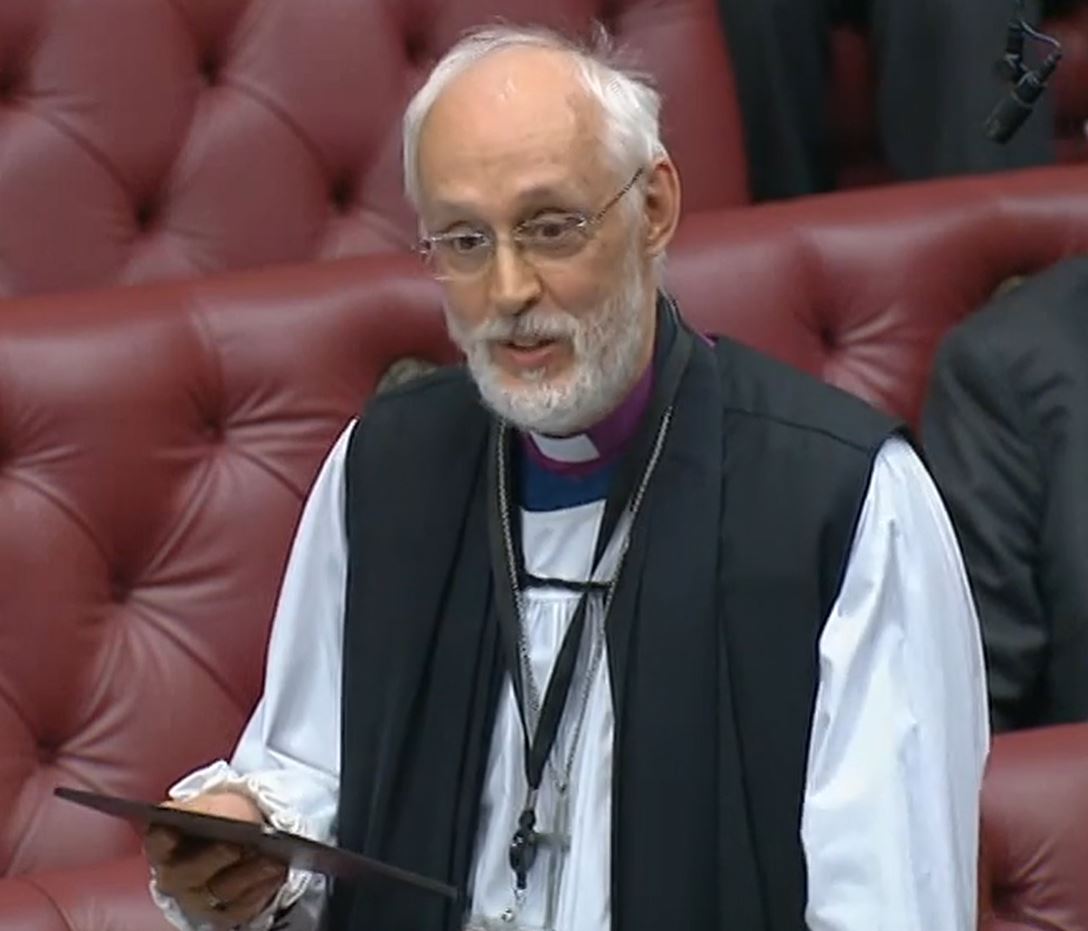
Bishop of St Albans asks a question on microplastics in food production

The Bishop of St Albans received the following written answer on 19th July 2022:

The Lord Bishop of St Albans asked Her Majesty’s Government what assessment they have made of the prevalence of microplastics in food production.

Continue reading “Bishop of St Albans asks a question on microplastics in food production”

Bishop of Manchester asks a question on the Food Strategy White Paper

On 7th July, the House of Lords discussed the Food Strategy White Paper. The Bishop of Manchester asked the following question:

The Lord Bishop of Manchester: My Lords, the National Food Strategy that was produced last year found that the UK’s current appetite for meat was unsustainable and that the intake needed to fall by 30% within 10 years to help the environment. I would be grateful if the Minister could clarify what role exists for vegetarian and vegan food in the Government’s strategy. It does not appear to be set out, not least when it comes to aligning with the Government’s net-zero strategy.

Continue reading “Bishop of Manchester asks a question on the Food Strategy White Paper”

Bishop of St Albans asks about food export plans

The Bishop of St Albans received the following written answer on 26th May 2022:

The Lord Bishop of St Albans asked Her Majesty’s Government, further to the report by the National Farmers Union Growing our agri-food exports to 2030 and beyond, published on 27 April, what plans they have to increase the number of agri-food experts in British embassies located in target markets for future free trade agreements.

Continue reading “Bishop of St Albans asks about food export plans”

Bishop of St Albans asks about food prices

On 19th May 2022, the Bishop of St Albans asked a question during a debate on inflation and food prices:

The Lord Bishop of St Albans: My Lords, I thank the Minister for his replies on this important area, but is he concerned, as a number of people are, that some farmland is now being taken out of production because it is being bought by companies for carbon offset? Indeed, one of the issues about some of the rewilding is that, sometimes, good farmland, which could help us, is now not available. What are Her Majesty’s Government doing to increase our food production, both for our own security but also so we can export to help those other countries that are facing huge hikes in prices?

Continue reading “Bishop of St Albans asks about food prices”

Bishop of Gloucester asks about food affordability

The Bishop of Gloucester received the following written answer on 5th April 2022:

The Lord Bishop of Gloucester asked Her Majesty’s Government what assessment they have made of the merits of an Affordable Food Innovation Fund being included in the White Paper to be published in response to the National Food Strategy.

Continue reading “Bishop of Gloucester asks about food affordability”

Bishop of St Albans asks about risks posed by genetically modified food

The Bishop of St Albans tabled a question on potential risks associated with genetically modified food production in the UK on 8th February 2021:

The Lord Bishop of St Albans [V]: To ask Her Majesty’s Government what assessment they have made of the potential (1) health, and (2) environmental, risks associated with approving genetically modified food production in the United Kingdom.

Continue reading “Bishop of St Albans asks about risks posed by genetically modified food”

Trade Bill: Bishop of Blackburn supports amendments on sustainable development goals, environmental, health and food standards

On 8th October 2020 the House of Lords considered the Government’s Trade Bill in committee. The Bishop of Blackburn spoke in support of amendments that would:

  • require parliamentary approval of both negotiating objectives and of free trade agreements before the UK becomes a signatory to any agreements, to safeguard food, environmental, animal welfare and health standards.
  • ensure trade agreements cannot be implemented, signed or ratified unless they are consistent with the provisions of the Sustainable Development Goals.

The Bishops’ speeches are below and the full text of the amendments beneath.

The Lord Bishop of Blackburn: My Lords, having made my maiden speech a week or so ago at Second Reading of the Bill, I am very grateful to the noble Lord, Lord Purvis, for proposing Amendment 35, to which I wish to speak, without, I have to say, the expertise of other contributors, but I shall speak in favour of the amendment on two counts, only simply, as I do not wish to repeat what has already has been said. Continue reading “Trade Bill: Bishop of Blackburn supports amendments on sustainable development goals, environmental, health and food standards”

Trade Bill: Bishop of St Albans backs amendments on food and environmental standards

On Tuesday 6th October 2020 the House of Lords considered the Government’s Trade Bill in Committee. The Bishop of St Albans spoke in support of amendments on securing food and environmental standards in future trade deals:

The Lord Bishop of St Albans [V]:  My Lords, I plan to say a few words on Amendment 20, moved by the noble Lord, Lord Grantchester. I am also sympathetic to Amendments 23, 25 and 26.​

Food production and environmental standards, as well as the safety that they enshrine, are crucial to a healthy agricultural sector that seeks to mitigate the dangers arising from poor practices and the low-quality products they produce. Ensuring continuity has been a big priority for a number of Members. Issues surrounding the responsible administration of antibiotics to livestock, for example, are not national issues but global public health ones. Despite the Bill covering existing trading arrangements, we should not forget that the raison d’être for leaving the European Union was the assertion of our sovereignty. Continue reading “Trade Bill: Bishop of St Albans backs amendments on food and environmental standards”

Trade Bill: Bishop of St Albans supports amendments to ensure trade deals meet standards on climate, environment, food and animal welfare

On 1st October 2020 the House of Lords considered the Government’s Trade Bill in Committee. The Bishop of St Albans, Rt Revd Alan Smith, spoke in support of amendments to the Bill to ensure that future trade agreements are fully compliant with international environmental obligations, and meet standards on animal welfare and food safety.

The Lord Bishop of St Albans [V]: I plan to speak mainly on Amendment 12, but I also support Amendment 40 and, particularly, Amendment 69 in this group [texts below]. Leaving the European Union should not mean leaving our international obligations. Recognition of those conventions mentioned under Amendment 12 is, one would imagine, already accounted for in the existing trade agreements due to be transposed into UK law as a result of this Bill. However, without this amendment, these remain an expectation not an assurance.

Continue reading “Trade Bill: Bishop of St Albans supports amendments to ensure trade deals meet standards on climate, environment, food and animal welfare”

Agriculture Bill: Bishop of St Albans supports successful amendment on food standards

On 22nd September 2020 the House of Lords considered amendments to the Government’s Agriculture Bill at its Report Stage. The Bishop of St Albans, Rt Revd Alan Smith, spoke in favour of an amendment he had co-sponsored, to extend the mandate and lifespan of the Trade and Agriculture Commission, to safeguard food and farming standards. The amendment was put to a vote and was passed by the House.

The Lord Bishop of St Albans [V]: My Lords, I too will speak on Amendment 101, in the name of the noble Lord, Lord Curry of Kirkharle, to which I have ​added my name. The previous three speakers have more than adequately spelled out why it makes a great deal of sense, so I can limit my comments.

The Government, through the joint letter from the Environment Secretary and the Secretary of State for International Trade, have assured us that standards will not be compromised as part of trade negotiations. Furthermore, I am reassured by the breadth of experience among the agri-food trade advisory group. However, welcome though these developments are, fundamentally they lack the legally binding requirement that properly guarantees that Parliament will have recourse to ensuring that our standards are not diluted. Continue reading “Agriculture Bill: Bishop of St Albans supports successful amendment on food standards”