Bishop of Birmingham calls for long-term focus in development assistance in emergency situations

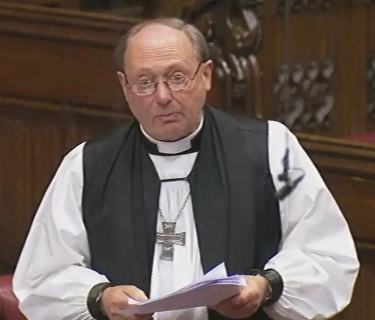
On 18th November 2013, the Bishop of Birmingham, the Rt Revd David Urquhart, asked a question in response to a Government statement on the Commonwealth Heads of Government Meeting and the Philippines typhoon. The question was answered by the Leader of the House of Lords, Lord Hill of Oareford.

01.04.14 Bishop of BirminghamThe Lord Bishop of Birmingham: My Lords, I thank the Government for this remarkable reminder of the generosity of the British people and DEC, and for the commitment of “HMS Daring” and other support. “HMS Daring” of course is connected with Birmingham, the most landlocked city in Britain. Perhaps I may ask the Leader of the House about not just the emergency phase, which is so important, as regards food, water and shelter, but the recovery phase in disasters such as this where we are looking for housing, infrastructure and livelihood. In looking further ahead than just the natural response to the ghastly situation, will he take into account two matters? One was raised by the Philippines climate change commissioner, Yeb Sano, at the UN Climate Change Conference in Warsaw. He said, “Typhoons such as Haiyan”— or Yolanda as it is called in the Philippines—

“and its impacts represent a sobering reminder to the international community that we cannot afford to procrastinate on climate action”,

and that the emergency response should look into the much more serious long-term effects of these kinds of climate changes. Continue reading “Bishop of Birmingham calls for long-term focus in development assistance in emergency situations”

Bishop of Guildford warns of further destabilisation if situations in Sudan and South Sudan are not resolved

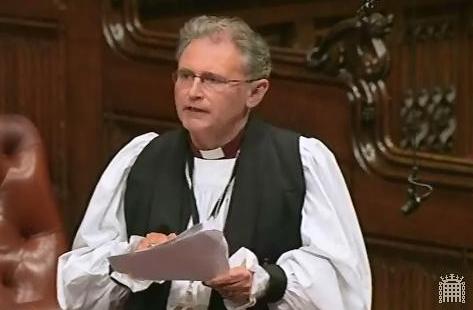
On 7th November 2013, Baroness Cox led a short debate on what assessment Her Majesty’s Government have made of the situation in Sudan, and the implications for citizens of the Republic of South Sudan. The Bishop of Guildford, the Rt Revd Christopher Hill, took part in the debate.

guildfordThe Lord Bishop of Guildford: My Lords, I completely endorse what has been said so far in this discussion. I want to raise a rather different point, but equally I want to express my distress—and, indeed, my shared anger—about the humanitarian, agrarian and political disaster about which we have been speaking.

My rather different point is a question about the implications of further destabilisation of Sudan for the country’s international neighbours. I think that that is an important point. I visit Nigeria regularly, and I am due to fly out to Abuja on Sunday. Four years ago, I was able to go to the province of Maiduguri up in the north-east. I cannot go there now, at the moment anyway, because of the political situation. Maiduguri is a long, long way from Sudan—many miles away. Nevertheless, I believe that there is a connection. Continue reading “Bishop of Guildford warns of further destabilisation if situations in Sudan and South Sudan are not resolved”

Bishop of Guildford highlights long history of Christianity in China

“There are huge numbers of practising Christians in China, amounting to many tens of millions, although I agree that the exact figure is very hard to determine…. The Chinese Government have a close interest in how religion helps in building a harmonious society, now that communism is not the only player in China’s major global role.”

On 7th November 2013 the Bishop of Guildford, the Rt Revd Christopher Hill, took part in Lord Dobbs take-note debate on the recent developments in the relationship between the United Kingdom and China. He focused on the long-standing relationship between the West and China, particularly in terms of  the long history of Christianity in China. He noted contemporary initiatives to strengthen the relationship between the Church of England and the church in China, particularly the role of the Bishop of Birmingham as the Archbishop’s envoy to China.

The Lord Bishop of Guildford: My Lords, the right reverend Prelate the Bishop of Birmingham deeply regrets that he cannot be in his place today. He is the envoy of the most reverend Primate the Archbishop of Canterbury in relation to China. I am sorry that he is not here speaking, and not only because I am speaking in his place.

We are hearing, and shall continue to hear, many fascinating things in this debate about China, not least from the two maiden speeches, to which we look forward. The importance of student academic exchanges, stressed by some noble Lords, particularly resonates with me. I declare an interest in the University of Surrey with its developing—indeed burgeoning—links with China. That is wonderful. Continue reading “Bishop of Guildford highlights long history of Christianity in China”

Bishop of Coventry leads debate on humanitarian crisis in Syria

“Even with a political solution, the scars of this conflict will take many generations to heal. It will require the continued generosity of the international community in a sustained and strategic humanitarian commitment. I hope that Her Majesty’s Government will continue to take a courageous lead and make this not the last business of a long day but the priority of every morning until the holy land of Syria is healed.”

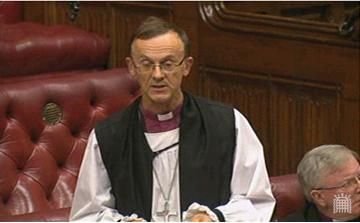
On 30th October 2013, the Bishop of Coventry, the Rt Revd Christopher Cocksworth, led a short debate in the House of Lords, to ask Her Majesty’s Government what steps they are taking to address the humanitarian crisis caused by the ongoing conflict in Syria. In his opening speech, the Bishop commended the Government for its response to the humanitarian crisis in Syria, but called for all pledged humanitarian assistance to be supplied as quickly as possible. He called on the Goverment to look into the resettling of Syrian refugees and noted the negative impact that the humanitarian crisis was having on the broader region. 

13.10 Bishop of CoventryThe Lord Bishop of Coventry: My Lords, despite the admirable diplomatic activity of recent weeks, the humanitarian costs of the ongoing conflict in Syria show no sign of abatement. As violence expands exponentially and cruelty abounds, no one can fail to be moved by the scale of the crisis, which is nothing short of a catastrophe.

This debate seeks neither to underestimate the efforts of Her Majesty’s Government to rise to the challenge of humanitarian support, nor to question their resolve to work towards a political resolution of the civil war. Rather, I hope that it will give an opportunity for your Lordships’ House to focus its expert attention on the humanitarian costs of the conflict and the humanitarian imperative of bringing the conflict to an end, and, in so doing, of checking that every stone is being turned in the cause of compassion and the pursuit of peace. Continue reading “Bishop of Coventry leads debate on humanitarian crisis in Syria”

Bishop of Wakefield leads debate on religious freedom in the Middle East and North Africa

“States need to feel comfortable and confident enough in their own skins, as one might put it, to uphold their core values for all citizens regardless of religious or non-religious background. Even in our own nation, it can sometimes appear to be a fragile commodity but we have the comfort of two centuries’ experience of relative tolerance. If freedom of religion is in many ways the fundamental right upon which all other rights turn, it is important for our and other Governments to remain actively engaged over the long term, pressing for the rights of all religious minority communities.”

On 29th October 2013, the Bishop of Wakefield, the Rt Revd Stephen Platten, led a debate in the House of Lords to ask Her Majesty’s Government what is their assessment of the situation of religious minorities in the Middle East and North Africa after the events of the Arab Spring. He noted that the Arab Spring and resulting events were about issues of identity, political organisation and rights, all of which impact on the place of religious minorities. He urged wisdom and patience from the international community and urged for governments based on consent to be established throughout the region. He noted in particular the persecution of Christians in the region, including many groups historically amongst the earliest Christian communities. He commended the work of the Government in prioritising the freedom of religion but called for there to be consideration around the appointment of an Ambassador-at-Large for Religious Freedom. 

Bishop of Wakefield PlattenThe Lord Bishop of Wakefield: My Lords, I am very grateful for this opportunity to speak about the situation of religious minorities in the Middle East and north Africa since the Arab spring. The debate will, I hope, provide the opportunity to take a more detached view on developments over the past few years and to look at the underlying dynamics affecting religious minorities in the region.

Events in the Middle East since the start of the Arab spring have been a challenge not only to those living in the region but to all of us. Many, myself included, have viewed the series of uprisings which started in Tunisia through the lense of our experience of the Cold War. We wrongly assumed then that the fall of the Berlin Wall would usher in an era of tolerance and political pluralism throughout Europe. The reality was very different. Released from the uniformity of authoritarian rule, the former states of the USSR struggled with weak Governments to meet the diverse and competing aspirations of all their people. Often, as in the case of Balkans, those struggles turned horribly violent, with religion politicised as a marker of identity. Of course, the lessons of our own European history are seminal when trying to understand the transformations shaping the Middle East today. Revolutions are never simple and straightforward affairs. The Reign of Terror and the Vendée in France at the end of the 18th century were perhaps the beginning in our own modern era. Continue reading “Bishop of Wakefield leads debate on religious freedom in the Middle East and North Africa”

Bishop of Ripon and Leeds speaks during debate on UK-Iran relations

“I am not yet convinced that a change in Iran’s human rights agenda will come with the Rouhani presidency, because critical decisions continue to be made by the Supreme National Security Council. This remains populated by a cohort of people who spent much of their careers in the military and security services.”

On 24th October 2013, the Bishop of Ripon and Leeds, the Rt Revd John Packer, took part in a short debate led by Baroness Afshar to ask Her Majesty’s Government, in the light of the recent elections in Iran, what steps they are taking to facilitate closer commercial and educational ties with that country. The Bishop asked what the Government considered a normalisation of relations between Iran and the UK to look like. He also raised concerns about human rights abuses in Iran and the importance of the respect of religious freedom and noted the need for strengthening of relations between UK and Iranian Churches. 

R_LThe Lord Bishop of Ripon and Leeds: My Lords, I am very grateful to the noble Baroness, Lady Afshar, for initiating this debate and for introducing it so comprehensively. I am aware, through contacts, of Iranian students in Leeds and of some of the difficulties of which noble Lords have been speaking in terms of their education and the way that that has developed, and of the struggle to keep them at Leeds University.

Like others, I have been heartened by the change of political rhetoric following the elections in Iran, and share the high expectations that a more pragmatic stance from Tehran will see progress made on a range of issues, not least the nuclear issues. In view of the speed of recent diplomatic developments and the ambitious timetable set at this month’s talks in Geneva—the six to nine months to which a number of noble Lords have already referred—it would be helpful to have some idea from the Minister as to what she understands to be the end game. What would a normalisation of relations look like? What might be the trade-offs that each party might be required to make? That seems to be at the heart of the question that the noble Baroness has put before us today. Continue reading “Bishop of Ripon and Leeds speaks during debate on UK-Iran relations”

Bishop of Ripon and Leeds calls for stronger monitoring of welfare of asylum seekers returned to DRC

On 24th October 2013, the Bishop of Ripon and Leeds, the Rt Revd John Packer asked Her Majesty’s Government on what evidence they consider the Democratic Republic of the Congo to be a safe country to which to return asylum seekers.

R_LThe Lord Bishop of Ripon and Leeds: Despite my unelected nature, I beg leave to ask the Question standing in my name on the Order Paper.

The Parliamentary Under-Secretary of State, Home Office (Lord Taylor of Holbeach) (Con): My Lords, we observe our obligations under the refugee convention and the European Convention on Human Rights. Every asylum application is considered on its individual merits in the light of country information from a range of sources, including fellow European and asylum-intake countries. Returns are made only if it is safe to do so, and the courts have supported our position.

The Lord Bishop of Ripon and Leeds: I am very grateful to the Minister for that response. Following the Unsafe Return report of November 2011 and continued documented reports of ill treatment of those who return to the Democratic Republic of the Congo in the Unsafe Return 2 report of this month, will the Government use the evidence provided to challenge the DRC authorities and to set up a monitoring mechanism for those returned so that there is a minimal safety measure for them in this very dangerous country?

Lord Taylor of Holbeach: My Lords, the Home Office works very closely with FCO staff here in London and with embassy officials in Kinshasa. The embassy staff participated in the DRC fact-finding mission and stated that they were not aware of substantial evidence of any returnee being ill treated. However, I assure the right reverend Prelate that the Home Offices investigates specific allegations of mistreatment on return.

(via Parliament.uk)

Bishop of Worcester puts questions to Government on Israeli settlements (Written Answers)

On 24th October 2013, the Bishop of Worcester, the Rt Revd John Inge, received answers to three written questions regarding Israeli settlement-based entities, activities and products.

Worcester

The Lord Bishop of Worcester: To ask Her Majesty’s Government what steps they intend to take to implement the new European Commission guidelines of July 2013 on the funding of Israeli settlement-based entities and activities.

The Senior Minister of State, Department for Communities and Local Government & Foreign and Commonwealth Office (Baroness Warsi) (Con): The EU guidelines on the eligibility of Israeli entities and their activities in the territories occupied by Israel since June 1967 for grants, prizes and financial instruments, were prepared to implement the commitment made by EU Foreign Ministers in December 2012 to make a distinction in relevant EU programmes and agreements between the State of Israel and Israeli settlements in the Occupied Territories. The guidelines themselves apply to EU, rather than individual Member State programmes, and will be implemented by the European Commission. The guidelines are due to be implemented in January 2014.

Continue reading “Bishop of Worcester puts questions to Government on Israeli settlements (Written Answers)”

Bishop of Ripon and Leeds calls for post-2015 agenda to focus on tackling inequality

On 23rd October 2013, Baroness Jenkin of Kennington led a short debate in the House of Lords to ask Her Majesty’s Government what assessment they have made of the United Nations High-level Panel report into the successor agenda to the Millennium Development Goals. The Bishop of Ripon and Leeds, the Rt Revd John Packer, spoke during the debate, calling on the Government to support a post-2015 agenda focused on tackling inequality as well as extreme poverty.

R_LThe Lord Bishop of Ripon and Leeds: My Lords, I am grateful to the noble Baroness, Lady Jenkin, and I share the welcome for the high-level panel report. I believe it could be strengthened in two areas. The first area is environmental sustainability. The millennium goals are weak on climate change and the high-level panel report does not make it sufficiently clear that global warming already damages the economies, and therefore the poor, in poorer countries such as Bangladesh. The panel has the laudable aim of eliminating $1.25 a day poverty but that needs to be inextricably linked with a new climate equilibrium, which we are far from attaining. Do Her Majesty’s Government agree that there needs to be a legally binding global climate deal in 2015 in line with the scientific consensus? Continue reading “Bishop of Ripon and Leeds calls for post-2015 agenda to focus on tackling inequality”

Written Answers – Civil Service, Freedom of Religion and the United Nations

Bishop of DerbyOn 17th October 2013 the Bishop of Derby, the Rt Revd Alastair Redfern, received answers to written question on the topics of civil service corporate credit cards, freedom of religion and the United Nations.

Civil Service: Corporate Credit Cards

The Lord Bishop of Derby: To ask Her Majesty’s Government what are the rules and criteria for the issuing of corporate credit cards to civil servants; and how the use of such cards is monitored and audited.

Lord Gardiner of Kimble: The Government Procurement Card (GPC) is a payment charge card used for making low value purchases. Its proper use contributes to making efficiencies.

All Departments have a clear policy for card allocation. The GPC Steering Group, established after the last General Election, has developed minimum policy standards for central Government departments and their Arm’s Length Bodies (ALBs). GPC Central Policy describes the roles and responsibilities for personnel that are required to govern and control local GPC programmes. These policies have been shared with the National Audit Office (NAO) and must be followed by all departments using GPCs. Before the last General Election there was no central oversight of Government GPC card use.

All Departments now operate compliance checking processes which include transaction logs that must be reconciled with bank statements and receipts each month; and the requirement for budget managers to reconcile GPC payment to ensure compliance with approved spend. The departmental controls, in accordance with GPC policy, include monthly compliance checking, including identifying off-contract spend and clear guidance for users on the correct route-to-buy.

All spend on GPCs over £500 is now published.

(via Parliament.uk) Continue reading “Written Answers – Civil Service, Freedom of Religion and the United Nations”