 On 9th July 2019 the Bishop of Durham, Rt Revd Paul Butler, led a debate in the House of Lords on the question to Government, “what assessment they have made of Project 17’s report Not Seen, Not Heard: Children’s experiences of the hostile environment”:
The Lord Bishop of Durham: My Lords, I am delighted to introduce this debate on Project 17’s report, Not seen, Not heard. In doing so, I draw attention to my interests as listed on the register and, in particular, to the research support I receive from the Good Faith Partnership’s RAMP project on immigration policy.
In this report, Project 17 highlights the way that vulnerable families and children are trapped between overstretched local authorities and punitive immigration controls. As with the ongoing harm caused by the two-child limit, it seems that cost-cutting and punitive notions of control are prioritised over the flourishing and protection of families. We need a radical change of direction away from seeing vulnerable children as a burden. Like many in this Chamber, I believe that a policy built on the gift and voices of children is not a naive aspiration but the very definition of good policy.
Continue reading “Bishop of Durham asks Government for response to report on children’s experiences of the hostile environment’”

 On 30th July 2019 the Bishop of Durham, Rt Revd Paul Butler, received a written answer, from Lord Agnew of Oulton, regarding free school meals for children of those with no recourse to public funds because of their immigration status:
 On 23rd July 2019 Baroness Lister of Burtersett (Lab) asked the Government “what assessment they have made of the impact on children of the no recourse to public funds immigration condition”. The Bishop of St Albans, Rt Revd Alan Smith, asked a follow-up question:
 On 19th July 2019 the House of Lords debated at Second Reading the EEA Nationals (Indefinite Leave to Remain) Bill, introduced by Lord Oates. The Bishop of Rochester, Rt Revd James Langstaff, spoke in the debate:
 The Lord Bishop of Durham: My Lords, I declare an interest as a trustee of
 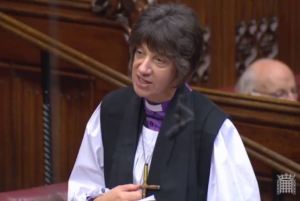 On 9th April 2019 the Bishop of Gloucester, Rt Revd Rachel Treweek, received written answers to two questions about asylum decisions and consultation with religious communities:
 On 3rd April 2019 the Minister for Equalities, Baroness Williams of Trafford, repeated a statement made in the House of Commons by the Home Secretary, Sajid Javid, about the Windrush Compensation Scheme. The Bishop of Peterborough, Rt Revd Donald Allister, responded with a follow up question about religious literacy in determining asylum applications:
 On 3rd April 2019 Baroness Whitaker asked the Government “whether they intend to implement the recommendations of the report of the Joint Committee on Human Rights, Immigration Detention (HL Paper 279), published on 7 February, in particular those related to indefinite detention.” The Bishop of Durham, Rt Revd Paul Butler, asked a follow-up question:
 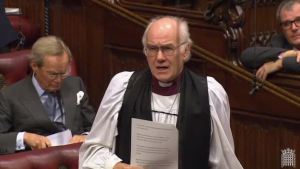 The Lord Bishop of Chester: My Lords, is it not the 28 days that people have to make arrangements, when they change from being asylum seekers to being refugees, that is the difficulty? It takes me more than 28 days to open a bank account if I am on good form, and there are lots of other things that they have to think about. Could the period not be extended beyond 28 days? Universal credit often does not kick in for at least 35 days. The 28-day period is just too tight for people in these circumstances.
 The Lord Bishop of Durham: My Lords, it is striking how small a part asylum and resettlement have played in the conversation about a post-Brexit immigration system. Assuming—and praying—that we do not leave without a deal, I hope that discussion of these vital areas will not be limited to the margins of an already limited engagement with the immigration White Paper and the SIs. I have a series of questions for the Minister.
 The Church of England in Parliament
You must be logged in to post a comment.