
On 12th September 2024, the Bishop of St Albans spoke in a debate on the government’s strategy for rural libraries, calling for an integrated rural strategy with a commitment to sustainability:

The Lord Bishop of St Albans: My Lords, if we are to stop the decline in the number of rural libraries, we urgently need something that many of us have been calling for for a long time, which is an integrated rural strategy with a commitment to rural sustainability. There is huge, mainly untapped potential in the countryside to use existing community buildings as hubs and provide many services such as access to computers and the internet—vitally important—banking services, basic dispensing, post offices and, of course, libraries. They could be sited in our rural schools or sometimes in underused village halls or even church buildings. We have managed to do that in some places; we can do it more. We need to find ways to make this vital service work economically. Will the Minister commit to supporting this radical rethink about rural services?
Continue reading “Bishop of St Albans calls for integrated and sustainable approach to rural library services”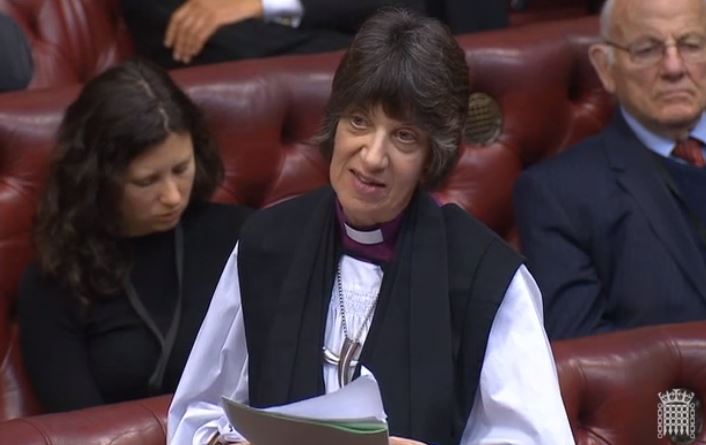
 On 24th January 2019 the Bishop of Worcester, Rt Revd John Inge, spoke in a debate tabled by Lord Scriven, “That this House takes note of the ability of local authorities across the United Kingdom to deliver essential services to their communities.”
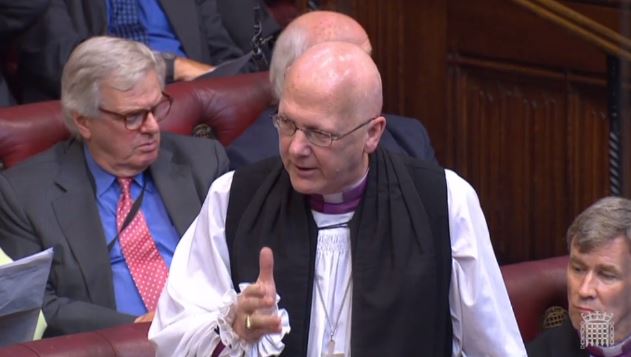 On the 13th October 2016 Lord Bird led a debate in the House of Lords: “That this House takes note of the cultural, civic and educational significance of libraries, bookshops and booksellers in the United Kingdom.” The Bishop of St Albans the Rt Revd Alan Smith, spoke about the impact closure could have on rural communities and the importance of imaginative partnerships which are developing between libraries and churches.
 The Lord Bishop of St Albans: My Lords, the Minister has twice mentioned the changing nature of libraries. Of course, they are not just about books. Nowadays, they are a major and vital source for internet access, especially in poorer areas, where people need them to apply for jobs and where fewer households have broadband. Especially in rural areas where broadband coverage is much lower, they are a vital part of rural sustainability. The Government are rolling out broadband very quickly, and that is encouraging, but it does need time. What support are they giving to those vital online centres, many of which are closely related to libraries or in libraries, both for the sake of heritage but also for the sake of our economy?
 The Church of England in Parliament
You must be logged in to post a comment.