
Mental Health Bill: Bishop of Manchester supports amendments on culturally appropriate care

On 22nd January 2025, the Bishop of Manchester spoke in support of amendments to the Mental Health Bill aiming to ensure culturally appropriate care in the mental health sector:

The Lord Bishop of Manchester: My Lords, I support all the amendments in this group. I also want to communicate the support of my right reverend friend the Bishop of London, who apologises that she cannot be in her place this evening.

Turning to the amendments led by the noble Baroness, Lady Whitaker, on culturally appropriate care, I appreciated the noble Baroness’s references to the Gypsy, Roma and Traveller community. I have worked with that community much over many years and very much enjoyed my interactions with it.

These amendments highlight issues that my right reverend friend has spent a lot of time considering, particularly from a faith perspective. I do not think we have heard that in the debate so far tonight. It is sometimes hard to grasp just how differently our health, especially our mental health, is culturally understood across different communities and faith groups. While our ability to discuss our own and others’ mental health may be generally improving—I think it is—it remains an extremely difficult discussion point for many cultures and many communities.

Continue reading “Mental Health Bill: Bishop of Manchester supports amendments on culturally appropriate care”
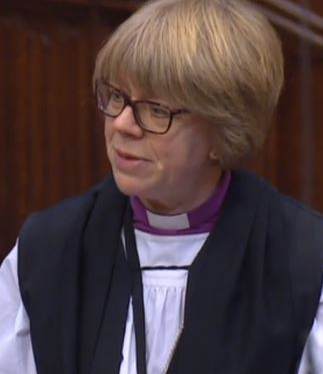
Mental Health Bill: Bishop of London raises issues of trust and accessibility for faith communities

The Bishop of London spoke at the second reading of the Mental Health Bill on 25th November 2024, raising the issues of trust and accessible care across different communities and faith traditions, and the need for investment in the mental health workforce:

My Lords, I am grateful to be able to participate in Second Reading of this important Bill. It is a privilege to follow the noble Baronesses, Lady Barker and Lady Watkins, who have a real breadth of experience in this field. I too welcome, along with many noble Lords, the reform of the Mental Health Act, which is long overdue.

The noble Earl, Lord Howe, highlighted the over-representation of minoritised communities detained under the Act but also placed on community treatment orders. Some groups are also more likely to be detained through contact with the criminal justice system or emergency departments. It is important to remember that we are speaking about these inequalities in the wider context of health inequalities; some groups present to health services far later, when their symptoms have worsened. The Royal College of Nursing notes in its briefing that mental health services are

“not seen as accessible to all communities”,

and that:

“Many black men have a first interaction with a service via the police during a crisis”.

Continue reading “Mental Health Bill: Bishop of London raises issues of trust and accessibility for faith communities”