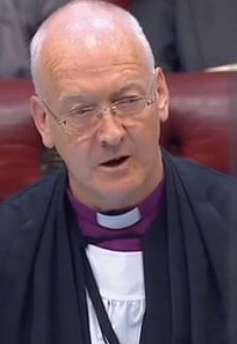
Bishop of Oxford on freedom of speech and online safety

“search engines free of advertising, social networking freed from the blind pursuit of profit, messaging services which do not mine our data—and all protecting the rights of the child? Perhaps the Government might be willing to explore this kind of radical intervention—social media in public service—in this vital area”

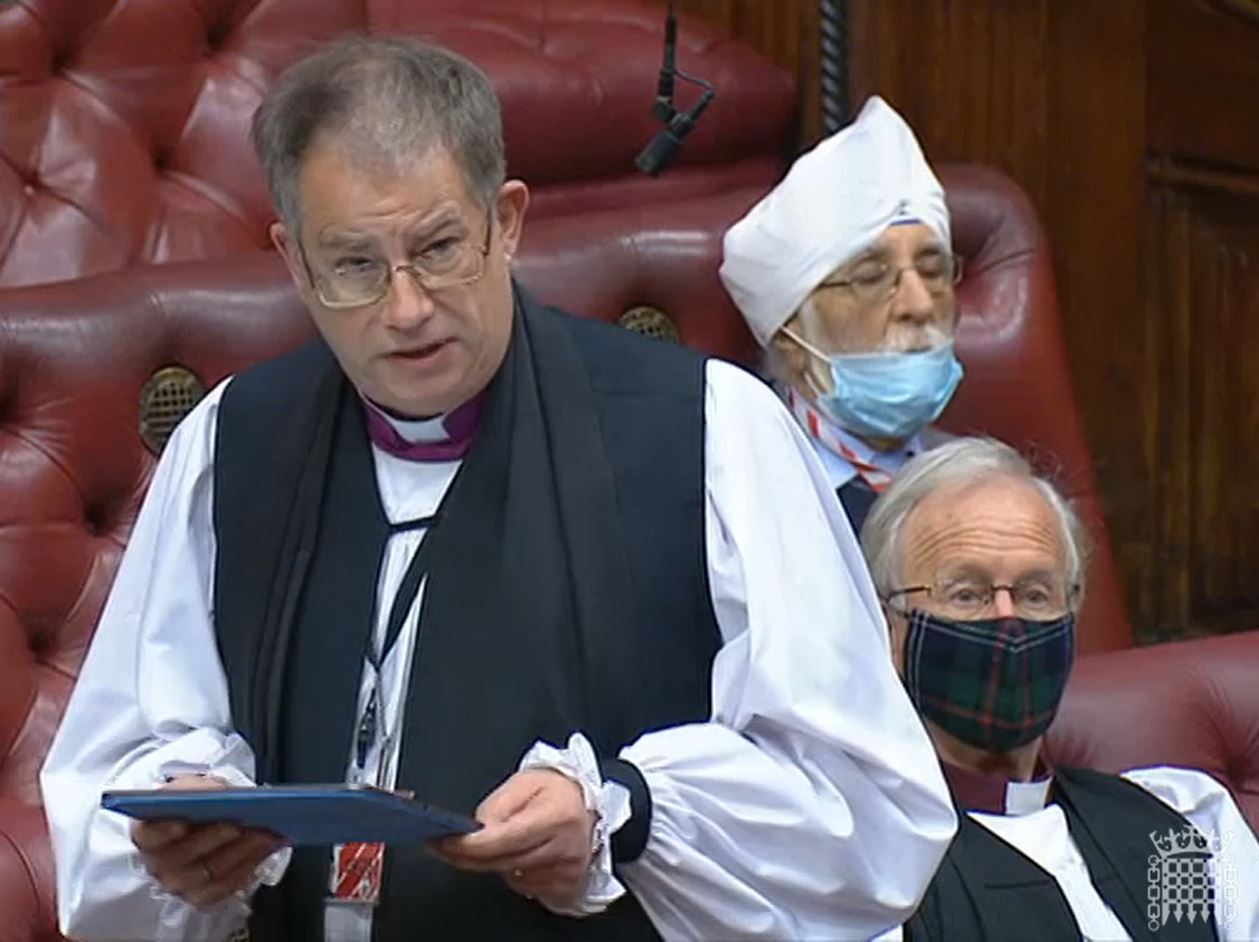
On 10th December 2021 the Bishop of Oxford spoke in a House of Lords debate led by the Archbishop of Canterbury on contemporary challenges to freedom of speech and the role of the public, private and third sectors in upholding it:

The Lord Bishop of Oxford: My Lords, it is a great privilege and honour, as always, to follow the noble and right reverend Lord, Lord Harries, one of my distinguished predecessors. I am grateful for this timely debate and to the most reverend Primate for his very comprehensive introduction. In a few days’ time, as we have heard, the scrutiny committee of both Houses will publish its report on the online safety legislation: a potentially vital web of provisions to prevent harm to individuals and, I hope, to society.

Continue reading “Bishop of Oxford on freedom of speech and online safety”

Bishop of St Albans asks about support for vulnerable elderly people using online financial services

On 30th November 2021, the Bishop of St Albans asked a question on the support and education available for elderly people accessing online financial services:

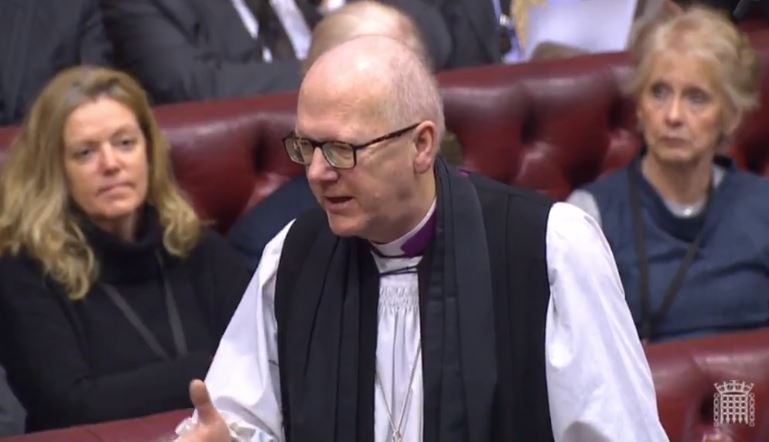
The Lord Bishop of St Albans: My Lords, with increasing numbers of bank branches being closed on high streets and the impact of Covid, the elderly vulnerable are having to negotiate the choppy waters of online banking like everybody else, in an environment where there are large numbers of online scams and frauds. What are Her Majesty’s Government doing to offer training and resources to try to protect the elderly vulnerable as they engage with online financial services?

Continue reading “Bishop of St Albans asks about support for vulnerable elderly people using online financial services”

Bishop of Oxford supports Age Assurance (Minimum Standards) Bill

On 19th November 2021, the House of Lords debated the Age Assurance (Minimum Standards) Bill in its second reading. The Bill, tabled by Baroness Kidron, would require Ofcom to produce a code of conduct setting out minimum standards for any system of age assurance, with the aim of protecting children from exploitation and harmful online content. The Bishop of Oxford spoke in support of the bill:

The Lord Bishop of Oxford: My Lords, it is a real pleasure to follow the noble Lord, Lord Russell, and indeed every other noble Lord who has spoken in this debate. It has been extraordinary and very moving. I join other noble Lords in congratulating the noble Baroness, Lady Kidron, on securing this Second Reading and on her passionate and brilliant opening speech. With others, I thank and commend her for her tireless commitment to protecting children online. That she does so with such consistent grace and good humour, against the backdrop of glacially slow progress and revelations about both the variety and scale of harms to children, is no small achievement in itself.

Continue reading “Bishop of Oxford supports Age Assurance (Minimum Standards) Bill”

Bishop of Gloucester asks about ensuring a healthy digital environment for children

The Bishop of Gloucester asked whether the government would give assurances that children’s rights to a healthy digital environment would be taken into consideration in the upcoming Online Safety Bill on 1st July 2021:

The Lord Bishop of Gloucester: My Lords, the online safety Bill talks about protecting

“rights to freedom of expression”,

but nowhere does it refer to children’s rights to grow up in a healthy digital environment. Can the Minister give assurance that this will be addressed?

Continue reading “Bishop of Gloucester asks about ensuring a healthy digital environment for children”

Bishop of Leeds asks about online abuse of public representatives

The Bishop of Leeds tabled a question on the proliferation of online abuse of public representatives on 16th June 2021, raising issues of security and the need for regulation:

The Lord Bishop of Leeds: To ask Her Majesty’s Government, further to the fifth anniversary of the murder of Jo Cox MP, what assessment they have made of (1) the security needs of public representatives subjected to online abuse, and (2) the need for regulation to tackle such abuse.

Baroness Barran (Con): My Lords, I think that this is a very solemn day for all of us as we remember Jo Cox’s tragic murder five years ago. I am sure that the House joins me in acknowledging the courage of her sister, whatever our party affiliations, in standing as a candidate in the by-election in Jo’s former seat.

Continue reading “Bishop of Leeds asks about online abuse of public representatives”

Queen’s Speech – Bishop of Gloucester on criminal justice, violence against women and girls, online safety

On 18th May 2021 the Bishop of Gloucester took part in the fourth day of debate in the House of Lords on the Queen’s Speech. She focused on criminal justice, violence against women and girls, and online safety:

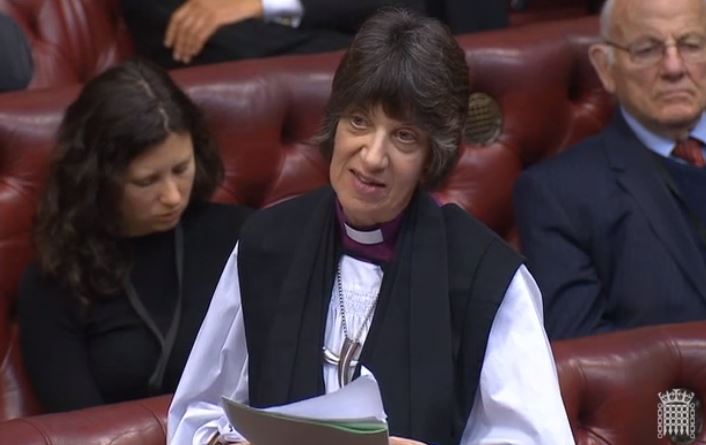
My Lords, I too look forward to the maiden speeches of the noble Baroness, Lady Fullbrook and Lady Fleet. In my few minutes, I shall briefly mention women in the criminal justice system, the Police, Crime Sentencing and Courts Bill, violence against women and girls and the online safety Bill. I refer to my interests in the register, as Anglican bishop to prisons.

I begin by asking: when will we see a renewed timetable for the 2018 female offender strategy? While I welcome the implementation of some of the deliverables, analysis by the Prison Reform Trust shows that the Government have met less than half the commitments. The concordat published last year does not appear to have been progressed. Then there was that shocking announcement of 500 new prison places for women, totally at odds with the strategy’s direction to reduce the number of women in prison. What evidence is it based on, and why is the designated £150 million not being spent on women’s centres and implementing the concordat?

Continue reading “Queen’s Speech – Bishop of Gloucester on criminal justice, violence against women and girls, online safety”

Queen’s Speech – Bishop of Oxford welcomes online safety bill plans

On 18th May 2021 the Bishop of Oxford spoke during the fourth day of debate in the House of Lords on the Queen’s Speech, focusing on proposals to legislate for online safety.


My Lords, it is a privilege to take part in this debate, to follow the noble Baroness, Lady Chakrabarti, and to welcome the noble Baroness, Lady Fullbrook—I thank her for her maiden speech. I warmly welcome the online safety Bill, referenced in the most gracious Address. I declare my interest as a board member for the Centre for Data Ethics and Innovation.

It is my view that the online safety Bill represents a major step forward in preventing harm to children, vulnerable adults and our wider society. The Bill places a robust duty of care on content-sharing platforms and creates a major new regulator by extending the remit of Ofcom. Those designing the Bill have listened carefully and have risen to the challenge of scoping a regulatory framework for new and rapidly changing technologies. The internet is used by over 90% of adults in the United Kingdom. There are many benefits to that use, as we have seen during the pandemic, but also great potential for harm. As the memorandum from DCMS indicates very clearly, this landmark regulation will end the era of self-regulation. The Bill is likely to prove a key benchmark, not only for the United Kingdom, but for governments around the world.

Continue reading “Queen’s Speech – Bishop of Oxford welcomes online safety bill plans”

Bishop of Oxford asks about tackling offensive material on social media

The Bishop of Oxford asked a question on development of a code of practice for tackling offensive online content on 23rd March 2021:

The Lord Bishop of Oxford: My Lords, the requirement to love our neighbours as ourselves makes practical demands of our online behaviour: not only what is posted but also what is endorsed, what is given the oxygen of repetition and what is tolerated. The digital common good is threatened from both sides: by those who post racist and offensive material and by some social media sites that craft algorithms to curate, propagate and perpetuate in order to maximise income. So will the Government give urgent consideration to implementing a code of practice for both hate crime and wider legal harms, perhaps along the lines of the model code that Carnegie UK and a number of other civil society organisations, including my office, recently co-drafted?

Continue reading “Bishop of Oxford asks about tackling offensive material on social media”

Trade Bill: Bishop of St Albans supports amendment on protection of children online

On 6th January 2021, the Bishop of St Albans spoke during a debate on the Trade Bill, supporting an amendment aimed at protecting children on online and digital platforms:

The Lord Bishop of St Albans: My Lords, I will speak briefly in support of Amendment 23. The Government’s proposed online harms Bill will provide a welcome framework to protect the most vulnerable from exposure to dangerous content by placing the burden of responsibility on social media companies. This crucial legislation will better equip Britain to deal with the digital age.

Continue reading “Trade Bill: Bishop of St Albans supports amendment on protection of children online”

Votes: Trade Bill

On 6th January 2021, the House of Lords debated the Trade Bill. Votes were held on amendments to the bill, in which Bishops took part:

Continue reading “Votes: Trade Bill”