Academy Chains & Inspection: Bishop of Chester Question

Baroness Hughes of Stretford asked Her Majesty’s Government, following the decision to remove 10 academies from the E-ACT Academy chain, what action they are taking to ensure that other chains are managing schools satisfactorily.

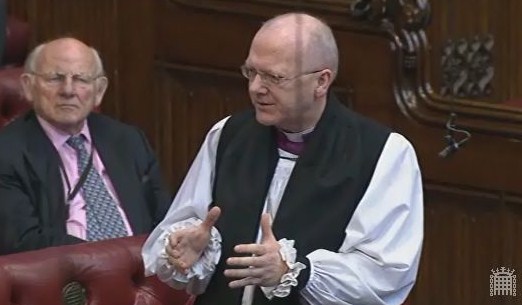
The Bishop of Chester asked a supplementary question.

The Lord Bishop of Chester: My Lords, I should like to return to the issue of inspection. In as much as the multichain bodies are involved in the governance of all the academies in their chain, and Ofsted inspects governance, why does Ofsted not also inspect the chains themselves?

Lord Nash: Ofsted looks at the support that chains are giving to their schools, and we have a very tight grip on the governance of all the chains. We have been in discussions with 50 chains to strengthen their governance arrangements

(via Parliament.uk)

The Bishop of St Albans calls for greater support for businesses taking on apprentices

Baroness Stedman-Scott asked Her Majesty’s Government what steps they are taking to equip young people with the skills necessary to enter the job market.

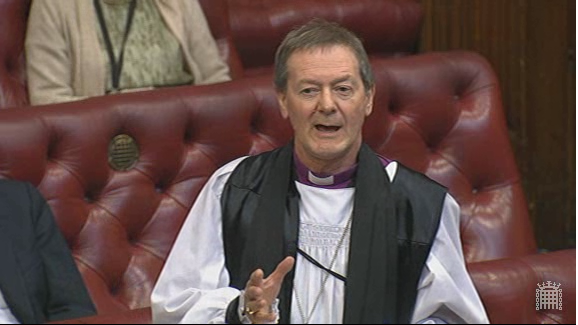
The Bishop of St Albans asked a supplementary question:

The Lord Bishop of St Albans: My Lords, there are four times as many 18 to 24 year-olds looking for work at the moment as there are in the 16 to 17 age group. Yet the Government’s policy on apprenticeships for 19 to 24 year-olds is to ask employers to pay half the costs of the learning framework. Many businesses, especially SMEs, will pause before taking on an apprentice because of this. Does the Minister agree that if this requirement were to be removed, it would hugely encourage many more young people to get into apprenticeships as well as giving them much more of a chance to succeed?

Lord Ahmad of Wimbledon: The right reverend Prelate makes an important point, but I am sure many noble Lords are aware that the Government do support local businesses. Indeed, they have made additional funding available to small businesses that are looking to take on both trainees and apprentices.

On the age group that the right reverend Prelate mentioned, particularly 19 to 24 year-olds, in October 2013 the Government announced funding of an additional £20 million to support the expansion of traineeships, which are helping even more young people to get the skills and experience they need to get into full-time work.

(via parliament.uk)

The Bishop of St Albans asks Government about support for healthy living in schools

Baroness Morgan of Ely asked Her Majesty’s Government what representations they have made to the food and drink industry about reducing levels of sugar in processed products in the United Kingdom.

The Bishop of St Albans asked a supplementary question:

The Lord Bishop of St Albans: My Lords, while I support the need to reduce the level of sugar in processed food wherever possible, I am concerned that this alone will do little to improve the nation’s health or deal with the problem of obesity. What progress are the Department for Education and the Department of Health making on reducing the number of calories in meals served in schools, and what progress is being made on increasing the level of physical activities for the pupils in our schools?

Earl Howe: My Lords, tackling obesity calls for action by the widest possible range of partners, including the food industry but also including schools. That is what we are trying to do through the responsibility deal. Our National Child Measurement Programme, the School Food Plan, the School Games and the money that we are putting into school sports funding—£150 million a year—all contribute to the joint effort across government to influence the way in which calories are consumed by children. I have encouraging news on that front, which is that the level of child obesity is now the lowest that it has been since 1998, so we are moving in the right direction.

(via parliament.uk)

Bishop of St Albans calls on Government to include churches in voter registration initiatives

Lord Roberts of Llandudno asked Her Majesty’s Government what steps they are taking to support National Voter Registration Day on Wednesday 5 February, which seeks to encourage new, especially young, people to register to vote.

The Bishop of St Albans asked a supplementary question:

The Lord Bishop of St Albans: My Lords, the Church of England is involved in the education of more than 1 million young people and we want to play our part in supporting this. Will Her Majesty’s Government talk with the department to see if, in future, they will write not only to schools but to the 43 statutory diocesan boards of education, many of which employ full-time schools workers, and to dioceses? My diocese has an average of 30 to 40 full-time paid youth workers and many volunteer ones. We would be delighted to use our communication resources to support this sort of initiative.

Lord Wallace of Saltaire: My Lords, the Government recognise that they alone cannot do everything in this regard. We welcome conversations with all other organisations. I wondered whether the right reverend Prelate was going to promise that the Church of England would give sermons on the subject. Once, when I was a parliamentary candidate, I was taken by a young woman called Liz Barker—the noble Baroness, Lady Barker, as she is now—to the Methodist church in which her father had been a minister. The sermon came as close as possible to suggesting that the congregation might like to vote for me.

Bishop of Ripon and Leeds asks question on recruitment of school governors

On 8th January 2014, Baroness Perry of Southwark asked Her Majesty’s Government what assessment they have made of the remarks about “lucky children” made by the Chief Executive of Ofsted during the launch of that organisation’s Annual Report 2012–13.

R_LThe Bishop of Ripon and Leeds asked a supplementary question:

The Lord Bishop of Ripon and Leeds: My Lords, in view of the difficulties often experienced in recruiting governors for schools, especially but not only in disadvantaged areas, what more can the Government do to encourage people to take on that role and to reduce the bureaucratic pressures that governors so often face? Continue reading “Bishop of Ripon and Leeds asks question on recruitment of school governors”

Bishop of St Albans makes maiden speech in eduation debate

On 5th December 2013, the Rt Revd Alan Smith, Lord Bishop of St Albans, made his maiden speech in the House of Lords, during Baroness Morgan of Huyton’s take note debate on the contribution of high-quality education to economic growth.

14.03 Bishop of St Albans Continue reading “Bishop of St Albans makes maiden speech in eduation debate”

Bishop of Derby receives answer on accountability in free schools (Written Answer)

On 29th October 2013, the Bishop of Derby, the Rt Revd Alastair Redfern, received an answer to a written question on accountability in free schools. 

Bishop of DerbyThe Lord Bishop of Derby: To ask Her Majesty’s Government what steps they are taking to ensure that there is a rigorous assessment of the leadership, aims and ethos of free schools.

The Parliamentary Under-Secretary of State for Schools (Lord Nash) (Con): All free school applications undergo a rigorous assessment against a number of criteria. The areas covered include: the education vision and plan for the school, which will cover its proposed aims and ethos; and the capacity and capability of the applicant group, which covers the track record and expertise of the trust members and proposed governing body, as well as their plans for recruiting a high quality principal. We also carry out due diligence checks on the suitability and track record of key members of the proposer group. The assessment criteria for the next round of applications will be published on the Department’s website shortly.

Where an application is approved into the pre-opening phase, those leading the project work closely with a named lead contact and an education adviser from the Department. Where any concerns are reported, including about their leadership, aims or ethos, the matter is escalated and an early decision is taken on what action to take in response, which may include cancellation of the project.

(via Parliament.uk)

Bishop of Derby responds to Government Statement on Al-Madinah Free School

On 17th October 2013, a Government Statement was repeated in the House of Lords by the Parliamentary Under-Secretary State for Schools, Lord Nash, on the Al-Madinah Free School in Derby. The Bishop of Derby, the Rt Revd Alastair Redfern, responded to the statement during the subsequent question and answer session.

DerbyThe Lord Bishop of Derby: My Lords, I declare an interest as the Bishop of Derby and congratulate the Minister and his colleagues on the monitoring and firm action that is being taken. As I understand it, this is a very local initiative. What lessons can be learnt because if we do not have the local authority playing a key role, how are we providing the right kind of framework and guidance for local initiatives so that the right kind of standards, structures and expectations are put in place and met? What are we learning and how are we going to deal with that?

The Parliamentary Under-Secretary of State for Schools (Lord Nash): I am grateful to the right reverend Prelate for his question. This is a local initiative, it is quite a complicated situation and I do not have time to go into all the details now, but I can assure the House that we are all over this and will not allow this situation to continue.

(via Parliament.uk)

Bishop of Birmingham highlights quality of education provided by Church of England schools

On 22nd July 2013, Baroness Bakewell asked Her Majesty’s Government whether they have plans to encourage religiously selective schools to adopt more open admission policies. The Bishop of Birmingham, the Rt Revd David Urquhart, asked a supplementary question:

01.04.14 Bishop of BirminghamThe Lord Bishop of Birmingham: Does the Minister agree with the Secretary of State that Church of England schools are most often found in very challenging areas in our communities and provide excellent education? Would he encourage the expansion of religious schools of that kind in oversubscribed areas?

Lord Nash: Where we have areas of basic need, we are keen to encourage all comers to help us. I entirely agree with the right reverend Prelate about the performance of Church of England schools. Again, in respect of achieving five A* to C grades, including in English and maths, they score 62% versus 58%, and at level 4 of key stage 2 they score 82% as opposed to 78%. We would welcome expansion of these schools as they provide an excellent education.

(via Parliament.uk)