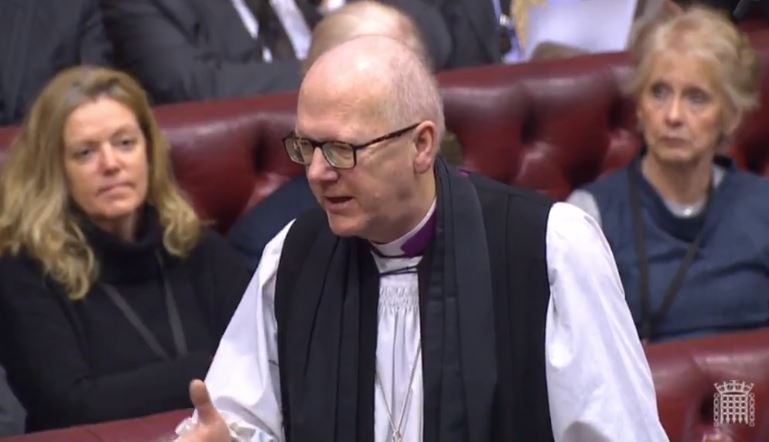
On 8th March 2022, the House of Lords debted the Nationality and Borders Bill in the 3rd day of the report stage. The Bishop of St Albans spoke in support of several amendments on modern slavery:
My Lords, I will speak to Amendments 67 and 68 in the name of the noble Lord, Lord Alton. I spoke to these amendments in Committee because I was concerned that Clause 59 was effectively raising the reasonable grounds threshold for identifying a victim of modern slavery. With respect to the Government, I confess that I remain unconvinced by their desire to alter reasonable grounds thresholds, and was not adequately assuaged in my fears that this could erect an unnecessary barrier to victims accessing the national referral mechanism.
The noble Lord, Lord Alton, made the argument in Committee that reasonable grounds decisions on the standard of “suspect but cannot prove” would allow the Modern Slavery Act to be more in line with ECAT. I am not a legal expert so this may well be the case. However, I made the point that since we currently use “maybe” as it exists within the Modern Slavery Act, as opposed to “is” or “are” as proposed by the Government —indeed, rather than “has been” as appears in ECAT—in supposedly bringing ourselves in line with ECAT we would effectively raise the threshold for access to the NRM.
Continue reading “Nationality and Borders Bill 2022: Bishop of St Albans speaks in support of amendments on modern slavery”


 The Church of England in Parliament
You must be logged in to post a comment.