The Bishop of St Albans received the following written answers on 29th January 2025:
The Lord Bishop of St Albans asked His Majesty’s Government what representations they have made to the government of Thailand regarding Uyghur asylum seekers detained there.
The Bishop of St Albans received the following written answer on 24th October 2022:
The Lord Bishop of St Albans asked His Majesty’s Government what assessment they have made of reports that crimes have been committed against Uyghurs, Kazakhs and other Turkic Muslim minorities in the Xinjiang Uygur Autonomous Region of China; and what steps they are taking in response to ensure that the perpetrators of any such crimes are brought to justice.
The Bishop of St Albans received the following written answer on 10th October 2022:
The Lord Bishop of St Albans asked His Majesty’s Government what assessment they have made of reports of crimes being committed against (1) Uyghurs, (2) Kazakhs, and (3) other Turkish Muslim minorities, in Xinjiang in China; and what discussions they have had with international partners about taking steps to investigate, and if necessary prosecute, any such crimes.
The Bishop of St Albans asked a question on what steps could be taken to identify products of slave labour to consumers on 16th December 2021, during a debate on the treatment of Uyghur Muslims in China:
The Lord Bishop of St Albans: My Lords, what assessment have Her Majesty’s Government made of kitemarking products which originate in Xinjiang province so that people can be informed that they may be produced by slave labour? That would help the economy take action in this important area, where we face such atrocities.
In the House of Lords on 17th December 2020 during exchanges on forced Uighur labour within Xinjiang, China, the Bishop of St Albans asked Government to investigate supply chains in UK local and national public contracts:
The Lord Bishop of St Albans [V]: My Lords, the news that forced labour was active in cotton supply chains is not the first example of business connections to Uighur repression.
Previous concerns have also been expressed in relation to Hikvision and its role in the Xinjiang surveillance apparatus. Will the Government commit to a comprehensive review of supply chains in local and national public contracts to ascertain whether public funds have helped to finance this ongoing tragedy?
On 10th December the Bishop of St Albans received a written answer to a question on whether Uighur forced labour had been used in production of PPE bought by Government for use in the UK:
The Lord Bishop of St Albans: To ask Her Majesty’s Government what assessment they have made of whether Uighur forced labour was used in the production of personal protective equipment purchased by the UK from Medwell Medical Products; and what plans they have to implement due diligence checks to ensure that items purchased by the UK have not been produced using such forced labour. [HL10106]
On 23rd and 25th November the Bishop of St Albans received written answers to questions on UK contracts with Pyronix-Hikvision and the use of that company’s technology in Uighur detention facilities in China:
On 29th July the House of Lords debated a motion from Lord Ahmad of Wimbledon “Global Human Rights Sanctions Regulations 2020”. The Right Revd James Langstaff, Bishop of Rochester, spoke in the debate.
The Lord Bishop of Rochester: My Lords, I, too, welcome this new regime of sanctions, but we must of course ensure that targeted sanctions do not become empty gestures. As other noble Lords have indicated, these sanctions will be most effective when they are consistent with other foreign policy priorities and done through co-ordinated, collective action. Without the support of a wider coalition, we risk being isolated diplomatically.


 The Lord Bishop of St Albans [V]: My Lords, the news that forced labour was active in cotton supply chains is not the first example of business connections to Uighur repression.
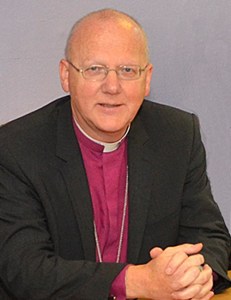 The Lord Bishop of St Albans: To ask Her Majesty’s Government what assessment they have made of whether Uighur forced labour was used in the production of personal protective equipment purchased by the UK from Medwell Medical Products; and what plans they have to implement due diligence checks to ensure that items purchased by the UK have not been produced using such forced labour. [HL10106]
 The Church of England in Parliament
You must be logged in to post a comment.