
On 21st July 2021, the Bishop of Durham tabled a probing amendment to the Skills and Post-16 Education Bill which would require the government to set out a long term funding plan for further education:
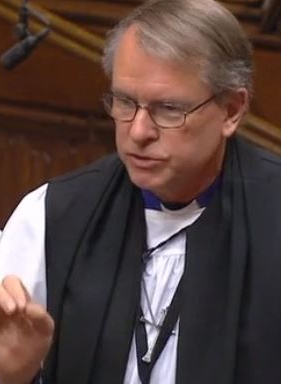
The Lord Bishop of Durham:
90B: After Clause 25, insert the following new Clause—
“Long-term funding review
(1) The Secretary of State must commission a panel of experts to review of the long-term funding for skills and post-16 education.(2) The panel must consider and make recommendations about—(a) resources available for different types of technical training, further education and higher education; (b) support for disadvantaged students and those with special education needs;(c) the impact of this Act on the long-term funding for skills and post-16 education.(3) The panel must conclude their review and make a report to the Secretary of State with their findings and recommendations.(4) Within the period of one year beginning with the day on which this Act is passed, the Secretary of State must lay the panel’s report before Parliament.”Member’s explanatory statement
This is a probing amendment, intended to draw out the Government’s plans to introduce a longer-term funding settlement for FE, as called for by the Education Select Committee, prefigured in the White Paper and signalled, as the direction of travel by recent increases in core FE funding, capital funding allocations and the longer term Lifelong Learning Entitlement.
My Lords, in its 2014 report Sense & Instability, City & Guilds made a wryly humorous and powerful case for much greater coherence, greater focus on building on success and greater attention to effective implementation in skills policy. With the White Paper and this Bill, along with associated developments such as T-levels and, we hope, far more radical change to apprenticeships, it is clear that the present Government are moving in that direction—a trajectory that we on these Benches fully support. This amendment seeks to make those policy ambitions more concrete by placing their funding arrangements on a statutory footing.
The goal of joining up the wider education and skills system so that it better meets society’s needs and gives people the skills they need is by no means easy to reach. It also requires that goal to be embedded in a long-term national strategy, most appropriately on something like a 10-year horizon. That strategy needs to sit across government, so that it can more imaginatively bring coherence across departments, as well as give greater stability at college, local and regional levels. Crucially, it requires a matching long-term funding settlement.
It is already possible to see how this kind of cross-departmental approach can bring huge benefits, for example in areas such as sustainability and the green agenda, tackling the recruitment needs of nursing and other allied professions, the major changes facing the automotive industry and the significance of digital skills—all of which require colleges to play a major part in delivering the required skills to individuals, employers and businesses. The need for such a longer-term strategic investment has been called for by the Education Select Committee, is an underlying strand in the White Paper and is being signalled by the additional funding already released to colleges, as well as the lifelong loan entitlement already announced. The Augar report also signalled the clear advantages of treating HE and FE in a more comprehensive way. We look to see how the department intends to see that continue to affect policy.
Clearly, much will depend on the comprehensive spending review and the continued impact of the pandemic on public spending. It would, however, be helpful to have an indication of how such a long-term strategy is being developed and, as the amendment indicates, how it will translate into concrete recommendations and thence long-term action. I beg to move.
Extracts from the speeches that followed:
Lord Addington (LD): My Lords, when the Government are asked to have a long-term look at something, the usual answer is, “We are”. That is what generally comes out with all these different things, but the advantage of the right reverend Prelate’s amendment, which I have signed, is that it puts it in one nice solid place and gives us three good bases to start from.
I was initially attracted by the support for special educational needs, and I remind the Committee yet again of my interests in that particular part of the playground. But looking at things regularly, over a long period of time, is essential if a policy is to develop. To go back to special educational needs, there was a long development of saying, “Of course you can, but a requirement on the way in”—I have an interest in dyslexia—“is that, by the way, you have to pass a written test in English, despite your having God knows how many other qualifications.” I remind the Committee of how many hours I have burned on that subject over the years. If you have a way in, how do you maintain that person? Does that maintenance pattern keep up with both the understanding and the technology out there at the moment? That is a pattern of development that comes one after the other and will change over time.
Lord Aberdare (CB): Amendment 90B in the names of the right reverend Prelate the Bishop of Durham, the noble Lord, Lord Addington, and the noble Baroness, Lady Morris, proposes commissioning a panel of experts to review and make recommendations on long-term funding for skills and post-16 education, building, of course, on the foundations set by the Augar review as well as the Skills for Jobs White Paper. This can be only helpful, if not essential, input for the Government, along with the various consultations they are planning, in addressing this challenge and getting the answers right. I too look forward to the Minister’s response and to hearing how the Government plan to tackle the important need for a joined-up, long-term, fully funded skills and training strategy.
Baroness Wilcox of Newport (Lab): My Lords, we welcome this probing amendment, introduced by the right reverend Prelate the Bishop of Durham and supported by the noble Lord, Lord Addington, and my noble friend Lady Morris. It is an opportunity to discuss the Government’s plans to introduce a longer-term funding settlement for further education, because the White Paper recognised that further education funding has been wholly insufficient.
Alongside increased funding, there is a need for, as alluded to by the noble Lord, Lord Addington, simpler, longer-term funding settlements that allow colleges to deliver on long-term strategic priorities. Their funding compares extremely unfavourably with university and school funding. Annual public funding per university student averaged £6,600, compared with £1,050 for adults in further education. Recent research from IPPR has found that if further education funding had kept up with demographic pressures and inflation over the last decade, we would be investing an extra £2.1 billion per year in adult skills and £2.7 billion per year in 16 to 19 further education. The result of this underfunding is that colleges have had to narrow their curriculum and reduce the broader support they offer to students—including careers advice and mental health services—and 16 to 19 funding for catch-up has also been woefully insufficient.
Baroness Penn (Con): I thank the right reverend Prelate the Bishop of Durham for tabling his amendment. Based on the substance of the debate we just had, I am not sure that there is much disagreement between the Government and noble Lords.
The Government are committed to transforming further education so that everyone can access high-value provision relevant to labour market needs and job opportunities. As noble Lords noted, we published the Skills for Jobs White Paper in January, setting out the future policy direction in this area.
Over the past two years, we have invested significantly in post-16 education. In the 2019 spending round, we increased 16 to 19 year-old further education funding by £400 million, followed by a further £291 million at the spending review 2020, so the direction of travel for policy has been matched by the direction of travel for funding.
(…)
The breadth of measures already in train—some noble Lords may say that is a long list—contain many elements of a concerted strategy that is moving in a consistent direction on the back of a number of reports and reviews that have sought to look at this on a long-term basis, whether we go back to the Sainsbury review or the more recent Augar review. While I completely agree with the need to take a long-term and strategic approach to this issue, I am not sure that a further review supported by an independent panel at this time is the right way to knit this all together rather than the progress that we are making on delivering the important outcomes of a number of those reviews already undertaken. I therefore hope that the right reverend Prelate is able to withdraw his amendment.
The Lord Bishop of Durham: My Lords, I thank the noble Lord, Lord Addington. I knew I could rely on him to pull out the specifics around special educational needs and the reasons for the need for long-term support and development. I thank the noble Lord, Lord Aberdare, for his support for the amendment.
I am very grateful to the Minister for her long and full answer which I will need to read carefully in Hansard to get the full breadth of all she outlined. I thank those who work with her for producing such a comprehensive list at this point. I will need time to look at and reflect on the length of the answer to determine whether there is enough guarantee or whether to pursue the possibility of this being in the Bill.
I wish the Minister well and hope she will have a safe and joyous delivery and much joy in her new child and family life. I beg leave to withdraw the amendment.
Amendment 90B withdrawn.
 The Church of England in Parliament
You must be logged in to post a comment.