
The Bishop of Durham spoke in a debate on regional inequalities on 14th October 2021, discussing issues relating to child poverty and health inequality:
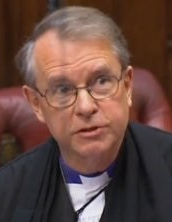
The Lord Bishop of Durham: My Lords, I thank the noble Lord, Lord Liddle, for securing this debate, and am pleased to follow on from the noble Lord, Lord Young of Cookham. I, too, look forward to the maiden speech of the noble Viscount, Lord Stansgate.
Jubilee is a strong theme of our Judaeo-Christian tradition. Jubilee includes setting people free from the impacts of inequality. If levelling up is going to mean anything significant, it must tackle the inequalities that exist in our nation. It needs to be a kind of jubilee.
This week is Challenge Poverty Week. Child poverty is a very good measure of regional inequalities within England, as it is both an indicator of poverty and a perpetuator of it. Child poverty highlights the complexity of issues that cause it, including education and employment. It has lifelong impacts on children as they grow into adults and shape their communities. The recent report by Donald Hirsch for Loughborough University estimates that the cost of child poverty is £38 billion a year, a significant increase in the past five years.
We see far higher levels of child poverty in some places than others. It is not a simple divide of a wealthy London and an impoverished north. The Institute for Fiscal Studies reported in its Green Budget for 2020 that
“inequalities within regions are larger than the inequalities between regions.”
So, in Bethnal Green and Bow, 60% of children are in poverty. However, child poverty rates in the north-east rose more steeply than in any other region in the lead-up to the pandemic. In Bishop Auckland, where I live, child poverty has increased by 7% since 2015. In nearby Middlesbrough, the increase is 13.6%. Poverty is inextricably linked to the issue of inequalities of place, and it demands a measure of relative poverty if it is to be addressed properly. The Work and Pensions Committee has called for the Government to re-engage with the Social Metrics Commission and to look beyond a solely absolute measure of poverty, and I echo its conclusions. So, in considering levelling up, will Her Majesty’s Government commit to using the Social Metrics Commission assessment for measuring poverty to inform decision-making?
The compound impact of the two-child limit in universal credit, the cuts to the £20 uplift, the impending national insurance levy, and food and fuel inflation create an increasing threat of a growth in child poverty. So, along with groups such as the North East Child Poverty Commission, the Child Poverty Action Group, the Work and Pensions Committee and many more, I urge that a strategy is developed rapidly. I hope that we will hear soon that HMG will publish a proper child poverty reduction strategy.
Then there are health inequalities. Here I note the findings of the recent report from the Northern Health Science Alliance, A Year of Covid in the North. This research found that Covid mortality rates between March 2020 and 2021 were 17% higher in the north than in the rest of the country. The estimate is that this has cost the national economy £7.3 billion in lost productivity. Minor psychiatric disorders were also 10% higher in the north.
In considering levelling up, what are Her Majesty’s Government doing about the disparity in health inequalities across the nation? Throughout the pandemic, the average unemployment rate in the north was almost 20% higher than in the rest of the country. Furlough was good but it worked less well in the manufacturing and service sectors. Inward investment in infrastructure and higher skills work is one key area to help here. I highlight transport. The inequality between our capital city and the rest of the country can clearly be seen in the difference in government spending and the service provided. London has received nearly two and a half times the public spending received by the north, according to the IPPR.
Since the publication of the Northern Powerhouse strategy in 2016, local transport chiefs are still waiting for the integrated rail plan to make this transport investment a reality. Therefore, as part of the future planning, will the integrated rail plan be published and will it favour the most poorly served regions? I look also to foreign direct investment. The International Trade Committee has reported that FDI is unevenly distributed between the regions and, despite its importance as an instrument of levelling up, it is reinforcing the inequalities it is intended to correct. What will the Government do to address the inequalities of investment in the north?
We all recognise that tackling inequalities of place is a highly complex issue. The Government’s welcome and much needed levelling-up agenda will not succeed without a coherent, cost-effective and long-term regional strategy to tackle inequalities of place within England. We could have a jubilee.
Extracts from the speeches that followed:
Baroness Bennet of Manor Castle (GP): I thank the noble Lord, Lord Liddle, for securing this debate. I particularly thank him for not using the term “levelling up” in the way in which it is set out, because I believe that levelling up is entirely the wrong direction of travel and the wrong aim to be looking at. It implies that we are trying to lift other parts of England up to the level of London and the south-east. But what have we got? The right reverend Prelate made some reference to this when he talked about child poverty. We have a London of rampant inequality, with 28% of people living in poverty. We have filthy air and a horrible standard of overcrowded housing. We have the area of the country with the highest proportion of the population with high levels of anxiety. We need—and I think the noble Lord, Lord Liddle, set out the points here—a coherent, cost-effective and long-term approach, which I suggest means that what we need to spread out around the country is security, health and hope. Those are lacking in every part of England, and indeed the UK.
Economic growth is often seen as the solution—“If we just have economic growth…”—but what we are actually talking about is a real rearrangement of society. We are not talking just about improved infrastructure, much as that is needed—as is not putting the wrong infrastructure in the wrong place—but I will not get into the regular debate that the noble Lord, Lord Adonis, and I have on the subject of HS2. What we are talking about, and many noble Lords have made this point, including the noble Lord, Lord Young of Cookham, who is not currently in his place, is that we need local control, local power and, as many noble Lords have said, local resources.
Lord Davies of Brixton (Lab): We already have a low-productivity economy, and apart from the rhetoric there is nothing to suggest that the Government have got to grips with this issue. But when we come to the suggestion that the Prime Minister’s policies represent a move to a centrally planned, higher-tax economy, your Lordships might think that this is something I, as a socialist, might favour. Unfortunately not, at least not in the version presented to us by the Government. To the limited extent that there is a policy hiding behind a slogan, it consists of expecting water to run uphill—futile and ignorant.
Of course, as the Motion suggests, we need a coherent, cost-effective and long-term strategy. I have one note of caution, as mentioned by the right reverend Prelate the Bishop of Durham. Casting this as a regional issue runs the risk of ignoring the real problems we face in London. All human life is in London, from great wealth to extreme economic hardship. My noble friend Lord Campbell-Savours correctly mentioned the injustices of the rating system, but north Westminster encounters as great social problems as the north of England, and any policies instituted need to recognise that.
In conclusion, I end with another quote from the Adam Smith Institute:
“Shortages and rising prices simply cannot be blustered away with rhetoric about migrants. It’s reprehensible and wrong to claim that migrants make us poorer. There is no evidence that immigration lowers living standards for native workers. This dogwhistle shows that this government doesn’t care about pursuing evidence-based policies.”
In no area of policy is that more stark than the vacuum that fills the space which purports to be levelling up.
Baroness Blake of Leeds (Lab): The backdrop to our discussions is the numerous reports, including from the IFS, that the UK, and in particular England, is the most geographically unequal country in the developed world. Our country is divided by several fault-lines. How can it be acceptable that the opportunities presented to young people depend almost entirely on where they grow up, and that the healthcare and jobs which they rely on throughout their lives are then determined by where they live? It is a colossal failure of government—and not one which can be resolved by a slogan. We must not fall into the trap of thinking that any of this is new. Report after report, especially over the past decade, has highlighted what this means: reduced life chances and opportunities and an increase in poverty—especially the scandal of in-work poverty— affecting families and many thousands of children and young people. It is estimated, for example, that almost a quarter of children living in Leeds are living in poverty and that, of those, 75% are living in a household where at least one adult works. I welcome the call from the right reverend Prelate for a child poverty reduction strategy.
Inequalities in health, as we have heard, have a disproportionate and devastating impact on women, with poor housing leading to the poor health outcomes so cruelly exposed by Covid. As we have heard, there is an enormous cost to the economy as well as huge personal cost. Take Blackpool, the archetypal seaside resort with an incredible history. In spite of its proud tradition and the ingenuity of local businesses, which drive the town to this day, around one in 10 of its people are unemployed and one in three children grow up in poverty. The fact is that the Government have failed Blackpool. They have done nothing to resolve or respond to these issues and through a decade of cuts have devastated the ability of local authorities to respond. The tragic consequence is that in Blackpool life expectancy is eight years less than the life expectancy of those born in the borough of Westminster, and the town has one of the highest rates of depression in England.
Lord Greenhalgh (Con, Department for Levelling Up): I thank the right reverend Prelate the Bishop of Durham and the noble Lord, Lord Wallace of Saltaire, for testing the Government’s commitment to the north. We will continue supporting the north to level up and build back better from Covid. We are doing this with £319.7 million from the Getting Building Fund for a wide-ranging package of projects that will deliver growth for the local economy and support green recovery. As noble Lords know, there is the new UK Infrastructure Bank headquartered in Leeds, which I am sure the noble Lord and the noble Baroness, Lady Blake, will be delighted about. The freeports are very often located in our northern cities.
(…)
I conclude by re-emphasising the importance that this Government place on reducing the regional inequalities in economic, social and environmental outcomes present across the United Kingdom. Both within my department and across government, we are already delivering a range of initiatives to level up the country. The upcoming levelling-up White Paper will set out further detail on our plan to reduce regional inequalities across the UK and level up the country.
The Lord Bishop of Durham: May I inquire about the child poverty reduction strategy, which I asked about?
Lord Greenhalgh: Once again, the right reverend Prelate raised the issue of child poverty and how we measure poverty. I will write to him on the specifics of the Government’s approach to addressing that matter and place a copy of that letter in the Library.
 The Church of England in Parliament
You must be logged in to post a comment.