
On 21st October 2021, the House of Lords debated the Skills and Post 16 Education Bill in the second day of the report stage. The Bishop of Durham spoke in the debate, supporting amendments on special educational needs, and moving his amendment on providing flexibility for universal credit recipients seeking further education:
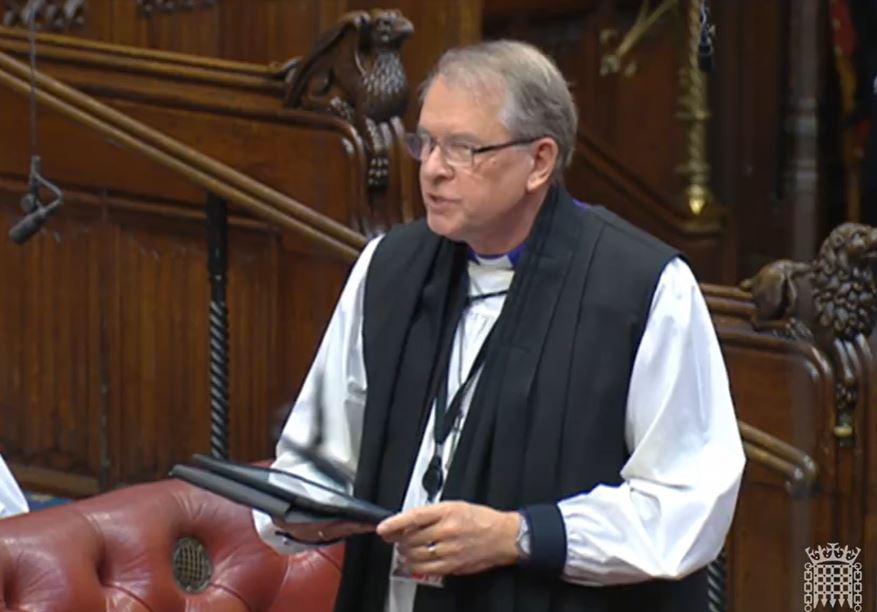
The Lord Bishop of Durham: My Lords, this is my first opportunity to welcome the Minister to her new role, and, indeed, the noble Baroness, Lady Chisholm, to hers. In my own role as chair of the National Society—which I declare as an interest—I look forward to working with them both on many matters relating to education and the Church of England’s place as a major provider.
Turning to Amendments 44 and 46, which I was pleased to add my name to, I thank both noble Baronesses for the time they gave us recently to discuss them. The need for specific provision to be made to better meet the needs of students with specific learning needs and disabilities at all levels has been made—not for the first time—with great expertise by the noble Lord, Lord Addington, and I wholeheartedly support these amendments. Given the range and varied nature of the learning needs among FE students, their lecturers, tutors, assessors and other staff must have the skills to recognise those needs to be able to adapt their own approach to teaching, learning and assessment, and to be able to promptly and appropriately refer students for more specialised or intensive support.
Amendment 44 does precisely what is required and, in addition, poses a challenge. Such high-quality support is very widely available in HE, often in the departments of FE colleges which deliver HE provision and from which it might be made more widely available. Is it not both educationally and ethically desirable that those on FE programmes should have the same access as their fellow students in HE?
Amendment 46 is also carefully drawn. It would require special needs awareness training that is relevant to students of ITT FE courses within an institution. It may be said that, in contrast to ITT provision for schoolteachers, the content, assessment and delivery of teacher training in FE is very different and that such a degree of prescription is inappropriate and much is already being done. In other areas, such as funding, governance, qualifications and many more, there is no such hesitation. In this particular field, the need for a strong lead from government and the investment it requires are, I think, fully recognised by Ministers, officials and the sector. I sincerely hope that the Government will be open to accepting these amendments.
The Lord Bishop of Durham:
45: After Clause 15, insert the following new Clause—
“Universal credit conditionality
The Secretary of State must review universal credit conditionality with a view to ensuring that adult learners who are—(a) unemployed, and(b) in receipt of universal credit,remain entitled to universal credit if they enroll on an approved course for a qualification which is deemed to support them to secure sustainable employment.”Member’s explanatory statement
This amendment is intended to ensure greater flexibility for potential students in receipt of universal credit to take up appropriate training that will better equip them for employment.
My Lords, I rise to speak to Amendment 45, tabled in my name, and I am grateful to the noble Baroness, Lady Bennett, for supporting it.
As Members will be only too aware, the £20 uplift to universal credit has ceased. A number of faith leaders, including myself, wrote to the Government alongside many other people seeking for that decision to be reversed. The response was the assertion that helping people back into high-quality, well-paid jobs is now the priority.
In order to achieve that objective—which is one that I know everyone in your Lordships’ House will applaud—it is necessary for those seeking such jobs to be suitably trained and qualified, especially if the economic and social shock of the pandemic means that they now need to change jobs for new ones or to completely retrain to meet new demand. Indeed, an early survey by Adecco in June 2020 suggested that just under one-third of employees were considering a
career change post pandemic, and a further 16% had already embarked on some form of training during lockdown with that goal in mind.
Being able to access high-quality training is crucial to those aspiring to the high-quality, well-paid jobs that are rightly the Government’s objective. That was a consistent theme in the excellent points made by a succession of speakers of day 1 of Report, whether in relation to green skills and jobs, by the noble Baroness, Lady Hayman, or the need to increase the skills of our whole workforce, by the noble Baroness, Lady Morgan, and many others.
It is no good having such opportunities available in theory, but finding that those who face the greatest challenges are, in practice, unable to take them up because they simply cannot afford to do so or the current eligibility criteria in effect exclude them from doing so. Among that cohort, people who are reliant on universal credit face particular difficulties in accessing such high-quality training. That is partly because the default setting for universal credit is that the client must not be in education, since support for that comes from the separate and quite distinct system of loans and grants designed for their needs—as the very helpful and recently updated policy note puts it.
As noble Lords will be aware, it is of course true that there is provision in specified circumstances for courses to be treated as a work preparation requirement for UC claimants up to a maximum of 30 hours per week in certain categories, which allows time for claimants to fulfil the other work-related requirements of their UC conditions. However, the briefest glance at the government regulations for UC that refer to education, or at the government guidance on claiming UC if you are a student, immediately showed just how complex the rules are in practice. That guidance also clearly shows how being available for work is a requirement of being able to claim UC regardless of the educational commitment, which can prove an insurmountable barrier for prospective students.
The present procedure allows a course of education to be included in an individual claimant’s work search requirements when that is approved by the claimant’s adviser. Such a request is frequently successful. However, while it is reassuring that, in some cases, education can be included in work search requirements, the fact that this is on a discretionary basis remains a cause for concern for prospective students, not least because they are reliant on their universal credit income. The uncertainty that this creates, along with the complex regulations that must be applied correctly, serves as a disincentive to many claimants to actually pursue the education that will get them into the higher-skilled work.
In addition, according to information provided by the Association of Colleges, there is a recurring issue whereby UC claims are incorrectly refused in the case of young people living independently, who are eligible to pursue full-time, non-advanced education within UC, due to the system assuming the education to be advanced. There are also significant problems facing prospective students who need financial support for accommodation or subsistence, which are either excluded
from current funding or insufficient in scale. Rereading this and explaining it shows just how complicated the system is currently.
However, the good news is that a potential solution is already in the Government’s hands. In broad terms, the amendment in my name seeks to give practical effect to one aspect of the Government’s lifetime learning guarantee—a commitment that we fully and warmly support. More specifically, until the end of this month, the trials of the intensive work search programme, which is available throughout the UK and lasts 16 weeks, and the 12-week skills boot camps, which are available in England, show that it is possible to offer full-time provision as part of that lifetime skills guarantee. In addition, the Kickstart programme has been so successful that is has now been extended until March, with some 69,000 young people starting Kickstart jobs since September 2020.
Plainly, the effectiveness of these approaches needs to be properly confirmed. In any extension of UC eligibility for learners who are retraining or changing career, proper safeguards will be required to prevent abuse of the system. For example, it has been suggested that those who have obtained a recent qualification—say, within the last five years—might be ineligible for further full-time study if in receipt of UC.
The purpose of this amendment, though, is simple and straightforward. It is to enable those in receipt of universal credit to access the skills and qualifications they will need for the future, and thereby access the high-quality, well-paid jobs that the country needs to rebuild our economy, to help create a fairer and more just society, to help them and their families to flourish, and to fulfil the very purpose for which universal credit is said to exist.
I know that the Minister is acutely aware of these issues and look for reassurance that the Government are equally aware and, more importantly, committed to finding further new and creative ways to maximise incentives for those wishing to acquire new skills and take up high-quality, stable jobs and who currently rely on universal credit for all or the majority of their income.
Extracts from the speeches that followed:
Baroness Bennet of Manor Castle (GP): My Lords, I rise with great pleasure to offer my support to Amendment 45 in the name of the right reverend Prelate the Bishop of Durham, to which I have attached my name. It is, in a way, the reverse of Amendment 63: Amendment 45 says that adult learners should be able to get universal credit; Amendment 63 says that you should be able to become an adult learner while on universal credit. I am not sure which is the best way round, but I am not sure that it matters or will make much practical difference. Both the right reverend Prelate and the noble Lord, Lord Storey, have clearly outlined the Kafkaesque complications that arise, and the unreasonable unintended traps people can find themselves in when they seek to study and find that the system simply does not allow them to.
I want to come from the other point of view very briefly and think about the overall good of the country. As I was contemplating these amendments, I thought back to hearing an economist talk about how, slightly counterintuitively, having a very short period between people becoming unemployed and finding a new job might not be the best thing, because if you have very low levels of unemployment benefits, as we do in the UK compared to many continental countries, people have to grab the first job they can secure—the first job that comes along. That means that you get an awful lot of square pegs in round holes. You get people who are not best for the job. They are not good for the employer and it is not good for them to be in a job for which they are not suited. If you have a longer period, people are able to assess and improve their skills and then find the right job, stay in that job for longer, advance in it and make real progress. We need to move towards a system that allows that to happen. When we talk about the economy, we talk about how we can solve our productivity problem. These are the base issues that we need to think about. Amendments 45 and 63 address them.
Baroness Sherlock (Lab): In Committee, the right reverend Prelate the Bishop of Durham and other noble Lords identified a number of barriers that get in the way of people wanting to do that. The Minister’s defence was basically twofold. She said, first, that DfE and DWP are working together on it and there is a trial under way for six months. She said that there is flexibility on conditionality, so that if you get universal credit and are part of the intensive work search scheme, you can study full time for 12 weeks, with boot camps and so on—the lot.
Secondly, she said that the benefit system may not be there for education and training for most people, but some people can get help. The Minister mentioned Regulation 14 of the Universal Credit Regulations 2013. I went back and refreshed my memory of that regulation. It lists the exceptions, but the only exceptions are young people doing A-levels or the like who are not living with their parents, those who have kids and some disabled people with limited capacity for work. As I read on—the Minister can correct me—I thought that all Regulation 14 does is remove the blanket requirement that you must not be in education to qualify for universal credit at all. I do not think it stops people—even in those groups—having conditionality requirements placed on them in the way that the right reverend Prelate the Bishop of Durham described, which might make it impossible for them to take on a training course. Can the Minister clarify that?
It is really quite hard to work out who can get universal credit for training, at what level and where. To that end, can the Minister tell the House whether any or all people wishing to carry out study necessary for a course leading to the lifetime skills guarantee could get universal credit while they do it, as Amendment 63 suggests? If not, how should they support themselves while they do that?
Amendment 45 from the right reverend Prelate the Bishop of Durham makes a broader point about the needs of people who are unemployed and need training to get secure, sustainable employment. There is a balance here. The benefits system is not there to fund everybody wanting to retrain, but this amendment could pick up some of those people who are long-term unemployed or may have gone from one low-paid, insecure job to another, perhaps with periods on benefits in between. Might not they and the taxpayer be better served if they could afford to get trained for a secure and sustainable career? How could they be helped under the Government’s current approach?
Baroness Chisholm of Owlpen (Con): Amendments 45 and 63 from the right reverend Prelate the Bishop of Durham and the noble Lord, Lord Storey, broadly seek to enable individuals studying at level 3 and below to claim universal credit—an issue debated at some length in Committee. It is of course vital that students feel supported and have the confidence to come forward to upskill. Where we differ is in how that support is financed.
As the noble Baroness, Lady Sherlock, talked about, there should be a joined-up approach between the Department for Education and the DWP. Important work is already under way on this subject, as she mentioned. Officials at the Department for Education and the Department for Work and Pensions are working closely together to help address and mitigate the barriers to unemployed adults taking advantage of our skills offer.
There is a new DWP train and progress initiative aimed at increasing access to training opportunities for claimants. As part of this, in April 2021 a temporary six-month extension to the flexibility offered by universal credit conditionality was announced. As a result of this change, adults who claim universal credit and are part of the intensive work search programme can now undertake work-related full-time training for up to 12 weeks, or up to 16 weeks as part of a skills boot camp in England. This builds on the eight weeks for which claimants were already able to train full-time. I am pleased to inform your Lordships that this flexibility has now been extended to run through to the end of April 2022. These measures are truly helping to ensure that UC claimants are supported to access training and skills that will improve their ability to gain good, stable and well-paid jobs.
(…)
The noble Baroness, Lady Sherlock, asked how people who have undertaken training under the LSG will fund themselves if they cannot get universal credit. Adults who study at level 3 or above can apply for an advanced learner loan to help them with the costs of a course at a college or independent training provider, if they cannot do so through existing entitlements. There is also a bursary fund to help vulnerable and disadvantaged people, via colleges and apprenticeship providers, with support such as childcare. I hope that answers noble Lords’ questions.
I ask the right reverend Prelate the Bishop of Durham to withdraw his amendment and the noble Lord, Lord Storey, not to move his when it is reached.
The Lord Bishop of Durham: I am very grateful to the Minister for her responses and for clarifying the situation. I am very concerned in particular about the gap that exists between now and 2025; come 2025, I think most of her answers would satisfy me, but that is four years away. So, slightly reluctantly, I would like to test the opinion of the House.
Amendment 45 agreed.
 The Church of England in Parliament
You must be logged in to post a comment.