
On 1st November 2021, the House of Lords debated the Police, Crime, Sentencing and Courts Bill in Committee. The Bishop of Gloucester spoke in the debate, in support of her amendment 110 and other amendments which would require courts to consider the impact of not granting bail on a child when the recipient of a bail decision is a primary carer to that child:
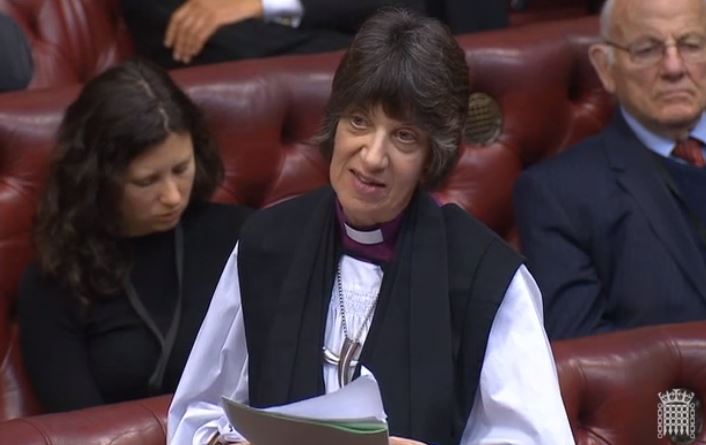
The Lord Bishop of Gloucester: My Lords, I am pleased to move this amendment, which has the support of the noble and learned Lord, Lord Falconer, the noble Lord, Lord Dubs, and the noble Baroness, Lady Massey. I am grateful for the knowledge and wisdom they will bring to the debate. I declare an interest as Anglican Bishop for Her Majesty’s Prisons in England and Wales and president of the Nelson Trust.
The sentencing of a primary carer can have a serious detrimental impact on the rights of a child and their life chances, yet the fact that they are a primary carer is not consistently considered by the court making the sentencing decision. Amendment 110 would require judges to consider the impact on a child of the decision of not granting bail when determining in criminal proceedings whether to grant bail to a primary carer of that dependent child. Amendments 215 to 217 aim to address inconsistencies in sentencing by requiring judges and magistrates to give due regard to the impact of a sentence on any dependent children and their welfare when sentencing a primary carer. The intention of Amendment 218 is to gather the relevant data about the number of prisoners who are primary carers and the number of children who have a primary carer in custody. Given that there are five amendments here, I hope noble Lords will bear with me.
I know other noble Lords will cover in greater detail the recommendation of the Joint Committee on Human Rights that the rights of children whose primary carer is in prison be upheld. In the vast majority of cases, the primary carer is the mother, and this will be my point of reference today. However, I acknowledge that for some children the primary carer may be someone else. My starting point with these amendments is not that primary carers—mothers in the most part—should never be given a custodial sentence. It is instead that we must find a way for the least harm to be caused as a consequence of sentencing. Custodial sentences for mothers punish children, including the unborn, and that is not justice.
I believe not only that every person is created precious and with unique potential but that we are created as people of relationships and that perfect wholeness and harmony—shalom—is about everything in a perfect interdependent relationship: humanity and all creation; of course, I would add, rooted in God. If we want a criminal justice system which is about justice, safety, transformation and the flourishing of individuals, communities and society, we have to attend to the whole picture of relationships—the whole system, and indeed, the long term. If we are to strengthen family ties, reduce reoffending and disrupt intergenerational cycles of abuse, trauma and offending, there must be consideration of where and how a mother serves her sentence.
So often prison is not able to meet the rehabilitative needs of the people who are sent there and will also not be about enabling the better safety of the public or strengthening communities and society. Many women are often in prison for only a few weeks. The majority of women are there for less than six months and, according to the Prison Reform Trust:
“72% of women who entered prison under sentence in 2020 have committed a non-violent offence.”
Alternative community-based provision must be available, well funded and trusted by those making sentencing decisions.
Last month, the Lord Speaker graciously allowed me to host an event here in the River Room. The most powerful speaker at that event was a young mother who shared her lived experience of addiction, domestic violence and a point-of-arrest diversion programme facilitated by the Nelson Trust through Avon and Somerset Police. I am grateful to have further opportunities to speak about the need for diversion later in Committee, so in this debate I will simply repeat Chloe’s powerful testimony of restoration. She said: “I now have my family back. I see my daughters every day. They stay overnight with me and together we are making happy memories. I am the happy, confident, healthy mum I always wanted to be and now I am one year sober.”
Some 95% of children have to leave their home when their mother goes to prison. Parental imprisonment is recognised as an adverse childhood experience that could have a substantial negative impact on children’s long-term health and well-being as well as their educational attainment. It can also seriously affect their life expectancy and the likelihood of going to prison themselves. According to Dr Shona Minson,
“children suffer short, medium, and long term and lifelong harms from being deprived of their parent by imprisonment.”
So often, these children—and the impact on their lives—lurk in the shadows unseen and the light needs to be shone there if we are to see the full picture and the consequences of our failing to uphold the right of the child within our criminal justice system. We also need to recognise that the impact on these children may not remain hidden in the long term. The intergenerational impact of imprisonment is well documented. Reportedly, 65% of boys with a convicted parent go on to offend themselves and children of prisoners have twice the risk of antisocial behaviour compared with their peers.
Three weeks ago, I visited Adelaide House, the female approved premises in Liverpool. One of the women there recalled how her mother was in and out of prison. She said: “I was passed from pillar to post, which resulted in my becoming dependent on drugs at the age of 13, just to get me through the day. This has been ongoing throughout my adult life. Looking back, I recognise that my mother had mental health issues and dependencies and received no support.” Holistic, trauma-informed support, including parenting education, is available in community interventions such as those provided by women’s centres, which is where the money needs to be channelled.
I have said before in this House that even if someone is utterly callous and cares little about the offender and their family, the financial aspects alone make no sense at all. The report, Counting the Cost of Maternal Imprisonment, published by Crest Advisory last week, states:
“Our research shows that interventions with children affected by maternal imprisonment were costing the taxpayer as much as £265,008 per family when the cost of the mother’s custodial sentence is taken into consideration.”
We must be better at seeing the whole picture, and considering the child’s rights here is the ultimate early intervention.
Sarah Beresford’s 2018 report for the Prison Reform Trust and Families Outside found:
“Every aspect of a child’s life is disrupted when a mother goes to prison”.
The report recommended introducing child impact assessments to ensure that children are listened to at every stage of their mother’s journey—arrest, court, imprisonment or community sentence, and on release—and that they are meaningfully and appropriately involved in decision-making about their care and any support needs they may have.
At this point, I want to mention the unborn child too. I am sure many noble Lords will be aware of the upsetting report published in September regarding the death of Baby A in HMP Bronzefield. The mother had not been sentenced; she was on remand. It is a tragic case and of course a complex one, but I stand with organisations such as Birth Companions, Level Up and Women in Prison in calling for an end to the imprisonment of pregnant women in all but the most exceptional circumstances. Through these amendments, we hope that sentencing judges will consider the real impact on the unborn child of imprisoning their mother.
In all this, I want to keep focused on the big picture, and communities and societies as a whole. That is surely vital if we are to keep victims of crime clearly in our view too. From the review by the noble Lord, Lord Farmer, into the importance of strengthening female offenders’ family and other relationships, published in 2019, we know that family ties are a factor in reducing reoffending, with benefits for society as a whole.
The Government’s own female offender strategy, published in 2018, acknowledged that:
“Custody results in significant disruptions to family life”
and that many women
“could be more successfully supported in the community, where reoffending outcomes are better.”
Indeed, it recognised
“the negative impacts on families of imprisoned mothers and the heightened risk of intergenerational offending”
and committed to rolling out the “Safeguarding Children When Sentencing Mothers” training material developed by the aforementioned Dr Minson, saying:
“This training raises awareness of the diverse implications of maternal imprisonment for children.”
So we can see that attempts have been made to reduce the impact on children, but they are not applied consistently. The Joint Committee on Human Rights found that, despite the Sentencing Council strengthening its guidance to judges and magistrates, evidence to the inquiry clearly indicated that the guidance was not being satisfactorily adhered to, and questions remain about whether these steps go fast or far enough to guarantee children’s rights.
We need to know the full picture but at present that is distinctly lacking. Joining up social services, whose primary responsibility is the welfare of the child, needs data. In 2019 Crest Advisory estimated that 17,000 children per year are affected by maternal imprisonment, but that is just an estimate. The Government do not know the true figure. In response to my Written Question in December last year inquiring how many women in prison are pregnant or are mothers with primary caring responsibilities, I was told:
“Pregnancy data is collected locally by individual prisons, to ensure the appropriate support can be provided to women in our care. Currently, there is no central collection of this data.”
So there is local data but no national picture. If we do not know where those pregnant mothers are, how can we adequately support them? I am aware of the argument that prisoners may not wish to disclose that they are parents for fear of social services’ involvement, but there must be a solution to this. I am heartened that in the same reply to my Written Question the Government said they were
“considering how to monitor and publish this information”.
I would be grateful for an update from the Minister in that regard.
In summing up, I reiterate that my view is not that primary carers should never be sentenced to a custodial sentence, but the Government must use the timely opportunity provided by this Bill to consider the big picture and ensure that the rights of children and the impact on their lives are brought to the fore. Doing that would of course also enable the Government to make progress on their own ambitions to radically reduce the number of women in prison, included in their female offender strategy and their national concordat on women in the criminal justice system as well as in the recommendations of the Farmer review on women. I ask noble Lords to support these amendments, and I beg to move.
Extracts from the speeches that followed:
Lord Falconer of Thoroton (Lab): My Lords, it is a pleasure and a privilege to follow the right reverend Prelate. My name comes after hers on this amendment, and I strongly support what she has said. This is a very important set of amendments and I really hope the Government will take the opportunity that they give. The right reverend Prelate is not saying that those who have primary caring responsibility, or where an unborn child is involved, would get a free pass in relation to the sentencing regime or the bail regime. She is saying, with these carefully thought-out amendments, that there have to be proper arrangements for the courts to take these matters into account and recognise that they are a significant factor in many cases in determining a sentence.
(…)
These amendments would mean that the interests of the child of which the defendant is the primary carer, or an unborn child, have to be explicitly considered and they are a weight—in many cases, a very considerable weight—in the scales. If we put these amendments into the Bail Act 1976 or the Sentencing Act 2020, which is where the right reverend Prelate is proposing they go, it will have an impact on sentencing. It is not enough, and it is a complacent view, as the Human Rights Committee found, to say, “Don’t worry; the judge has already taken it into account, it is referred to in the sentencing guidelines.” The evidence before the Human Rights Committee is that that was not the case. Put it into the Sentencing Act, as these amendments propose, and we will find that it then becomes a much harder thing for a court to avoid; it should be thinking of the rights of the child of which the defendant is the primary carer, or an unborn child. This is a significant opportunity for the Committee to make this Bill better, and I strongly support the right reverend Prelate.
Baroness Massey of Darwen (Lab): My Lords, the amendments in this group are about ensuring the best interests and welfare of the child. We must remember that children are those under 18, not just little ones. The arguments have been admirably set out by the right reverend Prelate the Bishop of Gloucester and my noble and learned friend Lord Falconer. It is an honour to follow them both.
I simply wish to emphasise some of the points from their arguments. Like my noble friend Lord Dubs, I am a member of the Joint Committee on Human Rights, which has considered this aspect of the Bill very carefully. Over many years, the committee has supported the rights and best interests of the child, as set out in the UN Convention on the Rights of the Child, ratified by the UK in 1992. The Joint Committee on Human Rights, in its report The Right to Family Life: Children whose Mothers Are in Prison, recalls that the JCHR has produced a number of reports on the right to family life, which is one of the articles of the UN convention.
It is clear that sentencing a person to prison affects not only their life but their family. Children should not suffer when a primary carer, so often a mother, is sent to prison. The committee also pointed out that children’s voices are not heard or listened to when their mother or primary carer is sentenced, despite case law and guidelines that should ensure that their best interests and welfare are considered. The Government have promised
“an ambitious programme of sentencing reform”.
I hope the Minister tells us that the impact on children will be at the forefront of that reform.
Lord Bradley (Lab): My Lords, I rise to make a short contribution to fully and strongly support the amendments. I declare my interests in the register, particularly as a trustee and vice-chair of the Prison Reform Trust. I first compliment the opening address by the right reverend Prelate the Bishop of Gloucester and fully associate myself with the arguments she made in opening this debate.
I will briefly give some background to these amendments. Following the publication in 2009 of my independent report to government on mental health, learning disabilities and the criminal justice system, a programme to establish liaison and diversion services across the country was commenced. This has continued to this day, supported by all Governments, with 100% geographical coverage of the country now achieved.
These services are based in police stations and courts and are made up of multidisciplinary teams comprising mental health nurses, learning disability nurses, speech and language therapists and other disciplines working together with drug and alcohol staff to assess the needs of the arrested person to determine whether it is appropriate to divert them away from the criminal justice system, depending on the nature of the offence, or to help and support the police in determining whether they should be charged. If they are charged, this assessment information passes through to the courts and, in partnership with the court staff and probation staff, they try to ensure that a more comprehensive picture of the often complex needs of the individual is available in the magistrates’ courts and the Crown Court at first appearance.
Lord Garnier (Con): It may only be the noble Lord, Lord Carlile, and possibly the noble and learned Lord, Lord Falconer, who, like me, have sentenced what I might call “ordinary” criminals in the Crown Court. The noble Lord, Lord Carlile, is of course too modest to mention that his wife, Judge Levitt, now deals with these matters on a daily basis in the Crown Court. But one of the things that recorders and amateur judges like me, who perhaps do four or five weeks in a Crown Court during the course of a year, have to cope with is the sad people—be they men, women, young teenagers or adults—who come before us for repeated low-level but very annoying criminal offences, such as shoplifting in order to fund a drug habit and so forth.
The one thing that we were determined to do—I do not think that this is controversial—is not send people to prison when it would cause more damage than benefit, both to them, as individual defendants, and their children. Remarkably, the older teenagers and young people in their early twenties who had not just one but two or three children were our daily bread and butter, and we were anxious not to send them to prison if we could possibly help it because of the effect that it would have on their children.
I hugely thank two people, one of whom is in this Chamber, for their influence on my coming to understand the difficulties of sentencing and putting people in custody, particularly women. One was James Jones, the former Bishop of Liverpool, who was the right reverend Prelate’s predecessor but one—perhaps her immediate predecessor. The other is the noble Lord, Lord Ramsbotham, who, for me, is the source of information about the prison system. If you read his book about it, and the opening chapter, which concentrates on Holloway—now shut, thank God—you will begin to understand just a bit of the difficulties that amateur sentencers, magistrates and Crown Court recorders, but also the equivalent of Judge Levitt, have to cope with, day in, day out. These are anxious decisions about what to do with women and children whose offences are sufficient to cross the threshold for custody—but, if they are sentenced to prison, what collateral damage does that cause to others?
Baroness Jolly (LD): My Lords, for two minutes, I want to throw a pebble into what seems like calm water. I totally support everything that the right reverend Prelate the Bishop of Gloucester has said. However, we need to ask ourselves: what is a child? If somebody talks to me socially and says, “Do you have any children?”, I say, “Yes, I have two.” They are grown-up men who flew the nest a long time ago.
However, adults with a learning disability are sometimes cared for by their parents, if they have chosen that the child should not go into care. Their family unit is mum and dad, who are in their 70s or 80s, and somebody with a learning difficulty who might be in their 50s. That is not what we think of as a nuclear family, but we still have to care for the child of those elderly parents, and when one parent dies there are all sorts of problems. Mencap has done a lot of work on this and I have worked with it on it. We really need to be careful about how we legislate for adults who have the mental capacity of a child.
Lord Marks of Henley-upon-Thames (LD): My Lords, I am extremely grateful to the right reverend Prelate for not just these amendments but the care and time she gives to compassionate consideration of the criminal justice system generally. I am also grateful to the other authors of this group of amendments. We on these Benches fully support them.
In this House, we have repeatedly stressed the special needs of women in prison and the effect of custody on women and their children. I entirely take the point made by my noble friend Lady Jolly and the noble Viscount, Lord Hailsham, that there are others who are cared for who need our concern. In terms of legislation, we have achieved no more than lip service. These amendments would put that right by imposing real duties on courts and judges to gather the necessary information and consider the effect of custody on children in making bail and sentencing decisions for their primary carers.
(…)
Noble Lords have had the benefit of the excellent briefing from the charity Women in Prison. The statistics it has collated tell a grim story. More than 53,000 children each year are affected by their primary carers being sent to prison and 95% of children whose mother is imprisoned are forced to leave home. One sentence encapsulated it all for me: “We’ve been sentenced,” says a mother, “but they’ve been sentenced with us.”
This point was at the heart of the opening speech of the right reverend Prelate the Bishop of Gloucester. Parental imprisonment is for children a well-recognised predictor of mental ill-health, poor educational attainment and employment prospects, and future criminality for the children concerned. It is often said that criminality runs in families. The noble and learned Lord, Lord Thomas, said that in answer to the noble Viscount, Lord Hailsham. The extent to which we fail the children of carers in the criminal justice system tends to make that a self-fulfilling prophecy.
Lord Wolfson of Tredegar (Con, Ministry of Justice): This group of new clauses relates to primary carers in the criminal justice system, and first I thank the right reverend Prelate and noble Lords for tabling these amendments. I know they were proposed in a recent legislative scrutiny report on the Bill by the Joint Committee on Human Rights, and this topic has been an area of interest to the Joint Committee during this and previous Parliaments. As set out during debates on the Bill in the other place, the Government support the principle behind these amendments. I hope, therefore, I will be able to provide to the House the reassurance that the noble Lord, Lord Carlile of Berriew, asked for. I can assure the noble and learned Lord, Lord Falconer of Thoroton, that we do take these points very seriously. More generally, I can assure the noble Baroness, Lady Massey, that when it comes to our sentencing reforms, we do consider the impact on children. However, the reason the Government do not propose to accept these amendments is that they do not consider them to be necessary, for reasons I will seek to explain.
(…)
I should not sit down without underlining a point that was made by the noble Lord, Lord Carlile, that judges at the sharp end should be given credit for understanding the position. It is fair to say—let me choose my words carefully; I do not wish to disrespect former judges—that there has been a revolution, a real sea change, in the judiciary. They really “get it” when it comes to female offenders and primary carers. This is one of the reasons why we have a low percentage of women in prison now which continues to fall. I suggest that it is not unconnected with a more diverse and better-trained judiciary. The judiciary should get a large measure of thanks for its work in this regard.
I conclude by returning to two points made by the right reverend Prelate. First, inconsistency in sentencing was put as a complaint. There must be a balance between sentencing appropriately in each case and sentencing within clear guidelines. There will be a range of sentences, and some inconsistency is not necessarily a bad thing. We do not want to get into a straitjacket of sentencing.
The right reverend Prelate also referred to an event which she hosted recently in the River Room, at which Chloe, a recent offender, spoke. I was at that event. Chloe’s speech was incredibly powerful. The right reverend Prelate used the word “Shalom”—meaning peace, because you make whole. It has another meaning which may be relevant in this context: it also means to pay, because when you pay, you complete a transaction. At the heart of this debate is balancing those two things: making the offender whole—rehabilitation—while recognising that there will be some cases where the offender must pay a debt to society that in some cases requires custody.
For those reasons, I hope that the right reverend Prelate will be persuaded to withdraw the amendment.
The Lord Bishop of Gloucester:
I am very grateful to all noble Lords who have spoken in this debate this afternoon; it is now getting on for this evening. I am very aware of time and where we are in this group of amendments. There have been some thoughtful contributions and plenty to think about.
We have talked a lot about what is, and about the numbers of women in prison, but we must look at the reality. There might be things which are theoretically there, but we still have so many primary carers in prison, and while the amendment is about primary carers, it is also about the rights of the child. We were in danger in our debate of not keeping the child at the centre. I have heard what people have said about other dependants. I take that on board, but it does not take away from us focusing on children and the long-term intergenerational impact. We could have a good theological discussion later, but I used “Shalom” because we cannot have any of this discussion without looking at the whole picture.
I have respect for all that has been said about judges and I give them credit for what I have heard in the very powerful speeches today. One problem is that there is not always enough information about what else is available. We will be talking about community sentencing another time, but I have had judges and magistrates say to me, “We don’t know exactly what is available in this area that could be offered to this person.” We must keep this all in the round.
Data has come up again and again, and that is crucial. I am grateful to all those who have talked about its importance. We have been talking about the number of women in prison and what happens at sentencing, but, with due respect, it is not happening. If it were, we would not have the number of women in prison that we have and the number of children who are being adversely impacted by this. We must be careful about the theory, what is happening and why it is happening. Therefore, data is really important.
We talked a lot about pre-sentencing reports. They are crucial, but it is not just about a pre-sentencing report—it is the information it contains. Again, we know that lots of primary carers, particularly mothers, do not always want to say that they are mothers. We must look at why that is. Again, it is that bigger picture—it is not just the PSR but the information it contains.
I do not want to replay all the arguments that we have heard, and I thank noble Lords. There is something I still want to hold on to about the rights of the child, and about inconsistency. I have heard what the Minister has said, yet that issue of inconsistency is really important because of the reality of what we have in our prisons at the moment and the number of children being impacted.
While I am willing to withdraw the amendment at this stage, I hope that there will be further discussion about the rights of children and all that we must do to continue achieving the aims of the Female Offender Strategy, which is not where we are in reality. I pay tribute to the noble and learned Lord, Lord Falconer, the noble Lord, Lord Dubs, and the noble Baroness, Lady Massey, for their support. We want further discussion going forward but for now, I beg leave to withdraw the amendment.
Amendment 110 withdrawn.
 The Church of England in Parliament
You must be logged in to post a comment.