
On 10th November 2021, during a debate on amendments to the Police, Crime, Sentencing & Courts Bill, the Bishop of Durham, on behalf of the Bishop of Derby, spoke in support of an amendment tabled by Baroness Massey which would ensure that children would not be affected by the imposition of changes to mandatory minimum sentences under the bill:
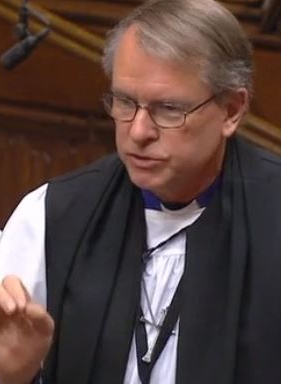
The Lord Bishop of Durham: My Lords, I speak on behalf of the right reverend Prelate the Bishop of Derby on this occasion, who could not be here today. I add my support to Amendments 198, 199, 200 and 201, in the name of the noble Baroness, Lady Massey, which deal with tariff starting points or DHMP sentences as they relate to young people. The noble Baroness laid out well the case for amending Clause 104 so that it takes into account evidence on maturation. I will briefly add the right reverend Prelate the Bishop of Derby’s perspective as a Lord spiritual and as part of a team of Bishops focused on Her Majesty’s prisons, particularly young offender institutions. She also declares an interest as vice-chair of the Children’s Society.
Children ought to be treated as children, and we resist any erosion of that in law. If we are to argue to the contrary we must be content to go against the trajectory of every other arena of English law. Eighteen is soon to become the age at which people can legally marry, leave education and join the Armed Forces. I urge noble Lords to reflect on this. If we project from this that children are to be protected from making decisions about marriage, education and even enlisting in Her Majesty’s Armed Forces until they reach a maturation point of 18, then the same logic surely must continue to apply in this instance.
The net consequence of Clause 104 would be more children spending longer in custody. Put simply, with very few under-16s impacted, the result would be more older teenagers receiving more severe sentences than is currently the case.
I intend to oppose Clause 103 being added to the Bill. Clause 103 would make it possible for judges to impose whole life orders on offenders aged 18 to 20. Our amendment would ensure that the minimum age for imposing a whole life order does not drop below 21. Although these are not legally children, in common with Clause 104, Clause 103 fails to take into account the Government’s 2015 response to the report by the noble Lord, Lord Harris, into the deaths of 18 to 24 year -olds in custody, where the Government agreed that
“It is widely recognised that young adults, particularly males, are still maturing until around 25 years of age.”
I am grateful to the Prison Reform Trust for its briefing on this and for highlighting that the origin of Clause 103 derives entirely from a single recent case. I understand the strength of feeling around that particularly tragic case, as it resulted in terrible loss of life. However, I do not believe there is any justification for extending whole life orders to young adults in this manner.
As Christians, we on these Benches might be somewhat predisposed to second chances and redemption through Christ. Under the proposals in this Bill, a young person, who the Government’s own research says has not reached full maturation, could be imprisoned for perhaps 60 or 70 years without any prospect of redemption or restoration. There is a wider argument here against whole life orders in principle but, until now, the law has recognised that for under-21s a sentence of this magnitude has been too significant a prospect, for the reasons already outlined. I am yet to hear a compelling case for change.
This is not to say that crimes ought not to be appropriately punished and justice served. It is to say that choices made by a neurologically immature young person should not determine the whole fate of that person’s life. Young adults who are still maturing are more capable of change and more likely to desist from crime in future.
We might even debate whether many of the young people in Her Majesty’s young offender institutions have had the ability to make real adult choices, free from abuse, coercion and manipulation, as the noble Lord, Lord German, just outlined. In reality, we are talking about a handful of cases, and children and young people deserve to be treated not as handfuls, but individually and separately.
Lord Wolfson of Tredegar (Con, Ministry of Justice): Clause 101 relates to—and I underline this point—minimum sentences. The noble Baroness, Lady Jones of Moulsecoomb, on a few occasions referred to “mandatory” sentences. The clause is not headed “mandatory sentences”; the words “mandatory sentence” do not appear in this Bill, except in one place, Clause 101(8), which refers back—it is a pity that the noble Lord, Lord Paddick, is not in his place, because we have a nice piece of parliamentary drafting here—to Section 399(c) of the Sentencing Code “(mandatory sentence requirements)”, but that refers to a minimum sentence where the conditions set out in the clause do not apply.
Baroness Chakrabarti (Lab): I am sorry to interrupt the Minister but in sentencing law and in the criminal justice system, minimum sentences are currently referred to as “mandatory minimum sentences”, subject to thresholds and exceptions such as exceptional circumstances. That is a very long tradition. As lawyers we must be fair to lay Members of the Committee as well. It is unfair to say that the noble Baroness, Lady Jones, has missed the point. It is very common in the parlance of sentencing law and criminal justice law to refer to minimum sentences as “mandatory minimum sentences”, subject to whatever thresholds and exceptions there are.
The Lord Bishop of Durham: That is exactly what it says in the paperwork we have.
Lord Wolfson of Tredegar: The point I am making is very important and we will get to it in another group. I absolutely accept that people use “mandatory sentence” in a common parlance way, but when we get to a later group, we will discuss what the test should be. I will not delay the Committee now, but the figures for when the minimum sentence is not actually imposed are surprising. People using the phrase “mandatory sentence” would be surprised to hear that in a third and sometimes nearly half of cases, the minimum sentence is not given. If “mandatory” does not apply in a third of cases, I question whether it is the appropriate word. Therefore, we must bear in mind that we are dealing with a minimum sentence with a provision, whether that is “exceptional” or some other test. I certainly do not seek to criticise the noble Baroness, Lady Jones, for using the shorthand. I wanted to point out that it is a shorthand which can be misleading when one looks at the facts as to how such sentences are imposed.
Extracts from the speeches that followed:
Lord Wolfson of Tredegar: I turn now to Clause 104 and 105, which both relate to children who have committed murder and will therefore receive the mandatory life sentence of detention at Her Majesty’s pleasure. I hear in this regard the words read to us on behalf of the right reverend Prelate the Bishop of Derby. When giving a life sentence, the judge sets a minimum amount of time that must be spent in custody before the offender may be considered for release by the Parole Board. This is known colloquially as the tariff. Judges use starting points to determine that tariff. They can set a minimum term higher or lower than the starting point by taking into account aggravating or mitigating factors. Currently, there is a 12-year starting point for all children who commit murder.
In this Bill, we are replacing the fixed 12-year starting point for all children—what might be called the mandatory starting point—with a range of starting points that take into account the child’s age at the time of the offence and the seriousness of the murder. The age groups are to reflect the different stages of development that a child goes through and that, although both in law are children, a 10 year-old is very different from a child of 17 years and 10 months. The different levels of murder, if I can put it that way, are based on the more nuanced system used for adults, which takes the seriousness of a murder into consideration. Therefore, the twin factors of age and the seriousness of the murder are then brought together. The higher the age and the more serious the murder, the higher the starting point, and the converse is also the case.
(…)
That right has developed through case law. It recognises the unique rights of children and the fact that they develop and mature at a faster rate than adults. The review is an important part of confirming that the minimum term remains appropriate or determining if a reduction should be made. However, they should be eligible for a further review only if they are still a child at the time of that further review. This is because, as the right reverend Prelate the Bishop of Durham said on behalf of the right reverend Prelate the Bishop of Derby, children have the greatest capacity to demonstrate the significant changes to maturity and outlook that the review considers. Therefore, the opportunity for multiple reviews would be available only to younger children at the initial time of offending, as they are more likely to be under the age of 18 at the time of any further review.
Those who commit murder as a child but are sentenced as an adult have already had their age and maturity taken into consideration. Adults who commit murder are not entitled to reviews and so this Bill ensures that all offenders who are an adult at the time of sentencing are treated equally. It is important to remember that we are talking about the most serious offence, that of murder. The minimum term set by the judge takes into consideration a child’s age and maturity at the time of the offence and reflects the seriousness of the offence. That minimum period should therefore be served, except in exceptional circumstances.
Lord Marks of Henley-upon-Thames (LD): Finally, the noble Baroness, Lady Massey, and the right reverend Prelate the Bishop of Derby—whose position was eloquently expressed by the right reverend Prelate the Bishop of Durham in the earlier group—oppose Clause 103 because new Section 321(3B) of the code would permit whole-life orders for those aged 18 to 20. We agree, for all the reasons they gave, and the reason that the noble and learned Lord, Lord Falconer, gave, that that is inappropriate. Whole-life orders should not be imposed in such cases.
Lord Wolfson of Tredegar: As I am on the topic of whole-life orders, I will go slightly out of turn chronologically to address the notice given by the noble Baroness, Lady Massey, and the right reverend Prelate the Bishop of Derby that they oppose Clause 103 standing part of the Bill. Clause 103 makes it possible for people aged 18 to 20 to receive a whole-life order where the crime committed is extremely serious. Clause 103 has to be read together with Clause 102, which expands the range of circumstances where a whole-life order must be the starting point to include the premeditated murder of a child. The current position is that whole-life orders can be imposed only on offenders aged 21 and over. This acknowledges the utmost seriousness of this punishment and its overwhelming effect on an offender’s future. We recognise, however, that there may be some rare cases where it may be appropriate to impose a whole-life order on offenders aged 18 to 20. We propose, therefore, to give judges the discretion to impose a whole-life order on an offender aged 18 or over, but under 21, in those cases.
We have set out an important clarification or criterion for when that sentence would be available. Clause 103(2)(b)(3C) makes it clear that the sentence will be warranted for offenders in the 18 to 20 year-old cohort only where the crime was extremely serious even by the standards of the crimes which would normally attract a whole-life order. We anticipate that this discretion would be exercised rarely. The expectation is still very much that offenders aged under 21 would not receive a whole-life order, but the change will allow judges to impose these sentences for these younger offenders, who are of course still adults, where that is necessary.
 The Church of England in Parliament
You must be logged in to post a comment.