
On 16th November 2021, the House of Lords debated the Dormant Assets Bill in the report stage. The Bishop of Ely, on behalf of the Bishop of Newcastle, spoke in support of an amendment to the bill which would support the creation of community wealth funds to assist deprived communities in reducing inequality and improving local infrastructure:
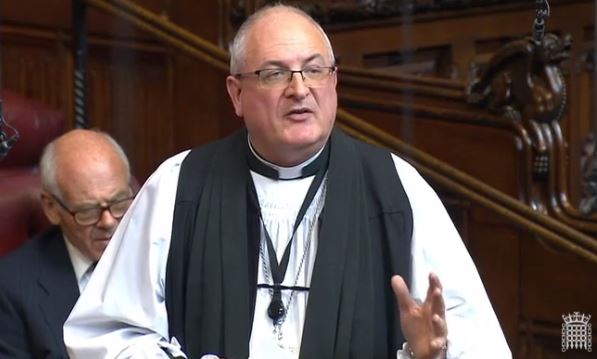
The Lord Bishop of Ely: My Lords, the noble Lord, Lord Bassam, is correct that my friend the Bishop of Newcastle has made her valedictory speech, but I have been permitted to speak on her behalf. Noble Lords may have noticed a certain discrepancy in height and volume between me and the Bishop of Newcastle but she is living proof that stature has nothing to do with size. I applaud my friend for her significant role as a Lord Spiritual and a community leader in Newcastle; the city has honoured her with the freedom of the city in recognition of her work.
In support of the amendment, we would like to say that the creation of community wealth funds, as the noble Lord, Lord Bassam, has said, will strengthen community life in left-behind communities, including many in the diocese of Newcastle. Levelling-up investment, while welcome, has been largely about hard infrastructure but we want to see more investment in social infrastructure so that our communities can flourish. It is precisely that social infrastructure which could be provided by the community wealth funds, so they are already creating confidence in communities even if the consultation is yet to happen.
One of the key founder members of the Community Wealth Fund Alliance is a local trust that administers the Big Local programme, a programme that has inspired this community wealth fund proposal. The Big Local programme has been operating for 10 years and has generated considerable learning and evidence that could inform the design of the new pilot fund or funds that the amendment would enable.
The Big Local programme supports 150 neighbourhoods across the country that have each received just over £1 million in funding from the National Lottery Community Fund. That funding is placed directly into the hands of local residents, giving them the ability to make decisions about how to improve their neighbourhoods and their quality of life. Areas were selected on the basis that they suffered from higher-than-average levels of deprivation and had previously missed out on their fair share of lottery or other public funding.
An in-depth evaluation of 15 of the 150 Big Local areas half way through the programme outlined the benefits for individuals, groups and organisations and charted wider community change as a result of the funding and support offered. The benefits are considerable, including increased employment and access to employment opportunities, increased confidence and aspiration and reduced social isolation. The programme has also increased people’s sense of agency and belief in their own ability to make things happen.
The noble Lord, Lord Parkinson, will no doubt be aware that one of the 15 projects evaluated in depth is in Whitley Bay in the diocese of Newcastle. I should interpolate here that I am very interested in the continued development of Whitley Bay as it is where I intend to retire. Early on, Whitley Bay Big Local identified local people who would benefit from a community hub, a place to meet and enjoy a range of activities. The team worked hard to make this project a reality, and the right reverend Prelate Bishop of Newcastle and I would like to congratulate them. Recently, Big Local has received £300,000 of funding from the community partnership fund. This, together with funding from North of Tyne Combined Authority, will support the purchase and refurbishment of a building as its new eco-hub, enabling it to run more community activities. Whitley Bay Big Local has also worked with the local authority to identify improvements for the town centre and run volunteer-led projects to create these changes.
Thirty-five years ago, when I was a curate in Gateshead, members of our parish went for their fortnight’s holiday by taxi to Whitley Bay. It is very good that through the fund Big Local has established and supported Whitley Bay Carnival, which has become a sustainable annual event attracting thousands of visitors to the area. The community wealth fund proposal is not being plucked out of the air. The local trust has the expertise to deliver it, and it comes with the backing of over 450 organisations, including 40 local and combined authorities. The Big Local project has made such a difference in Whitley Bay and in communities all over the country.
Extracts from the speeches that followed:
Baroness Barker (LD): My Lords, when I initially heard about community wealth funds, I was rather sceptical, and I perhaps remain on the more sceptical end of the spectrum in your Lordships’ House. But during discussions on the Bill, I have become less sceptical about the idea, as the noble Lords, Lord Bassam of Brighton and Lord Hodgson of Astley Abbotts, have talked to me, along with the groups mentioned by the right reverend Prelate the Bishop of Ely.
Two things in particular have caused me to think again. The first is the experience of the pandemic and how everybody’s sense of locality and place has changed. I happen to live in south London, and one of the many things that got me through the toughest of times was discovering local parks that I had never come across before. Watching other people having to live their lives in a much more geographically restricted scope has made a new sense of place. I now understand —in a way that I perhaps did not before—that being able to appreciate and develop your community space will be a very important part of people’s physical, economic and mental well-being in future.
The second reason why I have changed my mind is this. The noble Baroness gave a long list of community initiatives that have flowed out over the past 30 years, many of them from the National Lottery, the new deal for communities and so on. Pretty much all of them were the release of resources into a community, with varying degrees of restriction on how they could be spent—but they were resources to be spent in poor communities.
Baroness Lister of Burtersett (LD): It is a pleasure to be able to speak in support of the amendment. As Committee was quite a long time ago, I hope noble Lords will forgive me if I repeat some arguments.
We are all committed to building back better—to coin a phrase—and the proposed community wealth fund or funds could be a valuable foundation, enabling us to tackle a range of inequalities and improve outcomes for the residents of our most disadvantaged areas. As such, they potentially have a key role to play in the levelling-up agenda, as already noted, as increasingly it is recognised that levelling up must involve not just physical but social infrastructure, as the right reverend Prelate has said. As the report from the Bennett Institute for Public Policy argues, social infrastructure brings
“economic, social and civic value”
—and, we might add, cultural value—to areas where such assets may be weak. According to the British Academy, of which I am a fellow, the pandemic has shown:
“National capacity to respond to changing circumstances and challenges requires effort to sustain a strong web of communities and community engagement at local levels.”
Community-led networks are vital for combating inequalities over the long-term and must be at the centre of plans to build back better.
Lord Parkinson of Whitley Bay (Con, DCMS): My Lords, I thank the noble Lord, Lord Bassam of Brighton, the noble Baroness, Lady Kramer, the right reverend Prelate the Bishop of Newcastle, and my noble friend Lord Hodgson of Astley Abbotts for tabling this amendment relating to community wealth funds. I am also grateful to the right reverend Prelate the Bishop of Ely, who spoke on behalf of his right reverend friend, who, as he explained, has made her valedictory speech to your Lordships’ House and is therefore unable to speak today. I offer my best wishes to her as she leaves your Lordships’ House for a well-earned retirement and thank her for her contributions, both here in your Lordships’ House and across the diocese; it is one I hold particularly dear, having been baptised in it and having many relatives who live there still. I know that she will be much missed, but we are delighted that, through the apostolic succession, the right reverend prelate the Bishop of Ely was able to speak for her today.
 The Church of England in Parliament
You must be logged in to post a comment.