
On 7th June 2023, the House of Lords debated the Illegal Migration Bill in committee. The Bishop of Southwark spoke in support of amendments to the bill; in the name of the Bishop of Gloucester, Baroness Lister of Burtersett, and other peers; that would place limits on the detention of pregnant women and the use of force against children and pregnant women:
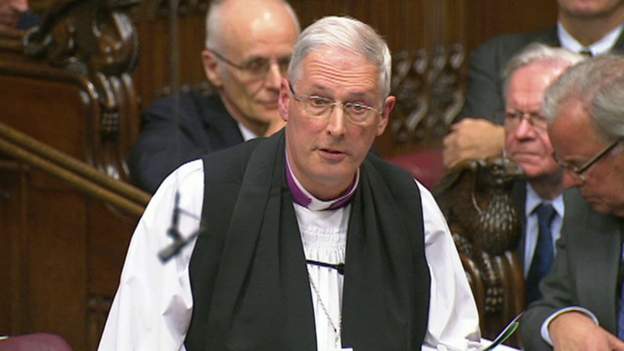
The Lord Bishop of Southwark: My Lords, it is a great pleasure to follow the noble Baroness, Lady Lister, who has expertly outlined why these amendments are needed. My good friend the right reverend Prelate the Bishop of Gloucester has added her name in support of Amendments 68 and 70, and regrets she is not able to be here to give her support in person. I share her concern about the impact of detention on pregnant women in particular, impact which we know is considerable. Others will rightly draw attention to the impact on children, and the suggestion of the use of force against either group is unspeakable. His Majesty’s Inspectorate of Prisons advises that there
“is no safe way to use force against a pregnant woman, and to initiate it for the purpose of removal is to take an unacceptable risk”.
I turn now to Amendment 68, which is a preservation amendment. This simply asks that the Government maintain the status quo. In 2016, the Immigration Act introduced a 72-hour time limit on pregnant women’s detention, which saw the numbers detained drop from 99 in 2014 to just seven in 2021. It is alarming to think that we may see numbers rise, and the consequences are disturbing. According to research by Women for Refugee Women,
“women seeking asylum who are pregnant are an extremely vulnerable group. Many have experienced trauma such as rape, trafficking and torture, and have significant physical and mental health issues”.
I appeal to the Minister to consider also the well-being of the unborn child involved. The Royal College of Midwives has said:
“The detention of pregnant asylum seekers increases the likelihood of stress, which can risk the health of the unborn baby”.
Antenatal care and support provided to women who are detained has often fallen short of the care normally available to pregnant women.
Research by Medical Justice found that in Yarl’s Wood, women often missed antenatal appointments. Some had no ultrasound scans while detained, and women did not have direct access to a midwife and could not request visits. In recent years we have seen the devastating consequences of holding pregnant women in prisons. These facilities, including detention centres, are on the whole not set up to provide the necessary health and welfare oversight. This violates women’s dignity and puts lives at risk. The indefinite detention of pregnant migrant women, who are often extremely vulnerable and the victims of abuse and trafficking, is a very worrying and regressive move. The implication that force may be used against them, and against children, is beyond words. I hope wholeheartedly that the Committee supports these amendments and that His Majesty’s Government give them the consideration they so justly merit.
Extracts from the speeches that followed:
Lord Stewart of Dirleton (Con): There has never been a complete bar on the detention and/or the removal of pregnant women, such as Amendment 76A seeks to provide. The noble Lord, Lord Alton of Liverpool, referred correctly to the situation as presently advised, with a 72-hour period and a seven-day maximum detention thereafter. In answer to the noble Lord, the right reverend Prelate the Bishop of Southwark, and other noble Lords, that will continue to apply to women who have not arrived illegally on these shores.
Under the Bill, detention is not automatic. The Bill provides power to detain, and the appropriateness of detention will be considered on a case-by-case basis. We expect that a woman who is in the later stages of her pregnancy and who cannot be removed in the short term would not be detained, but instead released on immigration bail. That matter would of course be assessed by the body hearing the application.
 The Church of England in Parliament
You must be logged in to post a comment.