
The Bishop of Chichester spoke in a debate on the ongoing conflict in Ukraine on 21st September 2023, raising the importance of religious freedom and the social role played by cultural and religious institutions during times of conflict:
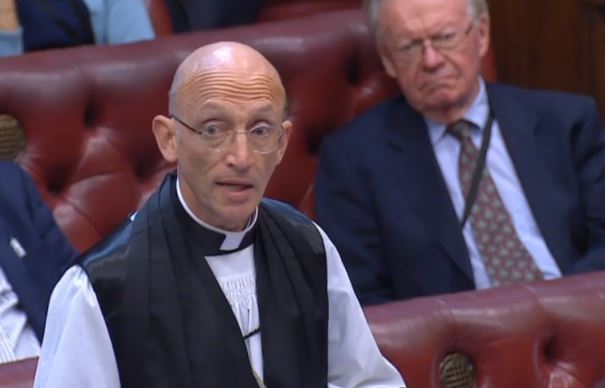
The Lord Bishop of Chichester: My Lords, I, too, am grateful to the noble Baroness, Lady Goldie, for introducing this debate and for the time that it gives us to rehearse the serious moral issues confronting us as a result of the conflict in Ukraine. Following the noble Lord, Lord Hannay, I echo my appreciation for the stirring comments from the noble and gallant Lord, Lord Stirrup, reminding us with great clarity of the issue of war crimes in this conflict, and the noble Lord, Lord Robertson, for reminding us how high the moral stakes are for us all.
I wish to place on record the importance of the ecclesial and religious dimensions of the political and military conflict in Ukraine, and the historic importance that religion has for the people of that land as the gateway of Christianity in the Orthodox tradition for this whole stretch of northern Europe, from the Baltic to the Black Sea.
The Ukrainian Orthodox Church has taken steps to assert its independence from the Russian Orthodox Church, and such actions should not be taken at face value. Short of applying for what it would term autocephaly, which is not within the Ukrainian Orthodox Church’s gift, there is little more that it can do to distance itself from the Russian Orthodox Church and its influence—which, at times, is malign, as an extension of Putin’s will.
At a time when Ukraine faces such an existential crisis and needs a response that meets all levels of its social and political life, criticism of the Ukrainian Orthodox Church—there has been some—can create unnecessary societal divisions, which can, arguably, weaken the morale that sustains Ukraine’s war effort.
At the same time, my Lords, we should be aware of the extent to which Russia has suppressed the religious freedom of Ukrainian citizens in occupied Ukraine with growing intensity since the war started last February. The US State Department’s report earlier this year on religious freedom noted:
“In the first six months of the war, at least 20 religious figures were reported killed and another 15 kidnapped, and nearly 500 places of worship and religious facilities”
were “damaged, destroyed, or looted”—and the bombing of Odesa Cathedral has reinforced those shocking statistics.
This chilling aspect of the conflict in Ukraine points to a cultural cost of the conflict that will live on in the spiritual life of that nation, which goes so deep. In short, we should recognise that the weaponising of culture and religion is also the move of a morally degenerate aggressor.
Therefore, aid for the rebuilding of cultural and religious heritage and identity will be an important contribution to building a peaceful recovery for all that gives Ukrainian people the dignity, courage and faith that have moved the hearts of the international community.
Extracts from the speeches that followed:
Lord Cormack (Con): We have to remember too, that Ukraine has not only lost a lot of modern buildings; much of its heritage and patrimony has been destroyed. The right reverend Prelate the Bishop of Chichester touched on this when he talked about the cathedral in Odessa. A nation is rooted in the history of its buildings—ours certainly is. Think of this country without Westminster Abbey or the building in which we meet. Both of them are so symbolic and mean so much to people throughout the country and indeed the world. Ukraine has lost a lot. Many of its libraries and museums have been looted. All these things will be on the agenda when we come to reconstruction.
It is all very well saying that we must make Russia pay, but how? Yes, we can sequester oligarchs’ assets, and we should, but we cannot physically make Putin sign a cheque. We have to be very conscious that the burden will fall upon the NATO nations—the United States in particular but our country too—to try to restore, through the generous sharing of expertise. We have many wonderful experts in historic buildings in Historic England, for instance, and they could help. But we have to do that and provide the money, or a lot of it, with our allies in order to do so.
Baroness Anderson of Stoke-on-Trent (Lab): It has been one year, six months, two weeks and five days since Russia invaded Ukraine for the second time in a decade: one year, six months, two weeks and five days of horror, brutality and fear for the people of Ukraine. Their resilience and determination in the face of such a brutal onslaught is inspirational and their courage is a testament to the will of their people. As the noble Baroness, Lady Harris, reminded us, we must never forget the personal toll this war is taking as the people of Ukraine mourn their dead and treat their wounded.
The right reverend Prelate the Bishop of Chichester rightly reminded us of the wider emotional and cultural attacks the people of Ukraine are facing every day. As the noble Lord, Lord Harrington, reminded us, too many Ukrainian citizens have been displaced and are now spread throughout Europe, including in the UK, looking on in horror at what is happening to their friends and families.
We are rightly humbled by the courage and resilience of Ukraine’s brave defenders. But we have been reminded again and again that the Ukrainian fight is our fight. As the noble Lord, Lord Cormack, outlined, it is also the fight of Finland, Norway and Estonia. It is the fight of all of us, so we have a duty and a responsibility to support them to victory.
Baroness Goldie (Con, Ministry of Defence): I also listened to the wise words of the noble Lords, Lord Hannay and Lord Owen. The noble Lord, Lord Owen, said that appeasement never works— I think that would get a voice of unanimity across this Chamber. Echoing these sentiments were my noble friend Lord Cormack and the right reverend Prelate the Bishop of Chichester, who apologised to me because he had to leave. He gave us another facet of what this support is about: the very important role of the Ukrainian Orthodox Church and the specific challenges confronting it.
 The Church of England in Parliament
You must be logged in to post a comment.