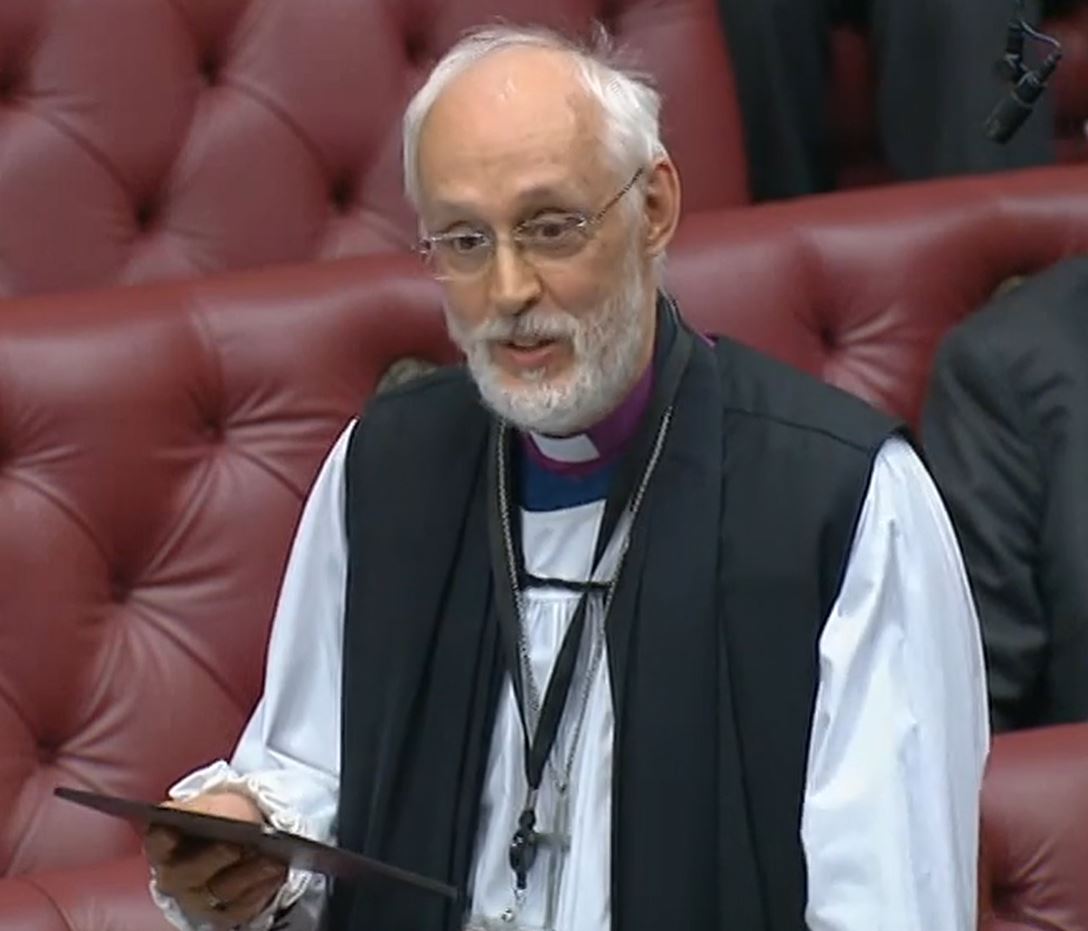
Bishop of Leicester calls for increase in overseas aid to combat conditions leading to atrocity crimes

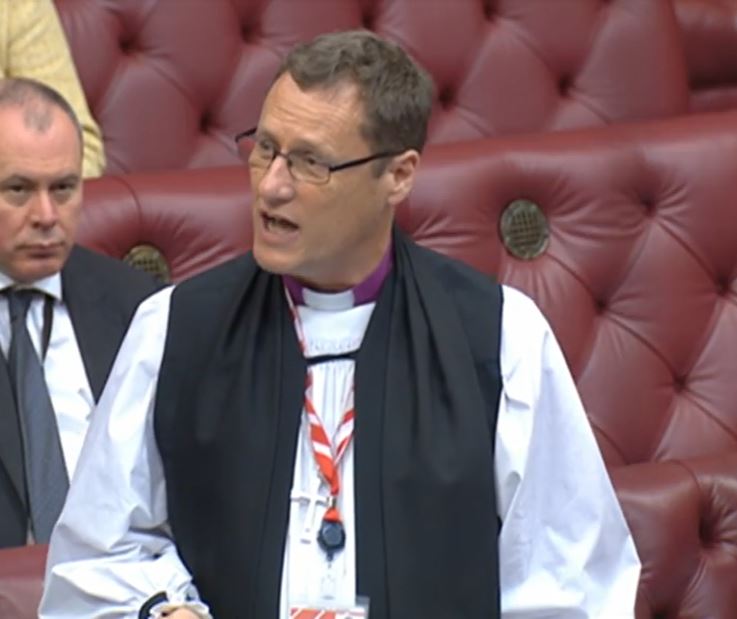
The Bishop of Leicester spoke in a debate on combatting genocide and atrocity crimes on 4th June 2026, calling for greater investment in overseas development aid to combat conflict and related conditions:

The Lord Bishop of Leicester: Like other noble Lords, I am in awe of the noble Lord, Lord Alton, for his patience and persistence in keeping the question of atrocity prevention before this Chamber. I thank him and indeed all those who have spoken. It is not my intention to repeat any of what has already been said: rather, I shall go deeper into the area of the relationship between conflict prevention and overseas aid.

The wholesale dismantling of the United States Agency for International Development has given us for the first time something close to a controlled experiment in what happens when a major donor abruptly walks away from fragile states. A study published last month in Science examined 870 subnational regions across most of the African continent in the 10 months before and after USAID came to an abrupt stop. Using a difference-in-differences design, it compared places that had been heavily reliant on USAID with otherwise comparable places that had not.

Continue reading “Bishop of Leicester calls for increase in overseas aid to combat conditions leading to atrocity crimes”

Bishop of Manchester asks about overseas aid

The Bishop of Manchester asked a question on the possibility of increasing overseas aid to mitigate harm to minority and disenfranchised communities in the Middle East, following a government statement on the economic response to the war in Iran on 1st June 2026:

The Lord Bishop of Manchester: My Lords, as this debate has continued, I have become increasingly concerned that the phrase “Middle East” in the title is referring to somewhere between Nottinghamshire in the north and Northamptonshire in the south. The Middle East to me is a series of countries where war is currently raging and people are suffering incredible consequences—I am thinking, for example, of Afghan refugees in Iran, who are one of the most vulnerable groups there, and many other Iranian citizens, and thinking of some of the Palestinians in the West Bank. Is this not the time, as well as looking after our own people, for the Government and Treasury to think about increasing our overseas aid to mitigate some of the severe harm that is being done to some minority communities or oppressed communities in different parts of the Middle East?

Continue reading “Bishop of Manchester asks about overseas aid”

Bishop of Norwich asks about environmental impact of current conflict in the Gulf

The Bishop of Norwich received the following written answer on 27th April 2026:

The Lord Bishop of Norwich asked His Majesty’s Government whether they have made an assessment of the impact on the natural environment of the Strait of Hormuz as a result of the recent conflict.

Baroness Chapman of Darlington (Lab, FCDO): No such assessment has been made.

Hansard

Bishop of Winchester asks about involvement of Rwandan army in conflict in Democratic Republic of Congo

The Bishop of Winchester received the following written answer on 27th April 2026:

The Lord Bishop of Winchester asked His Majesty’s Government:

  • what consideration they have given to imposing sanctions on the Rwandan army and key military officials for supporting, training and fighting alongside the March 23 Movement in the Democratic Republic of the Congo.
  • what assessment they have made of the conflict in the Democratic Republic of the Congo (DRC); and what representations they have made to the governments of the DRC and Rwanda regarding commitments to implementing the Washington Accords for Peace and Prosperity, including the Regional Economic Integration Framework.
Continue reading “Bishop of Winchester asks about involvement of Rwandan army in conflict in Democratic Republic of Congo”

Bishop of Manchester highlights role of faith communities in civil preparedness

The Bishop of Manchester spoke in a debate on civil preparedness on 20th April 2026, speaking on the role of faith groups and the importance of civil liberties:

My Lords, I share the gratitude already expressed to the noble Baroness, Lady Harris of Richmond, for securing this debate. In the short time available I will make just three brief observations, and I assure the Minister that none of them would lead to much expense.

First, on faith communities, I applaud that documents often refer to faith communities, but sometimes we appear to be wrapped up into a generic voluntary, community and faith sector. Faith groups are not just another example of voluntary or community activity; their reach goes much deeper into every corner of society. Their numbers far outweigh other bodies. They have different decision-making structures and are often networked in complex but effective ways, and many have significant links to the memberships of international bodies.

Our faith groups can and will have a major role to play in any situation that requires civil engagement and response, but that requires them to be seen as what they are, not lumped into a more convenient category. I am very grateful in my own diocese that the Greater Manchester Combined Authority fully recognises that distinctiveness. Having a very informed and supportive mayor means that we are recognised for who we are, and I believe that we make a major contribution already to civil society, as we could in terms of preparedness for a war situation.

Continue reading “Bishop of Manchester highlights role of faith communities in civil preparedness”

Bishop of Chester speaks in debate on civil preparedness for conflict

The Bishop of Chester spoke in a debate on civil preparedness for war, stressing the need to rebuild trust and social support in society on 20th April 2026:

The Lord Bishop of Chester: My Lords, I add my gratitude to the noble Baroness, Lady Harris, for bringing this vital Question forward, and I declare my interest, having served for a brief while in chaplaincy in our Armed Forces. Both the SDR and the 2025 resilience action plan raise this whole-of-society approach as a “fundamental element” of our national security. We have heard comparisons with the Nordic states. I would also draw comparisons with such countries as Ukraine and Taiwan, except the difference is that social inequality is far greater in this nation.

I had intended to make some erudite points about faith communities, which are brought in by the resilience action plan—I am sure that my right reverend friend the Bishop of Manchester will make them far more eloquently than I could—but I was hijacked by an accidental focus group that I found myself conducting over the weekend. As I discussed this matter with my nieces, nephews and godchildren—a group of highly intelligent 18 to 27 year-old adults—some clear and, for me, shocking themes emerged.

Continue reading “Bishop of Chester speaks in debate on civil preparedness for conflict”

Bishop of Southwark asks about conflict in the Middle East

The Bishop of Southwark asked a question on the need for diplomacy to resolve the conflict in the Middle East, following a government statement on recent events and the implications for UK security on 14th April 2026:

The Lord Bishop of Southwark: My Lords, I am grateful to the noble Baroness for coming to the House to answer questions on the Statement on the Middle East and to the Prime Minister for his diplomatic efforts in the Gulf. From these Benches, we believe that the initiation of this conflict, the attacks by Iran on its neighbours and the closure of the straits are unjustified. I know from my recent conversation with the Bishop of Cyprus and the Gulf that the peoples of the nine nations in the diocese dearly want peace from the threat and the reality of war. I agree with the Minister that the focus now needs to be desperately on de-escalation.

Continue reading “Bishop of Southwark asks about conflict in the Middle East”

Bishop of Chelmsford asks about current conflict in Iran

The Bishop of Chelmsford received the following written answer on 13th April 2026:

The Bishop of Chelmsford asked His Majesty’s Government what representations they have made to the government of the United States about risks to Iran’s territorial integrity of arming separatist groups in Iran.

Continue reading “Bishop of Chelmsford asks about current conflict in Iran”

Bishop of Leicester asks about report on intra-community violence in Leicester

The Bishop of Leicester received the following written answer on 13th April 2026:

The Lord Bishop of Leicester asked His Majesty’s Government what assessment they have made of the report by the Independent Commission of Inquiry into the 2022 Leicester violence, Better Together: Understanding the 2022 Violence in Leicester, published on 23 February.

Continue reading “Bishop of Leicester asks about report on intra-community violence in Leicester”

Bishop of Norwich asks about economic impact of current conflict in the Middle East

The Bishop of Norwich asked a question on the impact of the current conflict in the Middle East, following a government statement on the economic impact of the situation on 26th March 2026:

The Lord Bishop of Norwich: My Lords, I welcome this Statement and join the Chancellor speaking in the other place in paying tribute to our Armed Forces. In particular, I welcome support for those families and households hardest hit; however, I share the concern of the noble Baroness, Lady Kramer, for small businesses, and extend that with a question around what we are doing to support the charitable sector: for example, from my recent experience, in the transport costs associated with food banks, in heating warm hubs and so on. We have a responsibility to care for those who care for others, and I ask what the Government are doing to support that work.

Continue reading “Bishop of Norwich asks about economic impact of current conflict in the Middle East”