
The Archbishop of York spoke on devolution, with a particular focus on the North of England on 8th November 2023, in a debate following the Kings Speech:
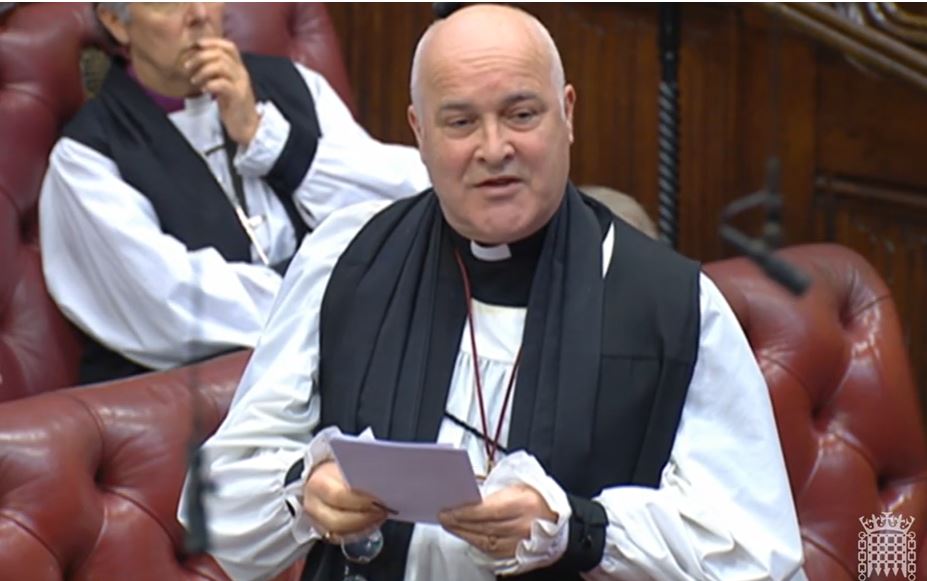
The Lord Archbishop of York: My Lords, from these Benches I too express our sadness at the news of the death of Lord Judge and offer prayers and condolences to his family. I look forward with others to the speeches of the noble and learned Lord, Lord Burnett of Maldon, and the noble and learned Lords, Lord Houchen of High Leven and Lord Bailey of Paddington.
The focus of my speech is devolution, looking particularly at devolution in and within the regions of England, not least because devolution and devolved government allow us to seek consensus in our decision-making, and therefore to be better able to take a longer view, which in turn is the best way of tackling some of the huge issues facing us that were mentioned in the gracious Speech: the greening of the economy; poverty; and criminal justice. Yesterday, the order was laid by the Government for the establishment of the mayoral combined authority for York and North Yorkshire, the area where I live and serve. This is very good news for the north and is the first deal of its kind that includes a large rural area in combination with a small city, and therefore is an opportunity for a new model that does not require a big city for its success.
I know, or at least I think I know, that I do not need to tell this House about the benefits of this kind of devolution. The understanding and representation of local needs allow for good value for the money spent and it is something we have often discussed. Certainly, in York and North Yorkshire, a regional view is required to understand the area’s huge variety and opportunities, but also its inequalities, and to address them. What is needed in our Government is consensus and longer-term planning, which is the sort of thing devolved government can deliver. Last week I was with people who have been working on this in York and North Yorkshire, and I was struck most by the incredible renewed hopefulness and togetherness that longer-lasting change could be achieved. This will renew our regional identity and enable us to better face issues of huge inequality. In turn, therefore, it will tackle the hopelessness that so often leads to crime.
I know today’s theme is not transport but that is inextricably bound up with the conversation about devolution. I welcome the designated powers and funding allocated as part of the deal that have been a success in other cities. However, transport is the most contentious part of all devolution work and, to state the obvious, the failure to join up the east and the west in national-scale transport projects remains a very serious issue for all of us who live in, but sometimes struggle to travel across, the north. The Network North proposals given in lieu of HS2, and announced yesterday, feel like an afterthought. They were announced so quickly that they eluded consultation. They do not seem to point to a well-measured decision that prioritises levelling up or investment in the north. Although the gracious Speech said that the most frequently taken journeys are prioritised, it is unfortunate that those journeys are mostly and most frequently made by car. Whatever anyone feels about HS2, I suggest that the contrast in functioning transport systems within regions and between them demonstrates a problem with the length of our view.
We have heard in the gracious Speech the legislative ambitions of the Government for this forthcoming Session, many of which I look forward to engaging with, as do my fellow Bishops on these Benches, including the Media Bill. Although I am glad to see that the measures trailed over the weekend around homelessness were not brought forward, there are other worrying inclusions, such as the Offshore Petroleum Licensing Bill and the announcement of new oil and gas licences. We on these Benches will be looking at all this in detail as it emerges.
What is missing is any recognition of the serious hardship that families are currently facing. The Joseph Rowntree Foundation’s most recent statistics note almost a million children in destitution, triple that from 2017. The Trussell Trust is expecting its worst winter ever and is planning to provide more food parcels than ever before. We need to take a longer view. We need to stay awake to the persistent and debilitating inequalities that exist in our nation, and to the danger of dividing communities with polarised voices. These things will get better only if we take a longer view, build cross-party consensus and change the way we do our politics. We look forward to taking opportunities to work together in this House and in other places to engage with this as we move forward.
Extracts from the speeches that followed:
Lord Strathclyde (Con): I am delighted to follow the most reverend Primate the Archbishop of York. I was going to follow him also in speaking about devolution, although it would have been of the Scottish variety rather than the English variety. However, yesterday afternoon, we heard my noble friend the Leader of the House speak, and I was so inspired by his words that I thought I would say a few words about something that affects us all, for which all of us bear some responsibility: namely, our behaviour in this Chamber and what we do as a House.
Over the course of the past few years there have been many occasions when we have debated the overall numbers of this House. But I do not think it has been at all helpful to look at those overall numbers. What we should be looking at are the overall numbers of Peers who actually vote. There were 180 votes during the course of the last Session, but only in about 30 of them did we produce more than 400 Peers to vote, and never did those numbers achieve 500—considerably less than the 800 which so many of us complain about. This House is a part-time House. It derives so much strength from Peers being able to do work outside it, volunteer outside it and play an important role in their own communities. For that reason, with this diversity of talent, experience and age, such diversity maintains the quality of the House and I think we should not forget it. My conclusion is that we should complain far less about our overall numbers and look at the numbers in the voting Lobbies to demonstrate our working capacity and our ability to effect change.
That leads me on to the number of government defeats. As I said, in the previous Session we had 180 votes. In those, the Government were defeated 125 times; the Government managed to win only 55 times. That is a loss ratio of 70%. It is too much. I have said before that this House should never become a House of opposition, but that is what these figures demonstrate it has become. Of course we should challenge the working of government by all means, but should it really be so often? How can we, on this side of the House, make the case for restraint on the number of new Peers when every day Members of the Government in another place are faced with that record?
That leads me on to the role of the Cross-Benchers, who play an important part in this House. But I wonder how many of us realise that, during the previous Session, the average Cross-Bench Member voted only 28% of the time in favour of the Government and 72% of the time against the Government. I suppose that we should be grateful for that. I wholly expect that sort of behaviour from the Labour Party and the Liberal Democrats, who are accountable for what they do, in a tangential way, through their representation in the House of Commons, but that is not true for the Cross-Benchers, who should perhaps keep a watchful eye on their voting records before people outside this House ask, “What are Members of the Cross Benches for?” A few weeks ago, my noble friend Lord Roberts of Belgravia wrote an extremely well-researched paper criticising, in the Spectator magazine, the right reverend Prelates for their voting records; I would not want him to cast his eye, or his pen, over the role of the Cross-Benchers. This makes it so much harder for those of us who have, in the long term, been great defenders of the role of the Bishops in this House and the role of the Cross-Benchers.
Baroness Brinton (LD): I will briefly comment on the speech of the noble Lord, Lord Strathclyde. It is dangerous, almost a false equivalence, to look at pure statistics. We all know the adage about lies, damned lies and statistics. Our Cross-Benchers and Bishops add real value to our House, but, when we push them to vote later on in a Bill, they absolutely say to us, “No, it is getting too political, and we will stand back”. Very occasionally, they might vote at an early stage of ping-pong, but no further. That is because they, unlike many of us, understand that their role is not political. But they, like every Member of this House, recognise that our role is to scrutinise legislation, regardless of which party is in government, and to help improve it. I, for one, welcome their tabling and voting on amendments, whether they vote with my side or not.
Baroness Taylor of Stevenage:
I now turn to devolution. Having spent much of the last 10 years on English devolution and most of my first year in your Lordships’ House immersed in the depths of the Levelling-up and Regeneration Bill, you would think I had had enough of that. Sadly, that Bill, like this King’s Speech, was a huge missed opportunity to create the kind of change that would drive Britain’s future. The noble Lords, Lord Bruce and Lord Stunell, both referred to this. It is astonishing that there was nothing in the King’s Speech to help grow our economy by devolving decision-making to the local areas that know best what will work, including, as the most reverend Primate the Archbishop of York referred to, those that include rural areas and towns rather than cities. The gracious Speech was certainly devo-lite.
The UK is one of the most politically and economically centralised countries in Europe, which leaves us stuck in a cycle of worsening inequality. It is hard to see how the levelling-up Bill will change that, as much of it has the effect of centralising decision-making, not devolving it. The Government’s devolution programme over the past 13 years has been characterised by a lack of ambition, with the odd deal being struck but only when local areas agree to governance arrangements imposed on them by the centre, along with a wasteful Hunger Games-style funding model. This system results in areas being pitted against each other, without any overarching vision for the future of Britain.
We believe that devolution settlements and fair funding should be made available to all parts of the country and would introduce new legislation for that in our first King’s Speech. This would involve a significant expansion of economic devolution in England, with local leaders using a range of powers to drive growth and prosperity in communities across the country. New economic devolution will give English towns and cities the tools they need to develop credible, long-term growth plans, with bespoke packages of powers to support new internationally competitive economic clusters in high-value industries, creating high-skilled jobs in their areas.
Lord Sharpe of Epsom (Con, Home Office): The noble Lord, Lord Stunell, and the most reverend Primate the Archbishop of York both raised the subject of transport and HS2. I thank them for their comments but will pass those comments on to the Department for Transport, which will be speaking in this Chamber on that matter on Monday.
 The Church of England in Parliament
You must be logged in to post a comment.