
The Bishop of Norwich asked a question in response to a government statement on levels of migration to the UK on 5th December 2023, bringing up the potential risks to the social care sector under new migration proposals, and the issue of workers in faith communities facing new barriers to entering the UK:
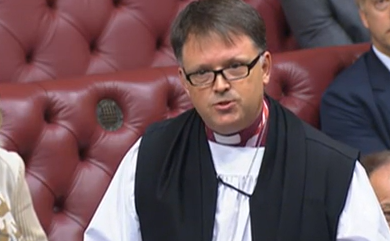
The Lord Bishop of Norwich: My Lords, I have three brief comments and questions. We know that there are 152,000 vacancies in social care in England, as reported by Skills for Care. This is of course a concern for the well-being of vulnerable people. The National Farmers’ Union reports a national shortage of 80,000 vacancies in the horticultural and agricultural sectors, but His Majesty’s Government estimate 40,000. This of course leads to a massive reduction in production and has an economic impact. As we know, this is further exacerbated in our rural communities. What conversations has the Minister had with these sectors about the risks inherent in their new policy?
My second point is that families come in all shapes and sizes, but when they are together they are stronger and more resilient. Families help individuals, communities and our society to flourish. Only recently, I met a Nepalese care worker in a rural church in Norfolk, off any bus route and not having her own transport. The church community has embraced her as one of their own and learned much in the process. Each week, she sends home a significant proportion of her earnings to support her very young family, but this is costly to that family’s bonds of relationship and she longs to see them. Will the Minister reassure the House that the department has applied the family test to these policies, and will he publish that assessment?
Finally, many faith communities greatly benefit from the presence of religious workers from overseas. The Church of England benefits from the ministry of clergy from all around the Anglican Communion, enriching our communities and resourcing individuals’ ministry for life, often equipping them for when they return to their country of origin to minister in places of conflict and abject poverty. Many UK clergy, me included, have benefited from overseas experiences. Will the Minister consult faith communities about exemptions for religious workers, many of whom earn below the published threshold?
Lord Sharpe of Epsom (Con, Home Office): I thank the right reverend Prelate for his questions. Of course, there is no barrier to recruiting people to the Church, as long as £38,700 is paid to them. I do not think that unreasonable, I am afraid. I appreciate that salaries may not be as high in the Church as he might like, never mind the rest of his colleagues, but that is the median salary, as I said earlier, and it is not unfair. As for recruiting to the health and care sectors, I think I answered that question earlier. Again, there are exemptions in place for those people and we obviously value their work and their service here. I do not know whether the family test has been applied. However, we also regard families as very important. If the lady whom the right reverend Prelate referenced is sending the bulk of her money home, one wonders exactly what the economic benefit is to this country as well. That is obviously an unfortunate state of affairs, but it is worth mentioning.
 The Church of England in Parliament
You must be logged in to post a comment.