
On 18th December 2023, the Bishop of Manchester spoke in a debate on the second reading of the Victims & Prisoners Bill, applauding the focus on victims and welcoming the bill as an opportunity for clarity of legislation and statutory instruments:
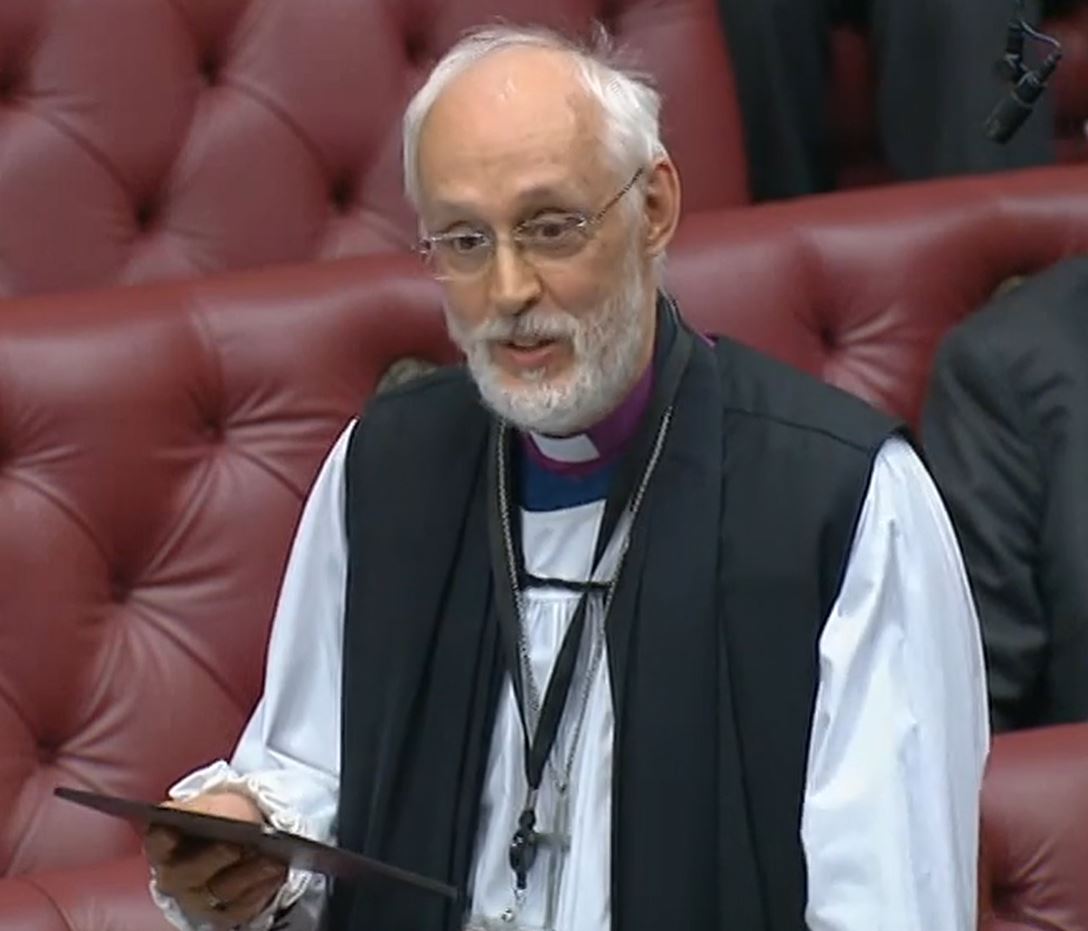
The Lord Bishop of Manchester: My Lords, I am grateful to His Majesty’s Government for introducing this Bill. I am also grateful that shortly we will hear a maiden speech from the noble Lord, Lord Carter of Haslemere. His long experience of the law and the Civil Service will serve your Lordships’ House well. I look forward to his remarks today and on many future occasions.
I also welcome the focus on victims that lies at the heart of the Bill. As we have just heard, it builds on the report of my right reverend friend Bishop James Jones, a former Member of your Lordships’ House, into the Hillsborough tragedy. I was a young member of the clergy called into the stadium to support bereaved families. I will never forget the sight of iron barriers twisted out of shape by the pressure of human bodies being crushed against them. Hence I warmly commend the proposal for independent public advocates in cases such as that and the Manchester Arena attack, to which the Minister referred in his opening remarks—I thank him for doing so. As Bishop of Manchester, it fell to me to help lead my city’s response to the brutal murder of 22 people and the injuring and traumatising of hundreds of others.
How inquiries are set up and resourced is vital to whether they gain the confidence of the public in general and of survivors and bereaved relatives in particular. I hope that as the Bill progresses we can reflect on whether the current draft does enough to ensure that. Specifically, it would be well to widen the cases in which an advocate would be appointed to include all incidents where there is a deep public interest in ensuring a thorough investigation. If the advocate is to be truly independent, as the noble Baronesses, Lady Brinton and Lady Sanderson of Welton, have reminded us, they need their own data controller powers and for the powers of the Secretary of State in relation to their appointment and functioning to be the minimum. All that is achievable through amendments to the Bill, which I hope to support later.
I also welcome placing IDVAs and ISVAs on a statutory footing, but the word “independent” matters and I hope that we can clarify, in the Bill or in statutory guidance, that they are fully independent from both the police and the criminal justice system. Many victims find community-based services, especially those led by people with lived experience of the issues they themselves face, to be the most accessible and most useful means of support. However, the vast majority of such services struggle financially—around 90%, according to a recent report—with inadequate, short-term, unreliable funding; that threatens their continuance. Hence, along with the noble Baroness, Lady Hamwee, and others, I agree with the suggestion from the domestic abuse commissioner of a clause placing a duty to collaborate on PCCs, local authorities and ICBs in the commissioning of appropriate local services. Alongside this, we need to think more widely, as the noble Baroness, Lady Brinton, indicated, about how we fund the community-based services that are the bedrock of so much support across Britain.
With one or two notable exceptions, it is some time since most of us were children. Hence we need to scrutinise legislation with particular care to ensure that children’s needs are properly included. I am glad that so many speeches this afternoon and evening have referred to that. I support the call from many of our major children’s charities that every child in England and Wales affected by abuse and exploitation must have access to specialist advocacy support. The Bill should establish the role of independent child sexual violence advisers, independent child domestic violence advisers and independent child trafficking guardians as a support offering for children and young victims. It must also provide central funding for their employment.
Beyond this, I hope we can also explore, as others have said, the establishment of a statutory definition of child criminal exploitation, perhaps along the lines proposed by Barnardo’s and the Children’s Society, which define it as when
“another person or persons manipulate, deceive, coerce or control the person to undertake activity which constitutes a criminal offence where the person is under the age of 18”.
If we can get to a better definition over the next few weeks, well and good, but let us not miss this opportunity to have some definition in the Bill.
As the noble Baronesses, Lady Chakrabarti and Lady Hamwee, have reminded us, at present the Bill contains measures to disapply Section 3 of the Human Rights Act. While I understand that reducing risk to the public must be a high priority, I hope we will scrutinise this very carefully. Human rights are not something we earn through good behaviour, and nor should they lightly be taken from us. We rightly accept that such rights may be qualified when they conflict with other human rights but, like the noble Baroness, Lady O’Loan, a few minutes ago, I urge that we be very restrained in enacting wider restrictions.
Finally, I am aware that my native northern bluntness can on occasion lead me to what some may perceive as an over-acerbity of comment, but today I wish to be entirely kind to the Bill and to the Government for bringing it before us. I believe that with some non-partisan working and a little careful amendment in your Lordships’ House, it can become a stronger and better Bill. To that end, I and my colleagues on these Benches look forward to engaging with it in detail in the new year. Our society will then be better for it being added to our statute book.
Extracts from the speeches that followed:
Lord Ponsonby of Shulbrede (Lab): We have heard a number of powerful speeches on independent public advocates, including from my noble friend Lord Wills, who of course has a great background of knowledge on this matter, the noble Baroness, Lady Sanderson, the right reverend Prelate the Bishop of Manchester and my noble friends Lady Kennedy and Lord Bach—he also asked about legal aid, which I am sure will be raised in Committee.
The noble Baroness, Lady Bennett of Manor Castle, and the noble and right reverend Lord, Lord Harries of Pentregarth, raised restorative justice, which is absent from the Bill. We have had many debates on it in previous criminal justice Bills and it is embedded in the work of the Probation Service and the Youth Justice Board. I would be interested if the Minister could say something about the continuing work of developing restorative justice in our wider Probation Service.
Lord Bellamy (Con, Ministry of Justice): I have used up my time, but I hope that I have covered most things. I apologise to noble Lords whose specific points I have not met. Anyone is fully entitled to write to me or ask me questions and I will, of course, answer them. If I may just finish with the words of the right reverend Prelate the Bishop of Manchester, who was kind enough to say he was going to be kind to the Bill. Let us be kind to the Bill and—
On that note, given the season of the year in which we find ourselves, we may not quite have reached
“Peace on earth, and mercy mild, God and sinners reconciled”,
but I hope we have taken the matter forward. I beg to move.
Bill read a second time.
 The Church of England in Parliament
You must be logged in to post a comment.