
The Bishop of Durham spoke in a debate on religious education in schools in Grand Committee on 18th January 2024, urging that RE be considered an essential part of the curriculum:
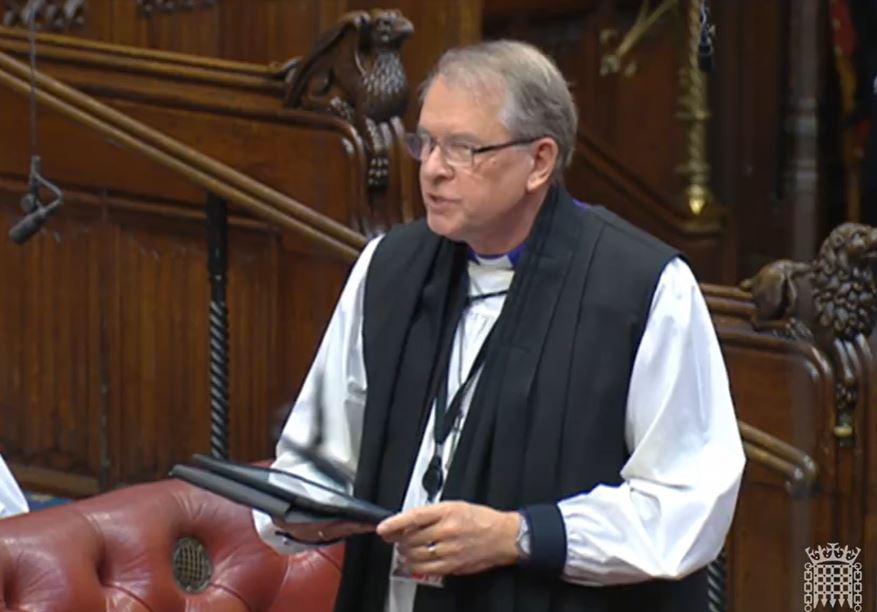
The Lord Bishop of Durham: My Lords, I declare my interests as in the register. Our modern society today is rich in diversity with varying cultures, religions and beliefs. Religious education gives young people an understanding of different world religions and beliefs, in a world where 70% of people affiliate themselves to a religion. It gives pupils an opportunity to explore their beliefs, enabling them to think critically and discuss belief systems in a non-offensive and non-discriminatory manner. However, RE is too often seen as inessential, with Ofsted stating, as was said earlier, that
“schools often consider RE as an afterthought”.
When current global conflicts have roots in religious histories, and with increases in faith hate crime in Britain, the provision of high-quality RE is crucial to creating a more respectful and tolerant society. Faith hate crime often comes from a lack of understanding, and it will not be eradicated when citizens lack knowledge of the beliefs of those alongside whom they live and work. I note the Government’s decision to omit RE from the English baccalaureate; will they reconsider this—it was disastrous—and include RE?
Despite the statutory requirement to teach RE at all stages, there are no clear expectations around RE provision regarding the breadth and depth of the syllabus. This results in the teaching of RE in many schools simply being inadequate. The National Content Standard for Religious Education in England, produced by the Religious Education Council of England and Wales, gives syllabus providers clarification and a benchmark for excellence in RE. Will the Government endorse the document and use it to raise the standard of RE provision across the country?
RE provision is further declining due to the lack of teachers qualified to teach the subject at a high standard. I appreciate the plans for bursaries for those training in the 2024-25 academic year, but I am concerned that these measures do not go far enough with—as already stated—51% of RE lessons in secondary schools taught by teachers who predominantly teach another subject and one in five schools reported to offer zero hours of RE teaching in year 11. How will the Government further ensure that an adequate number of teachers are qualified to teach RE well?
Religious education has the potential to be a vital component in addressing discrimination in the UK and creating a more understanding society. I urge the Government to ensure that RE is considered not as an afterthought, but as an essential part of education, equipping young people to live and engage in society today. The vision for education is to produce the best human beings possible. Surely RE has a vital part to play in that process.
Extracts from the speeches that followed:
Lord Warner (CB):
The UK population’s commitment to religion has seriously changed since my teenage refusal to chant the Lord’s Prayer in school assembly. In 2021, the British Social Attitudes survey revealed that 53% of the population had no religion. Only 12% said they were Anglicans, with young people making the biggest shift to secularism: 68% of 18 to 24 year-olds belonged in no religion, with just 18% saying they were Christians. Only 0.7% were Anglicans. Church of England support among young people is in free fall, with no evidence that this shift will be reversed. The 2021 census points in the same secular direction.
Yet the Church hierarchy, Parliament and educational policy-makers seem unwilling to recognise this new reality. This House still insists on starting proceedings with Anglican prayers, and we still have 26 Anglican Bishops here by right. As a House, we badly need to face up to the implications of this fundamental population shift to secularism. It calls into question both the state’s funding of religious schools and the curriculum and practices of non-religious state-funded schools. There is now no justification, in my view, for compulsory daily acts of Christian worship in the two-thirds of state schools in England and Wales that are not Church schools. There are big question marks over the way in which religious belief is taught in these schools, and curriculum change is inevitable.
I appreciate that tackling the issue of Church of England schools is difficult but, even without tackling this contentious issue, other—quite major—reforms are possible. We could and should abolish compulsory acts of Christian worship in schools, and we should move to teach an independently devised and more broadly based national education curriculum, as others have suggested, on faith and non-faith beliefs. This House might like to set an example by changing some of its own religious practices.
Baroness Twycross (Lab): My Lords, this has been a most interesting and varied debate, and I join others in commending the noble and right reverend Lord, Lord Harries, for securing it. I cannot claim to have his knowledge, or the knowledge displayed by many speakers, including my noble friend Lord Griffiths, the right reverend Prelate the Bishop of Durham and the noble Lord, Lord Storey, or indeed the teaching experience of the noble Lord, Lord Hastings, and the noble Baroness, Lady Garden. However, we can all agree, whatever our level of expertise, on creating an education system that delivers for all children. We can get the core subjects such as maths, English and the sciences right, with expert teachers in the classroom, but our education also needs to be broad enough to ensure that children develop the knowledge and skills that they need to succeed at school and into employment and adult life—and that includes religious education. As the noble Baroness, Lady Garden, put very succinctly, we clearly need this for an understanding of literature, and I say that as somebody who studied literature at university.
Baroness Barran (Con, Department for Education): A number of noble Lords, including the right reverend Prelate the Bishop of Durham, questioned the level of recruitment to RE teaching posts. As your Lordships set out, in the academic year 2023-24, 44% of the recruitment target for RE was reached. This is lower when compared with recent years, although it should be noted that the target increased by more than 45% to 655. There is work to be done here and the Government recognise that initial teacher training recruitment remains challenging due to the competitive graduate labour market. Therefore, we were pleased to announce that the department will again be offering a £10,000 bursary for RE trainee teachers starting initial teacher training in 2024-25, which we hope will incentivise greater numbers to apply.
(…)
That links to the question from the noble Lord, Lord Griffiths of Burry Port, about dedicated expenditure on religious education in schools. The Government’s stance remains that we trust schools to judge how to use the funding that we give them. We trust their judgment and we give them autonomy to decide how to use that funding. On the question from the right reverend Prelate the Bishop of Durham about whether we are planning to include religious education in the EBacc, I think he knows the answer: there are no current plans to do so.
 The Church of England in Parliament
You must be logged in to post a comment.