
The Bishop of Durham spoke in a debate on financial education in schools on 31st January 2024, urging that teachers be equipped to teach financial education as part of the primary school curriculum:
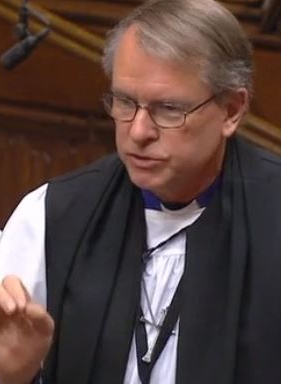
The Lord Bishop of Durham: My Lords, I too thank the noble Baroness, Lady Sater, for securing this debate and introducing it so clearly. I declare my interests as stated in the register.
The evidence finds that a child’s attitude towards money is well developed by the age of seven. The foundations of our skills in managing money are laid in these early years. Yet, unlike in the secondary curriculum, financial education is absent from the requirements of the primary curriculum in England. This is seen by 60% of teachers as a key obstacle to its high-quality delivery. Further challenges include training, time and funding. Young Money and City Pay it Forward are examples of external providers supporting teachers with high-quality resources and training.
LifeSavers is the financial education programme delivered to primary schools by the Just Finance Foundation, of which my most reverend friend the Archbishop of Canterbury is president. It provides teachers with training, resources and lesson plans, while its innovative saving clubs give children hands-on experience, enabling them to put money-managing skills into practice. It provides a values-based approach and equips teachers to explore with children not only how to use money but how we think about it—that is, what it means to be wise, generous, just and thankful with money. By 2023, it had worked with 202 schools, reaching 53,257 children nationwide.
What are the Government doing to ensure that teachers are supported and equipped to teach financial education as a requirement of the primary curriculum? Will they adopt a collaborative approach with external schemes? Surely we want all children to learn the skills of wise money management, enabling them to live generously with money and finance not as a god but as a servant of God’s, humanity’s and creation’s good.
Extracts from the speeches that followed:
Baroness Twycross (Lab): I echo my noble friend Lord Parekh’s question about why this gets very little attention—everybody here has found it fascinating—and I have been wondering why. As the noble Baroness, Lady Sater, said, worrying about money causes anxiety, and ensuring children get the knowledge they need is vital to equip them for life. A number of speakers, including my noble friend Lord Watson and the noble Lord, Lord Sandhurst, and the right reverend Prelate the Bishop of Durham have noted how early a child’s money habits can be formed.
Currently, as I think every speaker has noted, financial education is included in the national curriculum only in secondary schools. It is a welcome addition to the curriculum, but it is arguably too little too late. As the noble Baroness, Lady Sater, said, it is subject to a postcode lottery, and the noble Lord, Lord Sandhurst, highlighted that 30 hours a year may be required for this to be effective.
Baroness Barran (Con, DfE): My noble friend Lord Polak and the right reverend Prelate the Bishop of Durham both asked what we are doing to build the confidence of teachers; the right reverend Prelate also asked about collaboration. Of course, we are already collaborating with a number of organisations. In particular, the Money and Pensions Service provides guidance that signposts high-quality and quality-assured resources, including from the financial services sector, which play a key role in financial education at home and in the classroom. Training is obviously important for building teachers’ knowledge, confidence and skill. That is why the department is working with the Money and Pensions Service to deliver teacher webinars this academic year, focused on teaching about money in a cashless society. I do not know whether they will be as fun as the outline that the noble Lord, Lord Hampton, gave us, but I live in hope.
 The Church of England in Parliament
You must be logged in to post a comment.